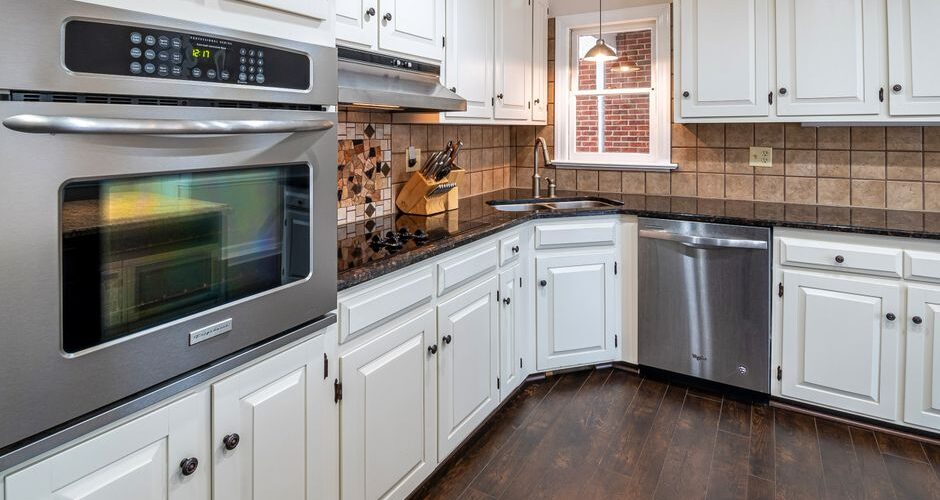



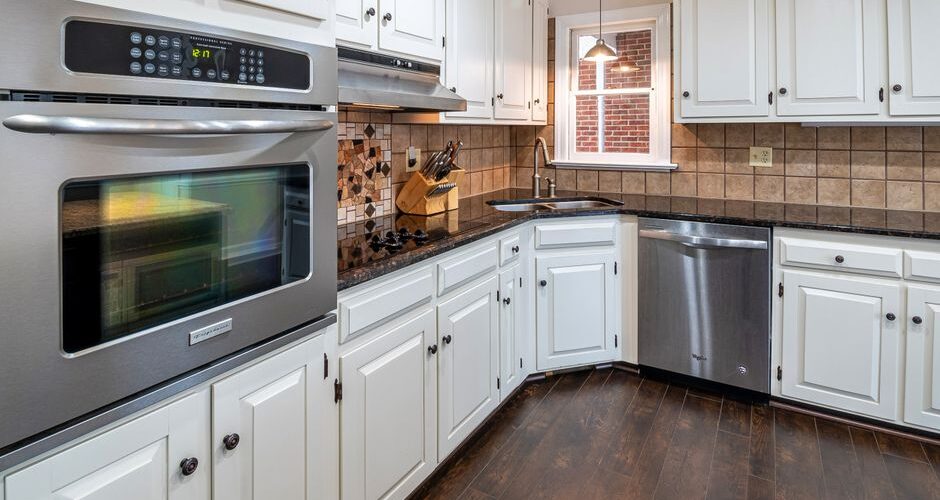
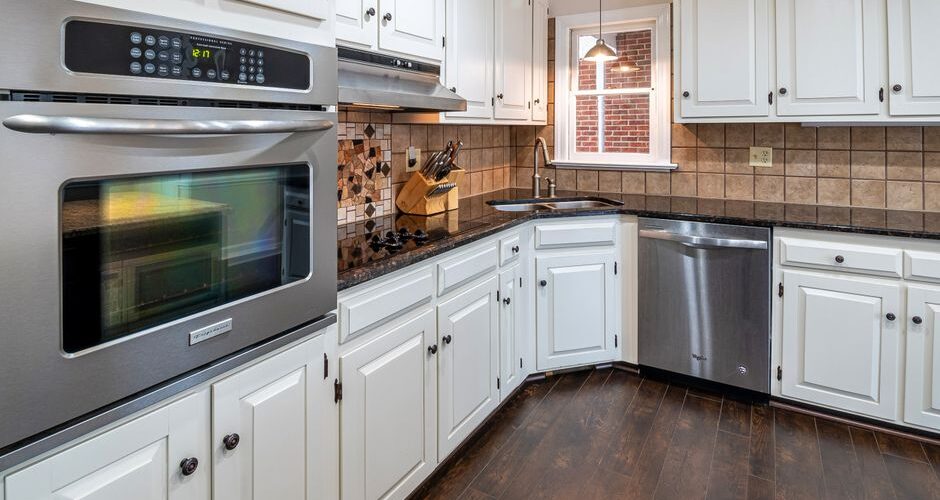
You open a cabinet door and a chip of paint flakes off onto the counter. The once-rich finish has dulled to a hazy, streaked version of itself. You have scrubbed, touched up, and hoped for the best, but your kitchen cabinets now look tired and dated. Replacing them would cost tens of thousands of dollars and turn your kitchen into a construction zone for weeks. There is a better path, one that professional cabinet shops have relied on for decades: professional cabinet refinishing with sprayed lacquer finish. This guide walks you through what that process actually involves, how it compares to alternatives, what it costs in Northern Colorado, and whether it is the right move for your home. You will get straight answers, not sales pitches, so you can make an informed decision.
Table of Contents
-
How Much Does Professional Lacquer Cabinet Refinishing Cost?
-
Is Professional Cabinet Refinishing with Sprayed Lacquer Right for Your Northern Colorado Home?
What Is Sprayed Lacquer Cabinet Finishing?
Lacquer is a solvent-based finish that dries through evaporation rather than chemical curing. When a professional sprays a coat of lacquer onto a cabinet door, the solvents flash off rapidly, leaving behind a hard, smooth film. The next coat does not simply sit on top of the first one. It chemically melts into the layer beneath it, fusing the two into a single, unified surface. This property, often called “burn-in,” is what separates lacquer from nearly every other cabinet finish on the market.
Water-based paints and polyurethanes cure as separate layers stacked like sheets of paper.
My Review of Graco FFLP Tips for Spraying Cabinets
Conversion varnish, another professional-grade option, hardens through a catalyst reaction that creates a tough but non-repairable shell. Lacquer occupies a unique middle ground: hard enough to meet Kitchen Cabinet Manufacturers Association durability standards, yet repairable enough that a scratch or chip years later can be blended back into the original finish without stripping everything down to bare wood.
The industry standard sheen for cabinetry sits around 20 degrees gloss, a subtle luster that resists fingerprints while still reflecting enough light to give doors and drawer fronts depth. Achieving that sheen requires spray equipment. Lacquer dries too fast for brushes or rollers, which would leave drag marks and bubbles. Professional application with HVLP or airless spray systems is not a preference; it is a requirement for results that look factory-original.
Pros and Cons of Lacquer for Kitchen Cabinets
Advantages of Sprayed Lacquer
Speed is the first thing professionals appreciate about lacquer. A coat dries to the touch in roughly 20 minutes under normal conditions, which means a skilled refinisher can apply three or four coats to a set of cabinet doors in a single day. That pace keeps project timelines short and labor costs reasonable compared to finishes that need hours between coats.
The self-leveling behavior of lacquer is what produces that glass-smooth surface. As the solvents evaporate, the finish flows out and settles, erasing minor spray texture before it hardens. The result looks like it came from a factory spray booth, not a job site.
Repairability is lacquer’s standout long-term advantage. Because each new coat burns into the existing finish, a professional can repair a scratch or worn area without sanding down to raw wood. Forum reports from experienced woodworkers confirm that solvent-based lacquer applied over 20-year-old lacquered cabinets bonds successfully when the surface is properly cleaned and scuffed. A 30-year-old finish can accept a fresh coat and look new again, something water-based products simply cannot do.
Durability testing referenced by professional refinishers aligns with KCMA standards for adhesion, resistance to household chemicals, and surface integrity. When applied correctly over properly prepared substrates, lacquer stands up to daily kitchen use for years.
Disadvantages to Consider
The fumes are the most serious drawback. Lacquer contains high levels of volatile organic compounds that demand professional-grade respiratory protection. A dust mask is not enough. The odor during application is intense, and off-gassing continues for 24 to 48 hours after the last coat. Homeowners should plan to be out of the house during spraying and for at least a full day afterward. People with respiratory conditions, pregnant women, and young children need to take this timeline seriously.
Lacquer reveals every flaw. If a cabinet door has a scratch, a dent, or even a speck of dust that lands on the wet finish, the final coat will show it. Professional prep work, including thorough sanding and working in a controlled environment, is non-negotiable. DIY attempts in a dusty garage almost always disappoint.
Chipping is a known vulnerability, particularly on sharp edges and corners. A hard knock from a pot or pan can crack the finish. The good news is that these chips are repairable. The bad news is that they do happen, especially in busy kitchens where cabinets take abuse near the stove and sink.
Lacquer is not the best choice for high-moisture zones without additional sealing. The area around a dishwasher that vents steam, or cabinets near a frequently used kettle, may show premature wear if the finish is not properly protected or if ventilation is poor.
Sprayed Lacquer vs. Other Cabinet Finishes
Lacquer vs. Water-Based Paint
Water-based cabinet paints have improved significantly in recent years, but they lack the chemical burn-in that defines lacquer. A water-based coating sits on top of the previous layer and on top of the substrate. Adhesion depends on mechanical bonding, meaning the surface must be sanded thoroughly to give the paint something to grip. If that bond fails, the paint peels in sheets.
Water-based products do offer lower VOCs and milder odor, which makes them appealing for occupied homes. The trade-off is drying time. Water-based finishes can take hours to recoat, stretching a refinishing project across multiple days. Hardness and scratch resistance also lag behind lacquer, though premium water-based alkyds have narrowed the gap.
Lacquer vs. Conversion Varnish
Conversion varnish is a two-part catalyzed finish that hardens into a shell tougher than lacquer. It resists moisture, heat, and chemicals better than almost anything else on the market. High-end cabinet shops often use it for commercial applications or luxury kitchens where the budget allows.
The downside is repairability. Once conversion varnish cures, touching it up means stripping the entire door or face frame. There is no burn-in, no blending. A small scratch becomes a major project. Lacquer trades a bit of ultimate hardness for the ability to be refreshed and repaired over decades. For a homeowner planning to stay in their house long-term, that trade-off often makes lacquer the smarter choice.
Lacquer vs. Polyurethane
Polyurethane builds a thicker film and offers strong impact resistance. It is the finish you find on hardwood floors, where toughness matters more than elegance. On cabinets, that thickness can look plasticky. Polyurethane also dries slowly and is difficult to spray without orange peel texture. Brushing it on is more forgiving, which is why some DIYers choose it, but brushed polyurethane will never match the smoothness of sprayed lacquer.
Lacquer builds in thin, elegant layers that enhance the wood without burying it. For cabinets, where appearance is as important as durability, lacquer remains the benchmark.
The Professional Lacquer Refinishing Process
A professional refinishing job follows a sequence that cannot be rushed. The first step is assessment. A refinisher examines the existing finish to determine what is on the cabinets now and whether it will accept new lacquer. Cabinets that are already lacquered, even if the finish is 20 years old, are excellent candidates because of the burn-in compatibility. Cabinets with peeling paint or unknown coatings may need more extensive stripping.
Cleaning comes next, and it is more involved than most homeowners expect. Kitchen cabinets accumulate cooking grease, oil, and wax that will ruin a new finish if not completely removed. Professionals use degreasers and sometimes TSP substitutes to strip away every trace of contamination. Skipping this step is the most common reason refinishing jobs fail.
Sanding creates a mechanical profile for the new finish to grip. For lacquer-over-lacquer jobs, this is a light scuffing, not an aggressive sanding down to bare wood. If the cabinets have an unknown finish or a water-based coating, a shellac-based primer goes on first. Shellac acts as a universal bonding layer that sticks to almost anything and gives the new lacquer a reliable foundation. This technique appears repeatedly in professional woodworking forums as a solution for tricky refinishing situations.
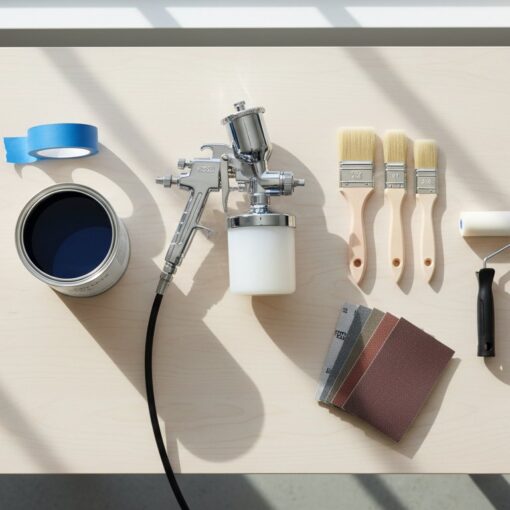
Spray application happens in a controlled environment. Professionals use HVLP turbines or airless sprayers with fine-finish tips to apply multiple thin coats. Each coat flashes off in about 20 minutes, and the next coat goes on while the previous one is still chemically receptive. Three to four coats are typical for cabinet doors and face frames.
Curing takes 24 to 48 hours before the cabinets can be handled normally. Full hardness develops over several days. During this window, the finish is vulnerable to fingerprints, dust, and moisture. Professionals advise leaving the cabinets untouched and the kitchen ventilated until the curing period ends.
How Much Does Professional Lacquer Cabinet Refinishing Cost?
Pricing for professional cabinet refinishing is conspicuously absent from most online discussions, which frustrates homeowners trying to budget. In Northern Colorado, including Fort Collins, Loveland, Greeley, Windsor, and Timnath, professional lacquer refinishing for a typical kitchen runs between $3,500 and $8,000. Smaller kitchens with simple door styles fall toward the lower end. Large kitchens with islands, extensive trim, and detailed door profiles push toward the upper end.
Several factors drive the final number. The number of doors and drawer fronts is the biggest variable. A kitchen with 30 doors and 10 drawers costs more than one with 15 doors and 5 drawers. Wood species matters too. Oak, with its open grain, requires more filling and prep than closed-grain maple or paint-grade MDF. The condition of the existing finish affects labor hours. Cabinets that need extensive stripping or repair add cost.
Lacquer occupies a middle price tier among professional finishes. It costs more than standard paint-grade refinishing but less than conversion varnish, which requires specialized catalyst mixing and has a shorter pot life. The material cost difference is modest; the labor and expertise are what you pay for.
For the determined DIYer, rattle-can lacquer from a home center runs $50 to $150 in materials for a small kitchen. The results, applied in a garage without professional spray equipment or environmental controls, will not match what a pro delivers. Forum discussions are full of hobbyists who got acceptable results with spray cans on small projects, but a full kitchen is a different challenge. Dust, uneven sheen, and runs are common outcomes.
How Long Does a Sprayed Lacquer Finish Last?
The evidence for lacquer’s longevity is not theoretical. Homeowners and woodworkers report successfully refinishing cabinets that were originally lacquered 20 years earlier, and in some cases, the original finish was still serviceable with just a cleaning and a fresh topcoat. A professionally applied lacquer finish should last 10 to 15 years before showing significant wear, and even then, a refresh coat can extend its life without a full strip-and-redo.
Longevity depends on how the cabinets are used and maintained. Direct sunlight through a kitchen window will fade any finish over time, lacquer included. Steam from cooking, especially near the range and dishwasher, accelerates wear. Cabinets that are grabbed by the door edges rather than the handles will show chipping sooner.
Maintenance is straightforward. Wipe cabinets with a damp cloth and a mild, non-abrasive cleaner. Avoid ammonia-based products, which can dull the sheen over repeated use. Clean up spills promptly, especially anything acidic or oily. With reasonable care, lacquered cabinets hold their color and luster for years. While no published fade-test data exists for specific lacquer products, the real-world track record of 20-year-old finishes still looking presentable speaks for itself.
Safety and Environmental Considerations
Lacquer’s VOC content is high enough that safety cannot be an afterthought. Professional refinishers wear NIOSH-approved respirators with organic vapor cartridges. They run ventilation systems that exchange air continuously during spraying. These are not precautions for the overly cautious; they are standard practice required by occupational safety guidelines.
For homeowners, the practical implication is that you should not be in the house while lacquer is being sprayed. The strongest fumes dissipate within 24 to 48 hours, but a faint odor can linger for up to a week. Plan to stay elsewhere for at least the first full day after application, and longer if anyone in the household has asthma, allergies, or chemical sensitivities.
Low-VOC and water-based lacquer alternatives exist, and they have improved in recent years. They spray more like traditional lacquer than they used to, but they still lack the true burn-in property of solvent-based formulations. For a homeowner who prioritizes air quality over repairability, these products are worth discussing with a refinishing professional.
Professional shops mitigate risk with spray booths equipped with explosion-proof fans and filtration systems that capture overspray before it escapes into the environment. In Northern Colorado, some municipalities have air quality regulations that affect VOC-emitting products. A reputable local refinisher will know and follow these rules.
Is Professional Cabinet Refinishing with Sprayed Lacquer Right for Your Northern Colorado Home?
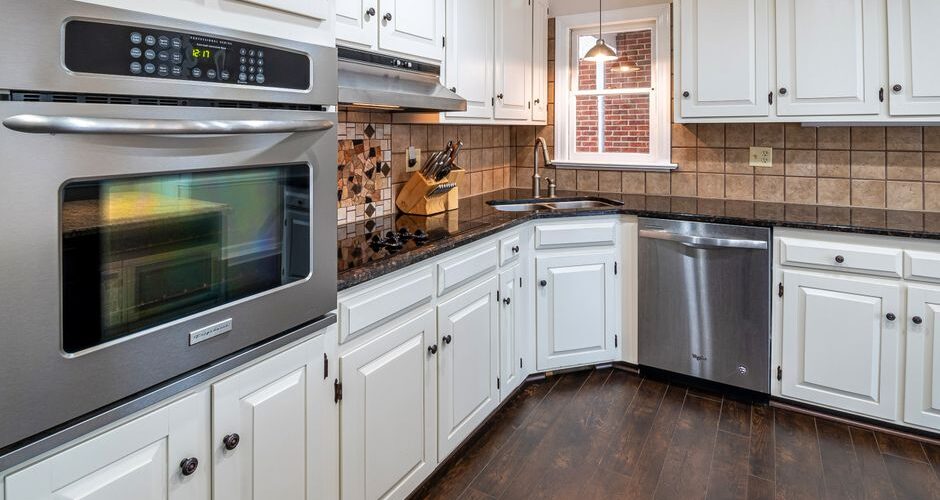
The best candidates for lacquer refinishing are homes where the cabinets are structurally sound but cosmetically tired. If your cabinets are already lacquered, even if they are 20 or more years old, you are in an ideal position. The existing finish provides a compatible base, and the burn-in property means the new lacquer will fuse with the old. Homes where the goal is a factory-smooth, high-end appearance will be happiest with the results.
Lacquer is not the right choice for every situation. Kitchens with chronic humidity problems, cabinets directly adjacent to dishwasher vents, or homes where occupants cannot vacate during application should consider water-based alternatives. Budgets under $3,000 will be tight for professional lacquer work in Northern Colorado; at that price point, a high-quality paint-grade refinish may be more realistic.
The professional versus DIY decision comes down to three factors: equipment, environment, and expectations. If you own an HVLP system, have a clean, ventilated space to spray, and have experience with solvent-based finishes, you can achieve good results on your own. If you are buying rattle cans at the hardware store and planning to spray in the garage with the door open, lower your expectations considerably. The gap between professional and DIY lacquer results is wider than with almost any other finish.
Northern Colorado’s dry climate is actually favorable for lacquer work. Low humidity helps solvents evaporate at the intended rate, reducing the risk of blushing, a cloudy appearance caused by moisture trapped in the finish. That said, local VOC regulations in some Front Range communities may restrict certain solvent-based products. A local professional will know what is permitted and what works best in the region.
Frequently Asked Questions About Lacquer Cabinet Finishing
Is lacquer a good finish for kitchen cabinets?
Yes, lacquer is an excellent finish for kitchen cabinets when professionally applied. It delivers a hard, smooth, factory-quality surface that resists daily wear and can be repaired years later without stripping. The main qualifications are the strong fumes during application and the potential for chipping on sharp edges if cabinets take hard impacts.
What finish do professional cabinet makers use?
Lacquer has been the traditional finish in professional cabinet shops for decades. Many high-end shops also use conversion varnish or catalyzed lacquers for their superior moisture and chemical resistance. The choice often depends on the shop’s equipment, the client’s budget, and the specific demands of the project.
What are the disadvantages of lacquer paint?
The primary disadvantages are high VOC fumes that require vacating the home during application, a tendency to show every surface imperfection and dust speck, vulnerability to chipping on edges, and the near-necessity of professional spray application. Lacquer also remains sensitive to damage during the first few days of curing.
Can I spray lacquer over existing lacquer cabinets?
Yes, and this is one of lacquer’s greatest strengths. Solvent-based lacquer burns into old lacquer, chemically fusing with the existing finish. Even cabinets lacquered 20 or 30 years ago can accept a fresh coat after proper cleaning and light sanding. This makes refreshing older lacquered cabinets far less labor-intensive than stripping and starting over.
Conclusion: Making the Right Choice for Your Cabinets
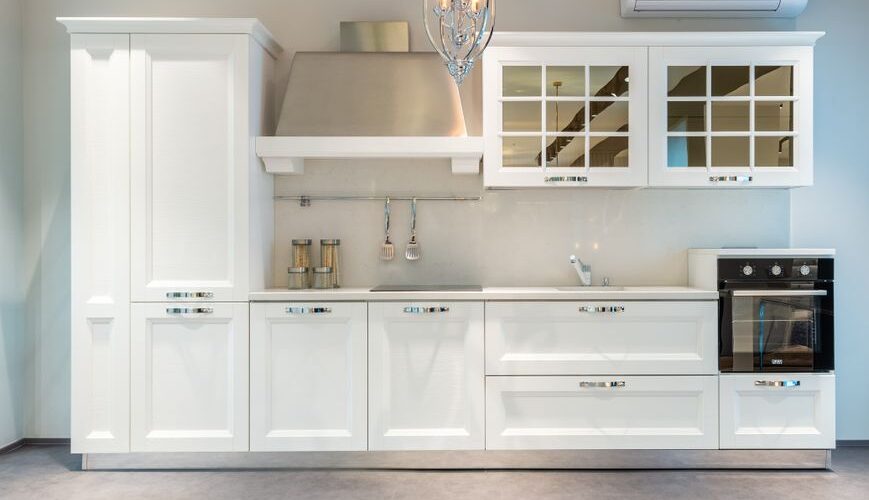
Professional cabinet refinishing with sprayed lacquer finish offers something no other approach can match: a factory-smooth surface that bonds into a single monolithic layer and remains repairable for decades. The trade-offs are real. VOCs demand serious safety precautions. The finish shows every flaw if prep work is rushed. Chips can happen on edges that take abuse. But for homeowners who want their cabinets to look and feel like they came from a high-end shop, lacquer remains the standard by which other finishes are judged.
Northern Colorado’s dry climate works in your favor, and local professionals understand both the craft and the regulations that apply in communities from Fort Collins to Greeley. If your cabinets are structurally sound but cosmetically worn, a consultation with a local refinisher will give you a clear picture of what your specific project requires and what it will cost. With proper application and reasonable care, a sprayed lacquer finish will outlast most kitchen renovations and still look beautiful when the next trend cycle comes around.
Before starting your project, learn about the
professional kitchen cabinet refinishing process
to understand how proper preparation, priming, and finishing create a durable factory-quality finish.