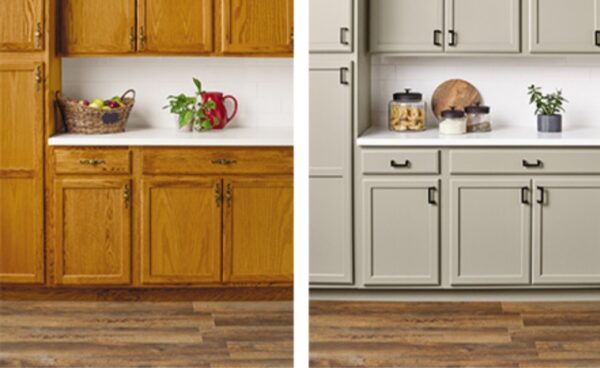
If you are researching professional cabinet refinishing with a sprayed lacquer finish, you likely want a durable, high-gloss look without the cost of full replacement. You have probably seen the glossy photos on social media, read conflicting opinions on forums, and wondered whether lacquer is the right choice for your kitchen. This guide answers those questions directly, with current 2026 data, practical cost breakdowns, and a clear explanation of what the process actually involves. For homeowners across Northern Colorado, from Fort Collins to Longmont, understanding the difference between a professional sprayed lacquer job and a DIY paint project can mean the difference between a kitchen that looks custom-built and one that shows wear within two years.

Table of Contents
- What Is Professional Cabinet Refinishing with Sprayed Lacquer?
- Why Choose Lacquer? The Pros of a Sprayed Finish
- The Professional Process: What to Expect in 2026
- The Real Cost of Professional Lacquer Refinishing
- Common Disadvantages and How Professionals Mitigate Them
- How Long Does a Sprayed Lacquer Finish Last?
- DIY vs. Professional: Why Northern Colorado Homeowners Hire a Pro
- Frequently Asked Questions About Lacquer Cabinet Refinishing
- Conclusion: Is Professional Lacquer Refinishing Right for Your Home?
What Is Professional Cabinet Refinishing with Sprayed Lacquer?
Professional cabinet refinishing with sprayed lacquer is a multi-step process that restores existing cabinet boxes and door fronts to a factory-grade finish without replacing the underlying structure. It begins with removing the old finish through cleaning, degreasing, and sanding, followed by priming and the application of multiple coats of lacquer using high-volume, low-pressure (HVLP) spray equipment in a controlled environment.
My Review of Graco FFLP Tips for Spraying Cabinets
This is not the same as cabinet resurfacing, where new doors and veneers are installed over existing boxes. It is also distinct from cabinet painting, which typically uses water-based latex or acrylic paints that sit on the surface rather than bonding with it. Lacquer, by contrast, contains solvents that partially dissolve the previous coat, creating a chemical bond that paint cannot replicate.
Looking to transform your kitchen? Our cabinet refinishing process gives you a factory-fresh look without the cost of replacement.
The defining characteristic of professional lacquer work is the spraying method. Brushed or wiped lacquer dries too quickly to self-level properly, leaving streaks and brush marks. Sprayed lacquer atomizes into a fine mist that lands evenly and flows out into a glass-smooth surface. The fast drying time, often 15 to 30 minutes between coats, allows professionals to apply three or four coats in a single day. The result is a thin, hard film that highlights the wood grain rather than burying it under a thick plastic-like layer.
Why Choose Lacquer? The Pros of a Sprayed Finish
Lacquer has been the dominant finish in professional cabinet shops for decades, and the reasons extend well beyond tradition. The cabinetpainter.ca analysis, still one of the most cited resources on this topic, identifies several advantages that hold true in 2026.
Durability is the headline benefit. A properly applied lacquer finish withstands heat from coffee makers and toaster ovens, resists grease splatter from stovetops, handles the moisture of a busy kitchen, and does not yellow under prolonged sun exposure the way oil-based polyurethanes do. For Colorado homes with large south-facing windows, this UV resistance matters.
The aesthetic quality is equally compelling. Lacquer produces the smooth, factory-like finish that homeowners associate with high-end custom cabinetry. Sheen levels range from a dead-flat matte at 5 to 10 degrees up to a wet-looking high gloss at 90 degrees, with satin at 20 to 30 degrees being the most popular choice for kitchens. Tinted lacquers allow for exact color matching, and glazes can be applied between coats to add depth and highlight door profiles.
Repairability sets lacquer apart from conversion varnish and some catalyzed finishes. Because solvent-based lacquer has a burn-in property, meaning each new coat chemically fuses with the previous one, a scratch or chip can often be repaired by scuff-sanding the affected area and spraying a fresh coat that blends invisibly. You do not need to strip the entire door.
Speed of application benefits both the contractor and the homeowner. A professional crew can complete a standard kitchen in two to three days, with cabinets ready for use within 24 to 48 hours after the final coat. This minimizes disruption compared to painting projects that can drag on for a week or more.
Lacquer vs. Other Professional Finishes
Understanding where lacquer sits in the hierarchy of cabinet finishes helps clarify whether it is the right choice for your project.
Conversion varnish offers superior chemical resistance and is the standard for commercial kitchens and laboratories. It requires precise mixing of a catalyst just before spraying, has a limited pot life once mixed, and is extremely difficult to repair if damaged. For most residential kitchens, this level of chemical resistance is overkill, and the repairability trade-off is not worth it.
Polyurethane, particularly oil-based formulations, provides excellent scratch resistance but yellows noticeably over time, especially on lighter colors. It also has a longer cure time, often requiring days between coats, which extends project timelines and increases labor costs.
Paint, whether latex or acrylic, is the most accessible option for DIYers but the least durable in a kitchen environment. Paint forms a thicker film that can hide wood grain, which some homeowners prefer, but it is more susceptible to heat damage, grease staining, and peeling at edges. Touch-ups are rarely invisible.
Lacquer occupies the sweet spot: more durable and attractive than paint, more repairable than conversion varnish, and clearer than polyurethane. For most residential kitchens in Northern Colorado, it offers the best balance of beauty, longevity, and practicality.
The Professional Process: What to Expect in 2026
A legitimate professional refinishing job follows a structured sequence. Cutting corners on any step compromises the final result.
The process begins with an on-site assessment. A professional measures the linear footage of cabinet faces, evaluates the condition of the existing finish, and discusses color and sheen options. This is the time to ask about the specific lacquer brand being used and whether the contractor works from a spray booth or seals off a room in your home.
Preparation is the most labor-intensive phase. Doors, drawers, and hardware are removed and labeled. The cabinet boxes and door fronts are cleaned with a degreaser such as TSP or naphtha to remove years of cooking oil and hand oils that would prevent adhesion. Surfaces are sanded with 320 to 400 grit paper to create a mechanical bond for the primer. Dents, gouges, and gaps are filled and sanded smooth.
Spraying takes place in a controlled environment. Reputable professionals either transport doors to a dedicated spray booth or create a sealed containment area within the home using plastic sheeting and positive air pressure to keep dust out. Two to three coats of lacquer are applied, with light scuff-sanding between coats to ensure adhesion. Each coat is thin, typically 4 to 5 mils wet, which flows out to a smooth, even film.
Curing and reinstallation complete the job. Lacquer dries to the touch within 30 minutes, but full chemical cure takes 24 to 48 hours. Hardware is reinstalled once the finish has hardened sufficiently, and the kitchen is ready for normal use within two days.
Safety protocols are non-negotiable. Solvent-based lacquers contain volatile organic compounds that require proper ventilation and respiratory protection. Professional crews wear VOC-rated respirators, and homeowners are typically asked to vacate the property during spraying and for several hours afterward. Colorado’s ozone season regulations, which run from June through August, impose additional VOC limits that professionals must follow.
Types of Lacquer Used by Professionals
Not all lacquers are the same, and the choice of product affects durability, cost, and application method.
Pre-catalyzed lacquer comes ready to spray straight from the can. It offers good durability for residential kitchens and is the most common choice for professional refinishing work. It has a shelf life of about six months to a year once opened.
Post-catalyzed lacquer requires mixing a separate catalyst into the finish just before spraying. The chemical reaction produces a harder, more chemical-resistant film that approaches conversion varnish performance. It is more expensive and has a pot life of only a few hours once mixed, but it is the better choice for high-traffic kitchens or households with young children.
Water-based lacquer has improved significantly in recent years. It emits far lower VOCs, has minimal odor, and cleans up with soap and water. The trade-off is slightly less chemical resistance and a different visual quality: water-based lacquers tend to look slightly cooler and less amber than solvent-based versions. For 2026, water-based formulations from manufacturers like General Finishes and Sherwin-Williams have closed much of the durability gap.
For most Northern Colorado homes, pre-catalyzed solvent lacquer offers the best durability-to-cost ratio. Post-catalyzed is worth the upgrade for kitchens that see heavy daily use, and water-based is the right call for households with respiratory concerns or during ozone season.
The Real Cost of Professional Lacquer Refinishing
Cost is the question that every homeowner asks, and it is the one that most online resources fail to answer with specificity. Based on 2026 pricing in the Northern Colorado market, professional lacquer cabinet refinishing for a standard 10-by-10-foot kitchen with 20 to 30 linear feet of cabinets typically runs between $3,500 and $8,500.
The range is wide because several variables affect the final price. Labor accounts for 60 to 70 percent of the total, covering the hours required for prep work, spraying, and finishing. Materials, including lacquer, primer, sandpaper, tape, and cleaning supplies, represent 15 to 20 percent. Equipment and overhead, such as spray booth maintenance, respirators, insurance, and vehicle costs, make up the remaining 10 to 15 percent.
Lacquer refinishing is typically 10 to 20 percent more expensive than a paint-grade refinish using water-based acrylic, but 30 to 50 percent less than conversion varnish. The premium over paint reflects the additional skill required, the cost of solvent-based materials, and the equipment needed for safe application.
Specific factors that affect your quote include the number of doors and drawer fronts, the condition of the existing finish, the sheen level selected, whether custom color matching is required, and your location within Northern Colorado. Jobs in Fort Collins or Boulder tend to price higher than those in Greeley or Windsor due to differences in labor rates and business overhead.
When comparing quotes, ask for a line-item breakdown that separates prep labor, materials, and cleanup. Be wary of bids that come in significantly below the range: low prices often signal shortcuts in prep work, fewer coats, or the use of lower-grade lacquers that will not hold up over time.
Common Disadvantages and How Professionals Mitigate Them
Lacquer is not a perfect finish, and honest professionals acknowledge its limitations. The key is understanding how a skilled contractor addresses each one.
Lacquer shows every imperfection. Because it dries so thin and smooth, dust specks, sanding scratches, and surface irregularities become visible in the final finish. Professionals mitigate this by spraying in dust-controlled environments, using tack cloths between coats to remove airborne particles, and sanding meticulously through progressively finer grits before the first coat ever lands.
Chipping can occur on high-impact edges, particularly on lower cabinets near the floor or on drawer fronts that receive constant contact. The solution is applying three to four coats rather than the minimum two, and using post-catalyzed lacquer in high-traffic kitchens. Some professionals also apply a slightly thicker film on leading edges for additional impact resistance.
Fumes and VOCs are a legitimate concern with solvent-based lacquers. The smell is strong during application and for several hours afterward. Mitigation strategies include using water-based lacquer when appropriate, scheduling spraying when the household can be empty for 24 hours, and running exhaust fans and air purifiers during the curing period. Professional crews wear full-face respirators with organic vapor cartridges.
High-moisture areas present challenges. Bathroom vanities and cabinets adjacent to dishwashers or steam ovens see more humidity than standard kitchen cabinetry. In these locations, catalyzed lacquer or conversion varnish may be a better choice. A knowledgeable professional will recommend the appropriate product for each zone rather than applying the same finish everywhere.
Repair complexity is a double-edged sword. While lacquer’s burn-in property makes repairs possible, executing them well requires skill. A touch-up that blends perfectly with the surrounding finish is not a DIY job. Hiring a professional who offers a written warranty on repairs, typically two to five years, provides peace of mind.
How Long Does a Sprayed Lacquer Finish Last?
With normal use, a professionally applied sprayed lacquer finish lasts 10 to 15 years before needing significant attention. This assumes regular opening and closing of doors, routine cooking activity, and standard cleaning practices.
Longevity depends heavily on what happens before the first coat of lacquer is sprayed. Thorough cleaning to remove grease, proper sanding to create adhesion, and a high-quality primer all extend the life of the finish. The number of coats matters as well: three coats is the professional standard, but four or more coats add years of durability in heavy-use kitchens.
Environmental factors play a role. Cabinets that receive direct afternoon sun through west-facing windows will show wear faster than those in shaded kitchens. Heat and steam from cooking, particularly near the range and oven, accelerate aging. Cleaning methods matter too: ammonia-based cleaners and abrasive scrub pads will dull and damage lacquer over time. A damp microfiber cloth with mild soap is all that is needed for routine cleaning.
Most professional refinishers in Northern Colorado offer a warranty of two to five years against peeling, cracking, or chipping. This warranty typically covers defects in workmanship and materials, not damage from impact, abuse, or improper cleaning.
Signs that it is time to refinish include yellowing on light-colored cabinets, dullness that does not respond to cleaning, chips near handles and on leading edges, and water damage at the sink base. Addressing these issues early, before the underlying wood is exposed to moisture, keeps the refinishing process straightforward and less expensive.
DIY vs. Professional: Why Northern Colorado Homeowners Hire a Pro
The internet is full of DIY cabinet refinishing tutorials, and the Sawmill Creek forum thread that ranks prominently for this topic shows that many homeowners attempt to refresh their lacquer cabinets themselves. The results, unfortunately, are often disappointing.
The most common DIY approach involves rattle cans of lacquer from the hardware store or a handheld HVLP sprayer purchased for the project. Without a proper spray booth, dust settles into the wet finish. Without experience dialing in fluid flow and air pressure, the result is orange peel texture, runs on vertical surfaces, and uneven coverage. The fast drying time that makes lacquer attractive to professionals becomes a liability in inexperienced hands: there is no time to fix mistakes before the finish sets.
Professionals bring several advantages that are difficult to replicate. Commercial-grade spray equipment produces a finer, more consistent atomization than consumer-level tools. Spray booths or properly sealed containment areas eliminate dust contamination. Knowledge of proper prep sequencing, from degreasing to sanding grit progression to tack cloth use, prevents adhesion failures that may not appear until months after the project is complete.
Compliance with local regulations is another factor. Colorado’s ozone season VOC limits, enforced from June through August, restrict the types and amounts of solvents that can be used. Professionals understand these rules and have access to compliant products that still perform well.
The value proposition is straightforward. A professional lacquer refinish costs 30 to 50 percent of what full cabinet replacement would cost, while delivering 70 to 80 percent of the visual and functional upgrade. For a $15,000 to $25,000 cabinet replacement, a $5,000 to $8,000 refinish that looks nearly identical is a compelling alternative.
DIY makes sense for small, low-stakes projects: a single bathroom vanity, a built-in bookshelf, or a cabinet in a workshop or laundry room. For a main kitchen that is the center of daily life, the cost of a professional job buys a finish that lasts a decade or more and looks like it came from a custom shop.
Frequently Asked Questions About Lacquer Cabinet Refinishing
Is lacquer a good finish for cabinets? Yes, for kitchens and low-moisture areas, lacquer is an excellent choice. It is durable against heat, grease, and UV exposure, it is repairable if damaged, and it provides the high-end look that homeowners want. It is less suitable for bathrooms or other high-humidity environments unless a catalyzed version is specified.
What finish do professional cabinet makers use? Most professional cabinet shops use pre-catalyzed or post-catalyzed lacquer for residential work. Conversion varnish is common in commercial settings where chemical resistance is paramount. Paint is used primarily for opaque finishes when the customer specifically requests it or when budget constraints apply.
How much does it cost to have kitchen cabinets sprayed? For a standard 10-by-10-foot kitchen in Northern Colorado, expect to pay between $3,500 and $8,500 in 2026. The final price depends on kitchen size, cabinet condition, sheen level, color complexity, and your specific location. Always request a line-item quote that breaks down labor, materials, and any additional fees.
What are the disadvantages of using lacquer? The main drawbacks are strong fumes during application, the potential for chipping on high-impact edges, and the fact that lacquer shows every surface imperfection if prep work is not meticulous. All of these can be managed by a skilled professional using proper equipment and techniques.
Can you spray lacquer over existing paint? Yes, but only after thorough preparation. The existing paint must be cleaned, sanded to create adhesion, and primed with a compatible primer. The paint must also be in good condition: peeling or flaking paint must be removed entirely before lacquer can be applied.
Conclusion: Is Professional Lacquer Refinishing Right for Your Home?
Professional cabinet refinishing with a sprayed lacquer finish offers a combination of beauty, durability, and value that is hard to match. It transforms a tired kitchen into a space that looks custom-built, withstands the daily demands of cooking and family life, and costs a fraction of full cabinet replacement. For Northern Colorado homeowners in Fort Collins, Loveland, Greeley, Windsor, and Longmont, it is a practical investment that pays off in both daily enjoyment and long-term home value.
If you are considering this upgrade, contact a local professional for a free on-site estimate and color consultation. Ask about the specific lacquer brand they use, whether it is pre-catalyzed or post-catalyzed, and whether they spray in a dedicated booth or create a sealed containment area on site. A contractor who answers these questions clearly and provides a detailed written quote is one who takes the craft seriously.
Your kitchen deserves a finish that looks as good in year ten as it does on day one. With the right professional and the right process, sprayed lacquer delivers exactly that.