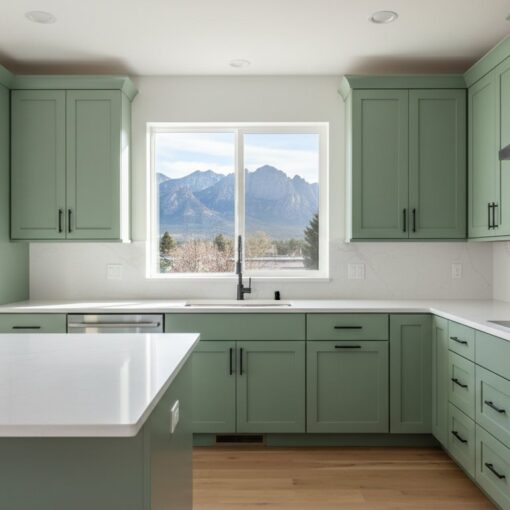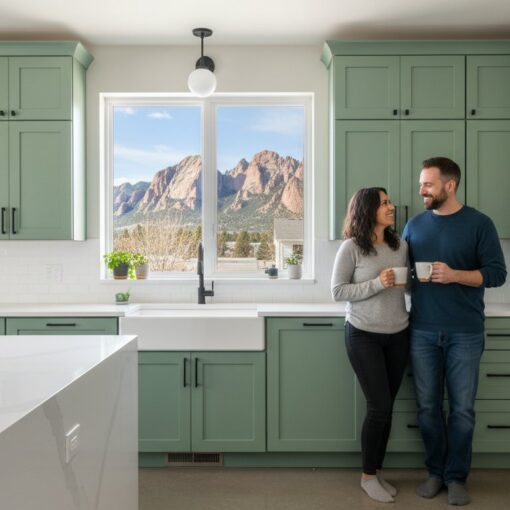
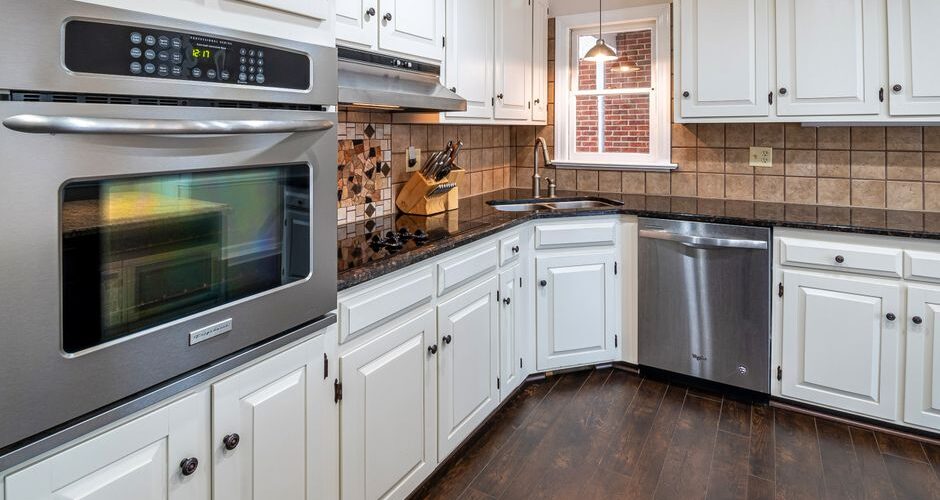
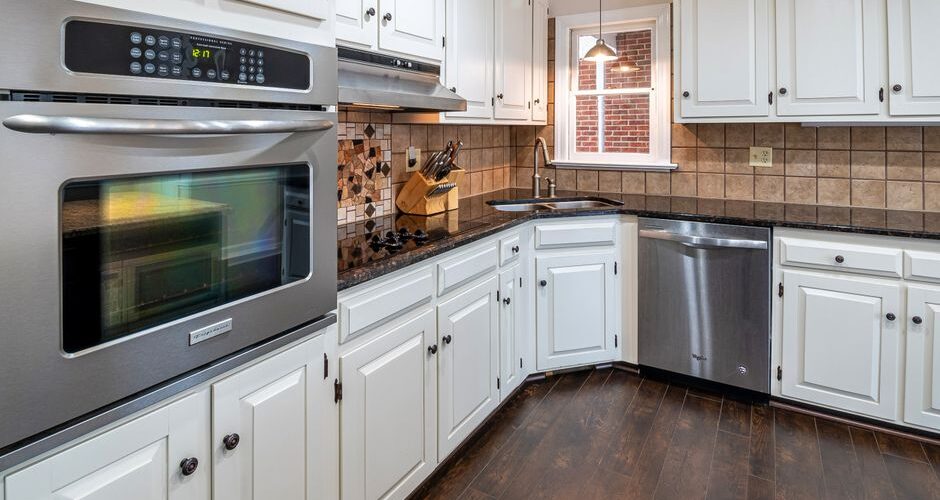
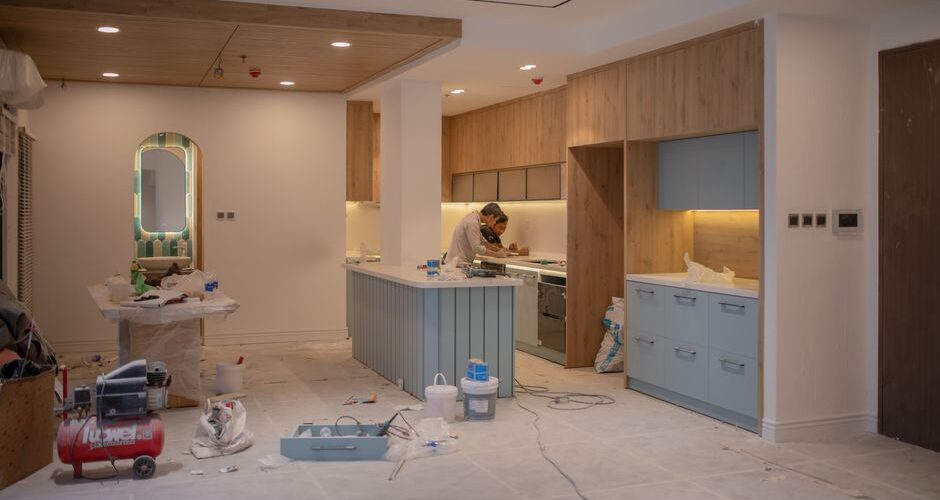
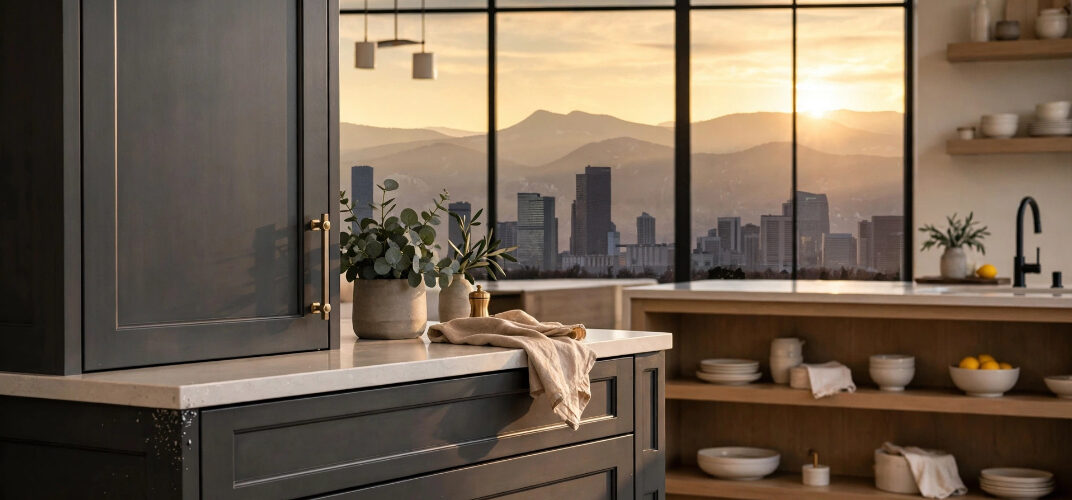


Longmont homeowners in 2026 face a familiar dilemma. The kitchen layout works, the cabinet boxes are solid, but the dated oak or faded thermofoil doors drag down the entire room. Full replacement quotes land between $15,000 and $25,000, a number that stops most renovation plans cold. Professional cabinet painting with a factory finish delivers the same visual transformation for $3,500 to $8,000 on a standard 10×10 kitchen. That is not a compromise. It is a strategic upgrade that preserves cash for other projects while achieving the smooth, durable surface you would expect from a high-end manufacturer. This article explains what a factory finish actually means when applied on-site, walks through the process step by step, and gives you the pricing and provider data to make an informed decision in Northern Colorado’s fastest-growing city.
Table of Contents
-
Why Longmont Homeowners Are Choosing Cabinet Painting Over Replacement in 2026
-
What Does “Factory Finish” Mean for On-Site Cabinet Painting?
-
Spray vs. Brush/Roller: Which Delivers a True Factory Finish?
-
Frequently Asked Questions About Cabinet Painting in Longmont
-
Ready for a Factory-Finish Kitchen in Longmont? Get Your Free Estimate
Why Longmont Homeowners Are Choosing Cabinet Painting Over Replacement in 2026
Longmont’s housing market continues to climb. Home values have appreciated steadily, and equity-rich owners are looking for ways to modernize without over-improving relative to the neighborhood. A minor kitchen remodel, which includes cabinet refinishing, delivers up to a 113% return on investment according to data tracked by cabinetrefinishing.info. That number matters when you are planning to sell within a few years or simply want to build value while enjoying an updated space.
The cost gap drives most decisions. Full cabinet replacement for an average kitchen runs $15,000 to $25,000 once you factor in demolition, new materials, countertop adjustments, and labor. Professional painting, by contrast, lands between $3,500 and $8,000. You keep the same footprint, avoid construction debris, and skip the weeks-long disruption of a tear-out.
Environmental considerations play a role too. Front Range homeowners tend to value sustainability, and painting keeps perfectly functional cabinet boxes out of the landfill. The wood is already milled, installed, and structurally sound. A new coating gives it another decade or more of service life.
Speed seals the argument.
My Review of Graco FFLP Tips for Spraying Cabinets
A professional cabinet painting crew completes most kitchens in one to three days. Compare that to the four-to-six-week timeline for custom cabinet fabrication and installation, and the choice becomes clear for busy families who cannot afford to lose their kitchen for a month.
What Does “Factory Finish” Mean for On-Site Cabinet Painting?
The phrase “factory finish” gets thrown around often in marketing, but it has a specific meaning in professional cabinet painting. It describes a surface that is uniformly smooth, free of brush marks or roller texture, and durable enough to withstand daily kitchen use for years. Achieving that result on-site requires three things: professional-grade spray equipment, bonding primers engineered for adhesion, and catalyzed coatings that cure to a hard, chemically resistant film.
The equipment matters. High-volume, low-pressure (HVLP) sprayers atomize the coating into a fine mist that lays down evenly across the door face. Airless sprayers offer faster production but require more skill to avoid runs and orange-peel texture. Either method, in experienced hands, produces a surface that rivals what comes out of a factory spray line.
The coatings matter more. Premium products like Envirolak and Renner are two-component systems. A catalyst cross-links the resin molecules as the finish cures, creating a harder, more flexible film than single-component paints. These are the same chemistries used by European cabinet manufacturers, adapted for field application by professional refinishers.
A common misconception holds that factory finishes require heat-curing in industrial ovens. While some manufacturers do bake their coatings, the real secret is chemistry and application control. A properly catalyzed finish cures at room temperature to the same hardness and durability. Colorado’s dry climate actually helps here, accelerating cure times and reducing dust nibs in the final surface. The challenge is the temperature swing. Longmont sees everything from single-digit winter mornings to 95-degree summer afternoons. Flexible coatings like Renner and Envirolak expand and contract with the wood, resisting the cracking and peeling that plague cheaper acrylic paints in this climate.
The “Factory Finish” Process: Step-by-Step
Understanding the process helps you evaluate quotes and ask the right questions when contractors walk through your kitchen. The best Longmont painters follow a disciplined sequence that leaves nothing to chance.
Step one is degreasing and cleaning. Kitchen cabinets accumulate cooking oils, hand oils, and airborne grease that form an invisible film. No primer bonds to grease. Professionals use solvent-based degreasers and scrub every surface, paying extra attention to the areas around the stove and above the range hood. Skipping this step guarantees adhesion failure within months.
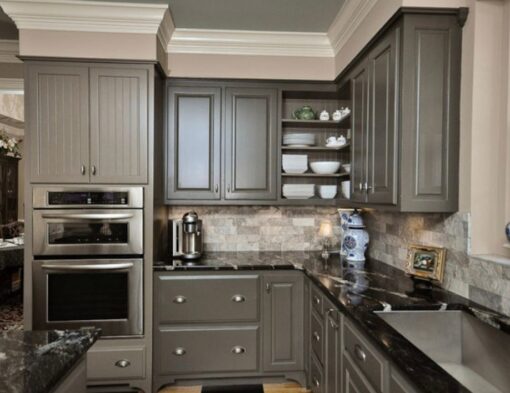
Step two is sanding and priming. The doors, drawer fronts, and face frames get scuff-sanded to create a mechanical bond profile. For oak cabinets with deep grain, this stage may include grain filling, a process that trowels a paste filler into the pores and sands it flat. Without grain filling, even a perfect spray job will show the oak texture through the finish. After sanding, a high-bond primer goes on. Primers serve two purposes: they seal the wood to prevent tannin bleed-through, which shows up as yellow or brown stains in white and light-colored finishes, and they create a uniform base that the topcoat can grip.
Step three is spray application. Doors and drawer fronts come off and move to a designated spray area. Many Longmont painters set up portable spray booths in garages or on driveways, using plastic sheeting to control dust and contain overspray. The face frames and cabinet boxes get masked and sprayed in place. Multiple thin coats go on, with controlled flash time between each. Thin coats level better, cure faster, and resist sagging.
Professional Cabinet Refinishing
The goal is three to four coats of finish, building to a film thickness that feels substantial under your fingers.
Step four is curing and reassembly. Catalyzed finishes dry to the touch within hours but take several days to reach full chemical cure. During this window, the finish is vulnerable to scratches and dings. Good painters advise waiting 48 to 72 hours before heavy use. Doors and drawer fronts get rehung with care, using the original hinge locations to avoid drilling new holes. Most painters reuse existing hinges unless you supply replacements. If you want new hardware, have it ready before the crew arrives so they can install it during reassembly.
2026 Pricing Guide: Cabinet Painting in Longmont, CO
Local market data places the cost of painting a standard 10×10 kitchen in the Longmont and Boulder area between $3,500 and $8,000. The range reflects differences in scope, materials, and the condition of the existing cabinets.
Several factors push a quote toward the higher end. Oak cabinets with open grain require grain filling, which adds labor hours. A kitchen with 30 doors and drawers costs more than one with 20. Color changes from dark stain to white paint demand extra primer coats to block bleed-through. Premium coatings like Renner and Envirolak cost more per gallon than standard latex but deliver the durability that justifies the investment.
For budgeting purposes, expect to pay roughly $50 to $75 per linear foot for base cabinets and an additional $20 to $30 per linear foot for uppers. A kitchen with 20 linear feet of lowers and 15 linear feet of uppers would fall around $1,300 to $1,950 for the bases and $300 to $450 for the uppers, landing in the $1,600 to $2,400 range before factoring in island cabinets, pantry units, or specialty finishes.
Ask about costs that may not appear in the base quote. Hardware replacement, if you want new knobs and pulls, is typically a separate line item. Some painters charge for color matching if you want a custom shade not in their standard palette. Disposal fees apply if you are replacing some doors rather than painting them. Get these details in writing before signing a contract.
Semi-Gloss and Color Trends for Longmont Kitchens in 2026
Semi-gloss is the standard sheen for painted cabinets, and for good reason. It strikes a balance between aesthetics and practicality. The surface has enough gloss to reflect light and resist fingerprints, but not so much that it highlights every imperfection in the underlying wood. Joanna Gaines, whose design influence remains strong in 2026, consistently specifies semi-gloss on her cabinet projects. The finish reads as intentional and polished without competing with other textures and colors in the room.
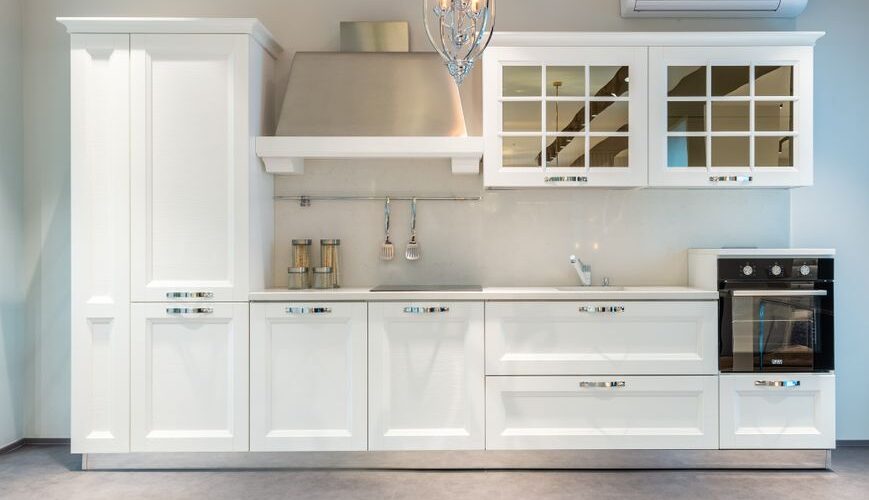
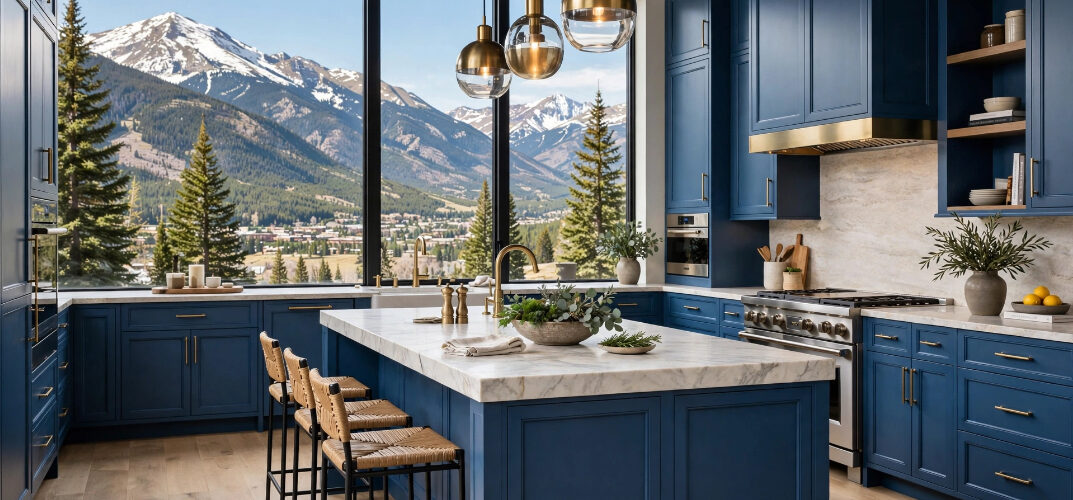
Color trends in Northern Colorado lean toward the modern farmhouse palette that has defined the region’s newer builds. Warm whites like Sherwin-Williams Alabaster and Benjamin Moore White Dove dominate, offering a clean backdrop that brightens kitchens without feeling sterile. Deep navy blues, particularly on island cabinets, create contrast against white perimeter cabinets. Sage green is gaining ground as homeowners look for color that feels organic and connected to Colorado’s natural landscape.
Custom color matching is widely available. Most Longmont painters, including Exo Painting and Paint Pals, can match any Sherwin-Williams or Benjamin Moore swatch you bring in. If you have a specific shade in mind from a designer collection or a competitor’s fan deck, they can formulate it in a cabinet-grade coating.
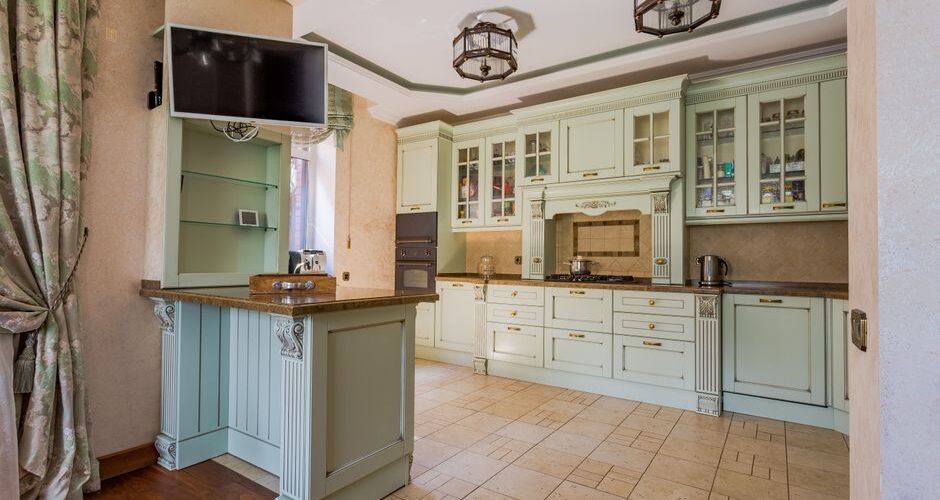
Glazing deserves a mention for homeowners with raised-panel or shaker-style doors. Glaze is a translucent tinted coating wiped into the recesses and corners of the door profile, then partially removed to leave a shadow effect that emphasizes the detail. It adds depth and an antique character that flat paint cannot replicate. Not every painter offers glazing. It is a specialty skill that requires an artistic eye and additional labor. If the look appeals to you, ask specifically whether your contractor has a glazing portfolio.
How Long Does a Factory-Painted Cabinet Finish Last?
A professionally applied factory finish using catalyzed coatings like Envirolak or Renner can last up to ten years under normal kitchen conditions. That figure assumes proper prep, adequate film build, and reasonable care from the homeowner.
Longevity depends on environmental factors. South-facing kitchens in Longmont get intense afternoon sun that can fade pigments and break down resin binders over time. Window coverings help. Humidity fluctuations from cooking, dishwashing, and seasonal changes stress the finish film, which is why flexible, catalyzed coatings outperform rigid, single-component paints. Homes with whole-house humidifiers or air conditioning see less dimensional movement in the wood and fewer finish failures.
Warranties vary by contractor. Paint Pals, for example, offers tiered warranties of two, four, and seven years depending on the scope and materials selected. A written warranty signals that the painter stands behind their prep and application. Ask what the warranty covers. Some exclude damage from cleaning products, impacts, or normal wear. Others cover peeling and adhesion failure unconditionally for the warranty period.
Maintenance is straightforward. Wipe cabinets with a soft microfiber cloth dampened with water and a small amount of mild dish soap. Avoid abrasive pads, powdered cleaners, and anything containing ammonia or bleach. These dull the semi-gloss sheen and can etch the finish over time. Dry the surface after cleaning to prevent water spots.
Spray vs. Brush/Roller: Which Delivers a True Factory Finish?
Spray application is the only method that produces a genuinely factory-like surface. The atomized coating lands in a continuous film with no directional texture. Light reflects evenly across the door face. There are no brush strokes cutting through the sheen, no stipple pattern from a roller nap. For homeowners who want their painted cabinets to look like they came from a high-end manufacturer, spray is non-negotiable.
Brush and roller application has its place. It costs less because the painter skips the extensive masking and containment required for spraying. There is no overspray to manage, no portable booth to set up. The trade-off is visible texture. Even the finest brush leaves micro-grooves in the finish. Rollers, even smooth foam types, deposit a subtle orange-peel surface. From a distance, the cabinets look painted. Up close, they look hand-painted. For rental properties, budget flips, or utility rooms where perfection is not the goal, brush and roller work fine.
The cost difference reflects the labor. Spray jobs typically add 15 to 25 percent to the total quote. The masking alone can take half a day for an average kitchen. Every surface that is not getting painted, including countertops, floors, appliances, and adjacent walls, must be covered with plastic and tape. The spray area needs ventilation and dust control. It is time-intensive work, but the result justifies the expense for most owner-occupied homes.
If a contractor quotes you a price that seems too good to be true, ask whether they spray or brush. Some painters quote low to win the job, then brush the cabinets and call it a factory finish. Insist on seeing examples of their spray work, either in a portfolio or, better yet, in a completed kitchen you can visit.
Top-Rated Cabinet Painters in Longmont, CO
Longmont has several highly rated cabinet painting specialists. Yelp data from 2026 shows a competitive field with strong review scores across the board.
Cabinet Restoration holds a 4.9-star rating across 35 reviews. They focus exclusively on cabinet refinishing, which means their entire process is built around this one service. Homeowners praise their attention to prep and their willingness to walk through the process in detail during estimates.
Xtreme Painting Plus also carries a 4.9-star rating, with 42 reviews. They are a full-service painting company that handles cabinets, interiors, exteriors, and epoxy garage floors. The epoxy floor service is a unique cross-sell. If you are planning multiple upgrades, bundling cabinet painting with a garage floor coating may yield scheduling and pricing efficiencies.
5280 Cabinet Coatings sits at a perfect 5.0 stars, though with only five reviews. They position themselves as a boutique provider for high-end custom color work. For homeowners with very specific design visions or unusual cabinet configurations, a smaller, specialized shop may offer the personalized attention that larger crews cannot match.
When you schedule free estimates, come prepared with questions. Ask whether they use Envirolak, Renner, or another catalyzed coating. Ask whether they spray or brush. Ask for a written warranty and what it covers. If you live in a neighborhood with an HOA that regulates exterior colors, ask whether the painter can help with the approval process. Some Longmont painters, including Exo Painting, offer HOA color approval assistance as a value-added service.
Frequently Asked Questions About Cabinet Painting in Longmont
Do factory-painted cabinets hold up? Yes. With proper surface preparation and premium catalyzed coatings, a professionally painted cabinet finish lasts up to ten years. The key variables are prep quality, coating chemistry, and how the homeowner maintains the surface.
What sheen does Joanna Gaines use on cabinets? Semi-gloss. It provides a sleek, wipeable surface that reflects light without creating harsh glare or competing with other finishes in the kitchen.
Can you paint bathroom cabinets too? Yes. The process is essentially the same as kitchen cabinets. The one difference is the primer. Bathrooms experience higher humidity and more frequent temperature swings. Ask your painter to use a moisture-resistant primer formulated for high-humidity environments to prevent adhesion problems down the line.
Do painters replace hinges and hardware? Most do not include new hinges in their base pricing. The standard practice is to remove, label, and reinstall existing hardware. If you want new hinges, pulls, or knobs, purchase them ahead of time and have them on-site when the crew arrives. Some painters will install new hardware for an additional fee.
Is low-VOC paint available for cabinet painting? Yes. Many Longmont painters offer low-VOC or zero-VOC coating options. Envirolak, in particular, markets itself as an environmentally conscious finish with reduced solvent content. If indoor air quality during and after the project matters to you, ask about VOC levels during your estimate.
Ready for a Factory-Finish Kitchen in Longmont? Get Your Free Estimate
Call today or fill out the online form for a no-obligation quote on cabinet painting in Longmont with a true factory finish.
Mention this article to receive a 10% discount on your color consultation.
Serving all Longmont neighborhoods including Prospect New Town, Old Town, Ute Creek, Fox Hill, and surrounding areas.