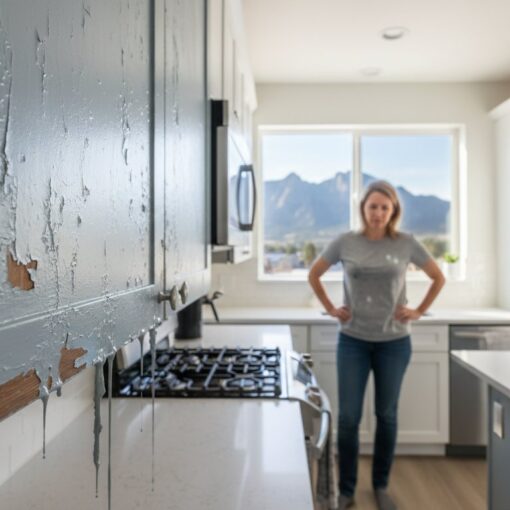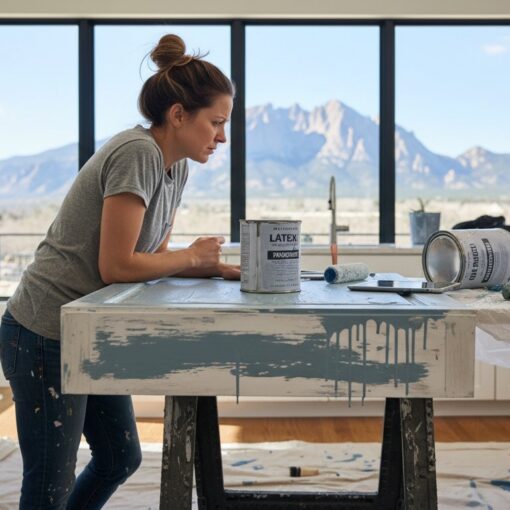
Most homeowners in Boulder are unknowingly ruining their $30,000 kitchens by letting amateur painters use standard latex house paint on their cabinetry. It’s a common mistake that leads to peeling and sticky surfaces within 12 months of application. You likely want a kitchen that looks brand new without the $50,000 price tag of a full replacement, but you’re worried about a “painted look” that looks cheap. Determining what is the best finish for kitchen cabinets is the most critical decision you’ll make for your remodel. Since 1985, we’ve seen how the dry Colorado climate destroys sub-par materials.
You deserve a finish that’s easy to wipe down and won’t fail when the humidity drops to 10 percent in the winter. We promise to show you how to identify factory-grade, industrial coatings that provide a smooth, durable surface. This guide covers the specific technical requirements for the Front Range housing market. We’ll compare industrial coatings against house paint so you can increase your home’s resale value with confidence.
Key Takeaways
- Identify what is the best finish for kitchen cabinets by balancing chemical resistance and impact durability specifically for the Front Range climate.
- Understand the critical difference between standard house paint and professional industrial coatings to ensure a long-lasting, factory-grade result.
- Learn why preparation is 90% of the job and how specialized cleaning and sanding prevent the common failures seen by general house painters.
- Compare matte, satin, and semi-gloss sheens to find the perfect balance between aesthetic appeal and the ability to hide fingerprints and water spots.
- Discover how a professional spray application achieves a flawless, brush-mark-free surface that looks and feels like brand-new cabinetry.
Defining the “Best” Cabinet Finish for Modern Kitchens
Determining what is the best finish for kitchen cabinets requires a balance between chemical resistance and long-term durability. A professional finish isn’t just a layer of color. It’s a high-performance coating designed to withstand the daily rigors of a working kitchen. Many homeowners in Boulder and the Denver-metro area make the mistake of hiring house painters who use standard architectural paint. This is the wrong choice. Standard latex paint is too soft for surfaces that get touched hundreds of times a day. Quality Kitchen cabinet construction demands a finish that bonds at a molecular level to the wood. In Colorado, our environment presents unique challenges. Low humidity levels often hovering below 15 percent and sudden temperature swings cause wood to expand and contract. A factory-like finish provides the flexibility needed to prevent cracking while maintaining a hard, protective shell.
To better understand this concept, watch this helpful video:
Our team has 45 plus years of experience refinishing cabinets in Lafayette, Arvada, and Broomfield. We know that when homeowners ask what is the best finish for kitchen cabinets, they’re looking for a result that looks new and stays that way. A factory-like finish is the gold standard because it’s applied in a controlled environment using specialized spray equipment. This process eliminates brush marks and ensures an even, durable coat that resists the oils and acids found in every kitchen.
Durability vs. Aesthetics: Finding the Sweet Spot
A premium finish must resist acids like lemon juice and common cooking oils without softening. It should maintain its original color for 10 years or more without yellowing. The feel of the cabinet is just as vital as the look. Professional spray applications result in a surface that’s smooth to the touch. It shouldn’t feel sticky or tacky. This is a common failure of DIY products or amateur brush-and-roll jobs that don’t use professional-grade hard-wearing coatings.
The ROI of a High-Quality Finish in the Boulder Market
In the current Denver-metro housing market, a professional kitchen update offers a high return on investment. A full kitchen replacement often costs $40,000 to $70,000. Professional refinishing provides the same aesthetic impact for about 20 percent of that price. Choosing a cheap finish is a financial trap. These low-quality coatings often peel or chip within 24 months. This forces homeowners to pay for a complete strip and redo, which doubles the cost of the project in the long run.
Comparing Top Cabinet Finish Options: Paint, Stain, and Industrial Coatings
Choosing between paint, stain, and industrial coatings is the most critical decision you’ll make for your kitchen remodel. Most homeowners ask what is the best finish for kitchen cabinets without realizing that “cabinet painting” is often a misnomer. Amateur house painters use standard latex or acrylic wall paint that typically fails within 12 to 24 months. Professionals use industrial-grade coatings designed for the high-traffic environment of a kitchen. These coatings resist grease, moisture, and frequent cleaning in ways that standard store-bought paint cannot.
Our team has 45 plus years of experience refinishing kitchens in Boulder and Denver. We’ve seen how traditional wood stains showcase natural grain but remain difficult to spot repair once the clear coat wears down. For 2026, the industry has shifted toward high-performance, low VOC (Volatile Organic Compound) finishes. These modern coatings provide a factory-smooth surface while meeting strict environmental standards, keeping your home safe from harsh chemical odors.
The Professional Choice: 2K Polyurethane and Conversion Varnish
2K Polyurethane and Conversion Varnish are the elite choices for a reason. A “two-part” (2K) coating uses a chemical catalyst or hardener mixed into the finish right before application. This creates a cross-linked bond that is 40% to 50% harder than standard air-dried finishes. Conversion varnish is the industry standard for achieving an ultra-smooth, factory-style look that resists moisture better than any consumer-grade product.
- Chemical Resistance: 2K coatings withstand household cleaners, oils, and food acids.
- Durability: The hardener ensures the finish won’t soften or become “gummy” over time.
- Application: These materials require specialized HVLP spray equipment; they cannot be applied with a brush or roller.
Stained vs. Painted Finishes: Which Hides Wear Better?
Stained finishes are excellent for showcasing the natural character of wood. While they hide dust and minor scratches effectively, they’re notoriously hard to touch up without leaving a visible patch. Solid-color industrial coatings are currently the top answer for what is the best finish for kitchen cabinets because they offer a clean, modern aesthetic with superior moisture protection. If you want the best of both worlds, cabinet glazing adds depth and a vintage feel to a solid painted base, highlighting the architectural details of your door styles.
If you’re ready to see the difference these professional coatings make, you can request a professional evaluation for your kitchen. Solid coatings provide a 100% opaque finish that covers old wood grain, while stains rely on the wood’s existing condition. In the Denver housing market, we see 85% of homeowners choosing solid industrial coatings for their durability and high resale value. These systems provide a finish that looks and feels like it came straight from the manufacturer’s floor.

Why Preparation is the Most Critical Ingredient in Any Finish
Homeowners often ask what is the best finish for kitchen cabinets, but they forget that the finish only looks as good as the surface underneath. General house painters fail at cabinet jobs 95% of the time because they treat wood like drywall. They don’t understand that kitchen wood is saturated with grease and oils. Our philosophy at Cabinet Refinishing Boulder is simple: quality is 90% preparation and 10% application. If you skip the prep, the most expensive coating in the world will peel within 12 months.
You need professional-grade primers to stop ghosting and tannin bleed. Tannins are natural dyes in woods like oak or cherry that soak through cheap paint, creating ugly yellow or brown stains. We use high-quality latex caulking to seal every seam. This prevents the black line effect where the wood expands and contracts. Without these specific steps, your kitchen renovation will look like a DIY project gone wrong.
The Meticulous Preparation Process
Cleaning is the first step in our system. We remove 30 years of grease and cooking oils using industrial-strength degreasers. Next, we perform mechanical sanding on every door and frame. This creates a profile, or a specific texture, for the new finish to grab onto. Our professional masking process is a 5-hour task. We protect your Boulder home’s floors, walls, and appliances with heavy-duty plastic and specialized tape to ensure zero overspray.
- Industrial Degreasing: Removes hidden oils that cause paint failure.
- Mechanical Sanding: Ensures the substrate is perfectly smooth and ready for bonding.
- Total Masking: Protects your kitchen environment from dust and spray.
Correcting Past Mistakes: Refinishing Bad Paint Jobs
We frequently see cabinets ruined by amateur house painters using thick, gummy latex paint. These bad jobs feel sticky and show every brush mark. To fix this, we strip or sand the surface down to a stable substrate. You cannot achieve a factory finish over a failing layer of cheap paint. A smooth, professional surface is the only way to get a high-end look. We have fixed over 250 botched amateur jobs in the Denver area since 1985. Determining what is the best finish for kitchen cabinets starts with a perfectly level, clean surface that allows the coating to lay flat and bond forever.
Cabinet Refinishing Boulder specializes in turning these failures into success stories. We use 40 plus years of experience to ensure your cabinets don’t just look good today, but stay durable for a decade. You can text us the number of doors and the number of drawers with pictures to get a direct quote on your project.
Choosing Your Sheen: Matte, Satin, or Semi-Gloss?
Deciding on the right glow for your cabinetry is just as vital as the color itself. Sheen refers to the amount of light reflected off the surface of the dried coating. When you ask what is the best finish for kitchen cabinets, the answer often depends on your kitchen’s lighting and how much maintenance you’re willing to perform. High-sheen surfaces act like mirrors, bouncing light around the room. Low-sheen surfaces absorb light, creating a softer, more muted appearance. In the bright, high-altitude light found in Boulder and Lafayette, choosing the wrong sheen can lead to unwanted glare or a dull, lifeless look.
Satin and Semi-Gloss: The Durability Leaders
Satin is currently the most requested sheen for Cabinet Refinishing Boulder projects, accounting for roughly 85% of our 2026 contracts. It offers a soft, pearlescent glow that hides minor surface imperfections and resists fingerprints better than any other level. It’s the industry standard for a reason. Semi-gloss provides a more reflective, high-end look that’s incredibly easy to wipe clean. You must be careful; the higher the gloss, the more it reveals every grain of wood or tiny dent. Our professional spray application ensures these flaws are minimized, but a high-gloss finish on poor-quality wood will always look subpar. If you have polished quartz countertops, a satin sheen on the cabinets provides a sophisticated contrast that prevents the room from feeling too shiny.
Matte Finishes: The Modern, High-End Risk
Matte finishes are trending in contemporary Denver homes for their velvety, ultra-modern aesthetic. They look stunning in professional photos, but they come with significant maintenance trade-offs. Matte surfaces lack the protective resin thickness of higher sheens, making them prone to burnishing. This happens when you scrub a spot too hard and create a permanent shiny patch. We generally recommend matte finishes only for low-traffic areas or for homeowners who commit to using microfiber cloths and gentle cleaners. After 45 years in the industry, we’ve seen that matte finishes often require touch-ups within 3 to 5 years in active households. When determining what is the best finish for kitchen cabinets for your specific lifestyle, consider how much manual labor you plan to use during cleanup.
Matching your sheen to existing elements is a science. If your backsplash features handmade, iridescent tiles, a semi-gloss cabinet might compete for attention. A satin finish allows the tile to stand out. Our team helps you evaluate these factors during our consultation to ensure your kitchen looks cohesive and professional. We focus on factory-like results that last for decades, not just a few seasons.
The Cabinet Refinishing Boulder Advantage: Our Factory-Finish System
Since 1985, Cabinet Refinishing Boulder has perfected a specialized process that general house painters simply cannot match. Our 45 years of hands-on experience in the Colorado front range means we understand exactly how local temperature shifts and low humidity affect coating adhesion. We don’t rely on brushes or rollers that leave behind ugly textures. Instead, we use a professional spray application technique. This high-performance system creates a flawless, mirror-smooth surface that looks like it came straight from a high-end showroom. Determining what is the best finish for kitchen cabinets depends on the application method as much as the product itself; a factory-grade spray finish is the only way to ensure a durable, mark-free result.
Our commitment to the Boulder, Broomfield, and Louisville communities is built on transparency and efficiency. We know you want a beautiful kitchen without a month of construction. That is why we developed a streamlined quote system. You don’t have to schedule a long in-home consultation just to get a price. You can text us the number of doors and drawers in your kitchen along with a few photos. We provide a fast, accurate estimate so you can plan your project with confidence.
A Proven System for Long-Lasting Results
Our “Factory Finish” is a multi-step chemical system, not just a coat of paint. We use industrial-strength cleaners to strip away every trace of cooking grease and oils. We follow this with specialized high-build primers that seal the wood grain and prevent “tannin bleed.” Finally, we apply catalyzed topcoats designed specifically for the high-traffic environment of a kitchen. This approach is superior to a standard paint job because the coatings bond at a molecular level to the substrate.
- Minimal Disruption: Most projects in Boulder or Denver are completed in 5 to 7 days.
- Precision Masking: We protect your floors, walls, and appliances with professional-grade materials.
- Durability: Our finishes resist chipping and staining better than any DIY or hardware store product.
Ready for a Transformation in Boulder or Denver?
Choosing kitchen cabinet painting from a local expert is a smart investment that can save you 60% or more compared to the cost of a full kitchen replacement. It updates the look of your home instantly while adding significant market value. If you are researching what is the best finish for kitchen cabinets for your 2026 remodel, our catalyzed spray system is the gold standard for longevity.
Take the next step toward your dream kitchen today. For a detailed breakdown of investment levels, visit our cabinet refinishing quote page. We are ready to bring our 45 years of expertise to your home in Boulder, Lafayette, or Broomfield to provide a result that looks brand new and stays that way for years to come.
Get the Professional Factory Finish Your Kitchen Deserves
Choosing the right look for your home comes down to durability and meticulous preparation. Amateur house painters often skip the vital cleaning, sanding, and masking steps that lead to peeling and failure. Cabinet Refinishing Boulder uses specialized factory-grade spray equipment to ensure your kitchen looks brand new. With 45 years of local experience in Boulder County, we know why industrial coatings outperform standard retail paints every time. Our team has completed hundreds of projects since 1985; providing a premium alternative to expensive cabinet replacements.
When homeowners ask what is the best finish for kitchen cabinets, the answer is always a high-performance industrial coating applied through a professional factory-finish system. This approach provides a smooth, hard-wearing surface that resists daily wear and tear. Don’t risk your investment with unqualified contractors who lack the proper equipment and experience. It’s much faster and less disruptive than a full remodel. We’ve spent decades perfecting our process to deliver results that last. You can trust our local expertise to handle every detail of your kitchen transformation.
Get your free cabinet refinishing estimate; text us your photos today!
We look forward to helping you create a kitchen you’ll love for years.
Frequently Asked Questions
Is a water-based or oil-based finish better for kitchen cabinets?
Modern water-based industrial coatings are superior to oil-based finishes for kitchen cabinets. While old oil paints yellow within 24 to 36 months, our water-borne alkyd urethanes maintain their color and emit 90% fewer VOCs. These professional coatings provide a hard, furniture-grade surface that doesn’t become brittle or crack like traditional oil products.
What is the most durable finish for a high-traffic family kitchen?
A 2K polyurethane or factory-grade conversion varnish is the most durable option for a high-traffic kitchen. These coatings are 4 times harder than standard architectural paint and resist chemicals, food acids, and physical impacts. When homeowners ask what is the best finish for kitchen cabinets, we recommend these industrial-strength spray applications because they withstand 1,000 plus scrub cycles without losing their sheen.
Can you put a professional finish over old laminate or thermofoil cabinets?
Yes, you can apply a professional finish over laminate or thermofoil provided the original adhesive is still intact. We use a specialized 3 step bonding process that includes a thorough cleaning, mechanical sanding with 220-grit abrasives, and a high-adhesion primer. This system ensures a permanent bond on 98% of laminate surfaces, preventing the peeling and chipping often seen with amateur paint jobs.
How long does a professional factory-style finish actually last?
A professional factory-style finish typically lasts between 10 and 15 years with standard kitchen use. Our 45 years of local experience proves that spray-applied industrial coatings outlast hand-brushed store-bought paint by over 300%. Because we focus on meticulous preparation and professional-grade masking in every Boulder home, the finish stays bonded without wearing thin on high-contact edges.
Is satin or semi-gloss better for hiding fingerprints on cabinets?
Satin is the better choice for hiding fingerprints and daily smudges on your cabinetry. While semi-gloss finishes reflect 70% of light and highlight every oily mark, a satin finish reflects only 30% of light. This lower reflection level masks surface imperfections and reduces the need for daily cleaning, which is why 85% of our Denver clients choose a satin sheen.
Why do general house painters struggle with cabinet finishes?
General house painters struggle because they treat cabinets like walls rather than fine furniture. Cabinetry requires specialized HVLP spray equipment, dust-controlled environments, and industrial coatings that most house painters don’t carry. We’ve repaired 50 plus kitchens in the last year where general contractors used the wrong rollers or failed to remove grease properly before painting.
Does a professional cabinet finish increase my home’s resale value in Colorado?
A professional cabinet finish provides a 65% to 80% return on investment for Colorado homeowners looking to sell. In competitive markets like Lafayette and Arvada, a updated kitchen is the primary selling point for buyers. Refinishing your cabinets for $5,000 can often add $15,000 to your final sale price, making it a vital factor for a successful real estate listing.
How do I clean and maintain my newly refinished cabinets?
Clean your refinished cabinets using a soft microfiber cloth dampened with warm water and a single drop of mild dish soap. Don’t use ammonia, bleach, or abrasive scouring pads that can micro-scratch the protective clear coat. We recommend a light wipe-down once every 14 days to prevent cooking grease from hardening on the surface, keeping your kitchen in showroom condition for years.