
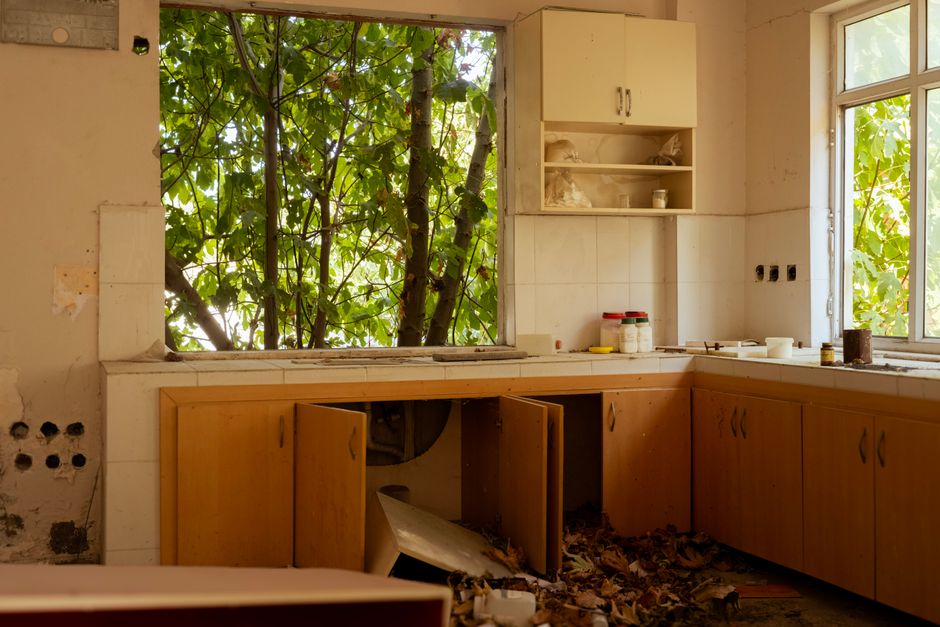
Yes, in most cases insurance covers cabinet refinishing after smoke damage, and for Louisville and Superior homeowners it is often the difference between an $8,000–$15,000 refinishing claim and a $40,000–$70,000 replacement claim. We are a Boulder County refinishing crew that worked through the Marshall Fire rebuild, and this guide is written for homeowners in Boulder, Longmont, Lafayette, Louisville, Superior, Erie and Niwot who need straight answers about smoke-damaged cabinets, insurance, and whether to refinish or replace.
Table of Contents
- What did the Marshall Fire actually do to cabinets in Louisville and Superior homes?
- Why is refinishing usually smarter than replacing after smoke damage?
- What does smoke damage to cabinets look like — and how do you prove it to an insurer?
- How does professional cabinet refinishing remove smoke smell for good?
- How does Cabinet, painting, and refinishing in all of Boulder county handle smoke-damaged cabinets?
- What does cabinet refinishing after smoke damage cost in Boulder County in 2026?
- Will the smoke smell come back after refinishing?
- Can you save oak cabinets after smoke damage — or do they need to be replaced?
- Key Takeaways
- References
What did the Marshall Fire actually do to cabinets in Louisville and Superior homes?
The Marshall Fire began on December 30, 2021 and affected over 2,000 residential structures in unincorporated Boulder County, the City of Louisville, and the Town of Superior, according to the FEMA MAT Homeowner's Guide. Smoke reached thousands more homes that never burned. That smoke did not just pass through. It settled into cabinet joints, drawer boxes, and door edges, and it is still causing problems for homeowners in Boulder, Longmont, Lafayette, Louisville, Superior, Erie and Niwot in 2026.
Soot is composed of small, dark-colored particles measuring 0.1 micrometer in diameter, while ash is composed of larger, light-colored particles measuring 1 to 10 micrometers, according to the FEMA MAT Homeowner's Guide. Those tiny soot particles work their way into places a rag never reaches. We find them packed into hinge mortises, behind drawer slides, and inside the hollow spaces of cabinet doors. The residue is oily and alkaline, and it does not wipe off with a standard cleaner.

Cabinet finishes fail after smoke exposure in predictable ways. Lacquer and older solvent finishes yellow and lift. Latex paint traps odor and peels. Oak grain holds smoke smell deep in its open pores. Homeowners in Louisville and Superior tell us the same story: the kitchen looks fine from across the room, but open a drawer and the smell comes back. That is trapped smoke residue, not imagination.
Metal hardware corrodes too. Fire residue can permanently etch metal surfaces due to its extreme levels of alkalinity or acidity if not removed in a timely manner, according to the FEMA MAT Homeowner's Guide. Hinges, pulls, and drawer slides that sat in smoke for weeks often show pitting or rust. We check hardware on every smoke damage evaluation in Boulder County because corroded hardware tells us how aggressive the residue was.
Why is refinishing usually smarter than replacing after smoke damage?
Refinishing is usually smarter than replacing after smoke damage because restoring cabinetry is often far more cost-effective than total replacement when joinery and structure are intact. According to Furniture Medic, cabinetry, wood flooring, and decorative millwork can be restored for much less than replacement cost when only surface damage is present. Replacement makes sense only when structural parts are destroyed or excessively charred. In our experience across Boulder, Longmont, Lafayette, Louisville, Superior, Erie and Niwot, most smoke-damaged kitchens fall into the restorable category.
The insurance math is straightforward. Refinishing claims typically run $8,000 to $15,000. New cabinets typically run $40,000 to $70,000. That is not a small gap. When a homeowner pushes for replacement on cabinets that could be refinished, the claim eats into policy limits that may be needed elsewhere. The Boulder County Assessor estimated Marshall Fire losses at $513 million, according to United Policyholders. Every dollar of settlement matters.

Underinsurance makes the refinishing decision even more important. United Policyholders estimates that two-thirds of wildfire victims are underinsured, according to United Policyholders. A homeowner with a $250,000 contents and structure limit cannot afford to spend $60,000 on cabinets when a $12,000 refinish solves the problem. Stretching the settlement means more money for the roof, the flooring, and the hundred other things smoke touched.
Timeline matters too. Refinishing takes days on site. Replacement means demolition, disposal, new cabinet construction, and weeks or months of disruption. For a family already displaced by fire recovery, getting the kitchen functional again is worth a lot. We have refinished smoke-damaged kitchens in Louisville and Superior in four to five days, with homeowners staying in the house the whole time.
What does smoke damage to cabinets look like — and how do you prove it to an insurer?
Smoke damage to cabinets looks like yellowed finish, darkened door edges, soot inside drawer boxes, and a smell that returns when cabinets are opened. Visible soot or ash is enough to justify cleaning per the Colorado Division of Insurance, according to 9News. Testing should not be required when residue is visible. That means a homeowner in Superior or Louisville does not need a lab report to get a cleaning claim started.
Documentation still matters. Photograph cabinet interiors, drawer boxes, door backs, and any yellowing or film on the finish. Note the smell and when you notice it. Keep a written log of dates and observations. If a homeowner hires their own testing company and results support the homeowner's assertion, the insurance company should reimburse for the testing and pay for additional mitigation or cleaning, according to 9News.
There is a risk to testing without documentation. If testing results do not show toxins or residue, the homeowner will not be reimbursed and additional living expenses payments will cease, according to 9News. That is a hard outcome. Before you order any test, document visible residue and smell thoroughly. We tell homeowners in Boulder, Longmont, Lafayette, Louisville, Superior, Erie and Niwot the same thing: take photos first, then test if you must.
How does professional cabinet refinishing remove smoke smell for good?
Professional cabinet refinishing removes smoke smell for good by degreasing every surface, sealing with shellac, grain-filling open pores, and spraying a durable factory finish. The first step is degreasing. Soot is oily and alkaline, and a finish will not bond over residue, according to the FEMA MAT Homeowner's Guide. We clean cabinet boxes, doors, drawer fronts, and interiors with degreasers that break down that oily film. Skipping this step means the new finish fails.
The second step is a shellac-based odor block on cabinet boxes and doors. Shellac seals trapped smoke molecules so they cannot off-gas into the kitchen. This is the step that stops the smell. We apply it to every surface, including drawer interiors and the backs of doors, because smoke gets everywhere. A homeowner in Erie or Niwot with a persistent smoke smell needs this sealing step, not just a fresh coat of paint.
The third step is grain fill on oak. Oak's open pores absorb smoke and old finish, and without grain fill those pores telegraph through the new finish and hold odor. We grain-fill every oak kitchen we refinish in Boulder County. It is non-negotiable for smoke-damaged oak.
The final step is a sprayed factory 2K polyurethane finish. This is not latex. Latex traps odor and fails in dry Colorado air. A 2K finish cures hard, resists moisture and cleaning chemicals, and encapsulates the sealed surface. According to Furniture Medic, restoring smoke-damaged wood is more cost-effective than replacement when the structure is sound, and the right finish is what makes the restoration last.
How does Cabinet, painting, and refinishing in all of Boulder county handle smoke-damaged cabinets?
We handle smoke-damaged cabinets with a Boulder County-only process built for the Marshall Fire rebuild. We work in Boulder, Longmont, Lafayette, Louisville, Superior, Erie and Niwot, and we were here during the recovery. We work directly with insurance adjusters, which means we document the damage, write the scope, and explain the refinishing process in terms adjusters understand. Homeowners do not have to translate contractor language into insurance language.
Our process starts with a full degrease of every cabinet surface. Then we apply a shellac-based odor block to seal trapped smoke molecules. On oak cabinets we grain-fill every open pore so the new finish does not telegraph and the smell does not return. Then we spray a factory 2K polyurethane finish. The 2K finish is low-VOC and suited to Colorado altitude and dry air, which matters for health-conscious homeowners in Boulder County.
We use W-2 crews, not subcontractors. Our crew works in booties with HEPA containment so the rest of the house stays clean. Homeowners can stay in their home during the project. Most kitchens take four to five days from start to finish. That timeline matters for families in Louisville and Superior who have already spent too long dealing with fire recovery.
We offer a free smoke damage cabinet evaluation across Boulder County. We look at door integrity, box condition, hardware corrosion, veneer lift, and the extent of smoke penetration. Then we tell you honestly whether refinishing will work or whether replacement is the better call. We have seen enough smoke-damaged kitchens in Boulder, Longmont, Lafayette, Louisville, Superior, Erie and Niwot to know the difference.
What does cabinet refinishing after smoke damage cost in Boulder County in 2026?
Cabinet refinishing after smoke damage in Boulder County typically costs $4,500 to $10,500 in 2026, depending on kitchen size and door count. Per-door pricing runs $95 to $155. Smoke odor block adds $500 to $900 because it requires additional prep and an extra sealing step on every surface. Heavy soot cleaning and grain fill on oak are priced separately based on the condition of the cabinets. These are the numbers we quote across Boulder, Longmont, Lafayette, Louisville, Superior, Erie and Niwot.
City-by-city costs vary slightly across Boulder County. Labor rates and home sizes differ, and older homes in Boulder and Louisville often need more prep than newer builds in Erie and Superior. The table below shows typical refinishing ranges by city for a standard 20-door kitchen in 2026.
| Boulder County City | Typical Refinishing Range (20-door kitchen) |
|---|---|
| Boulder | $5,500–$10,500 |
| Longmont | $5,000–$9,500 |
| Lafayette | $5,000–$9,500 |
| Louisville | $5,500–$10,000 |
| Superior | $5,500–$10,000 |
| Erie | $4,500–$9,000 |
| Niwot | $5,000–$9,500 |
The refinishing versus replacing comparison is even more important after smoke damage. The table below shows the difference in cost, timeline, insurance treatment, and smell outcome.
| Factor | Refinishing After Smoke | Replacing After Smoke |
|---|---|---|
| Typical cost | $4,500–$10,500 | $40,000–$70,000 |
| Timeline | 4–5 days on site | Weeks to months |
| Insurance treatment | Standard cleaning/restoration claim | Major replacement claim, may hit policy limits |
| Smell outcome | Sealed and eliminated with shellac block and 2K finish | Eliminated, but at much higher cost |
| Structural requirement | Cabinets must be intact | Needed if joinery is destroyed or charred |
According to United Policyholders, two-thirds of wildfire victims are underinsured, which makes the refinishing path the practical choice for most Boulder County homeowners. According to Furniture Medic, restoring cabinetry is often far more cost-effective than total replacement when the structure is sound.
Will the smoke smell come back after refinishing?
No, the smoke smell will not come back after refinishing if the odor source is sealed. Shellac block plus a 2K topcoat encapsulates residue rather than covering it. That is the difference between a real fix and a temporary one. A painted-over cabinet still has smoke molecules trapped underneath. A sealed cabinet has those molecules locked away permanently.
Air quality research supports sealing the source. CU researchers found that air cleaners with activated carbon reduced indoor chemical concentrations, but concentrations increased after turning off the air cleaner, according to 9News. Air cleaners help, but they do not remove the residue sitting in cabinet joints and drawer boxes. Sealing that residue is what stops the cycle.
CU researchers also found that in smoke-impacted homes, levels of some toxins in the air went back to normal after a few weeks, according to 9News. But trapped odor in cabinets persists without sealing. The air can test clean while the cabinets still smell. That is why we focus on the cabinet surfaces themselves, not just the room air.
If a smoke smell returns after refinishing, call us for a re-evaluation before assuming replacement. Sometimes the odor source is somewhere else, like an unsealed duct or a piece of trim that was missed. We have tracked down lingering smells in Boulder, Longmont, Lafayette, Louisville, Superior, Erie and Niwot that turned out to be a single unsealed drawer box or a section of crown molding.
Can you save oak cabinets after smoke damage — or do they need to be replaced?
Yes, you can save oak cabinets after smoke damage in most cases. Oak's open grain absorbs smoke and old finish, which is exactly why grain fill is non-negotiable. Without grain fill, the pores hold smell and the new finish telegraphs the old texture. With grain fill, the surface is sealed and smooth. We have saved hundreds of oak kitchens in Boulder, Longmont, Lafayette, Louisville, Superior, Erie and Niwot that homeowners thought were beyond help.
Cabinets with intact joinery and no charring are strong candidates for refinishing. According to Furniture Medic, replacement makes sense only when structural parts of furniture or cabinet joinery are destroyed or excessively charred. A smoke-stained oak door with solid joinery is restorable. A door that is warped, delaminated, or charred through is not.
On site we check door integrity, box condition, hardware corrosion, and veneer lift. Hardware corrosion tells us how aggressive the smoke residue was, according to the FEMA MAT Homeowner's Guide. Veneer lift means moisture or heat got into the door core. We check every door and drawer front before we quote.
Realistic expectations matter. Oak after smoke damage may show some yellowing even after sealing, and dark stains can bleed through if the grain fill is not thorough. Color choice helps. Lighter paints over heavily stained oak need a stronger seal coat. We walk homeowners through these choices during the free evaluation so there are no surprises after the finish goes on.
Key Takeaways
- The Marshall Fire affected over 2,000 structures across Louisville, Superior and unincorporated Boulder County, and smoke damage reached many homes that never burned.
- Insurance typically pays $8,000–$15,000 for cabinet refinishing versus $40,000–$70,000 for replacement, which matters because two-thirds of wildfire victims are underinsured.
- Per the Colorado Division of Insurance, visible soot or ash is enough to justify cleaning, and testing is not required first.
- Smoke odor is removed permanently by degreasing, sealing with shellac, grain-filling oak, and spraying a factory 2K finish, not latex.
- Boulder County 2026 refinishing costs run $4,500–$10,500, or $95–$155 per door, with smoke odor block adding $500–$900.
- Cabinet, painting, and refinishing in all of Boulder county serves Boulder, Longmont, Lafayette, Louisville, Superior, Erie and Niwot with W-2 crews and works directly with insurance.
- Free smoke damage cabinet evaluations are available today throughout Boulder County at cabinetrefinishing.info.
References
- FEMA MAT Homeowner's Guide to Risk Reduction and Remediation of Residential Smoke Damage — June 2023
- For people who lost homes in the Marshall Fire, insurance might not cover everything — United Policyholders
- Families struggle to get help from insurance to clean up Marshall Fire smoke damage — 9News
- Fire & Smoke Damage: Replace vs. Restore — Furniture Medic