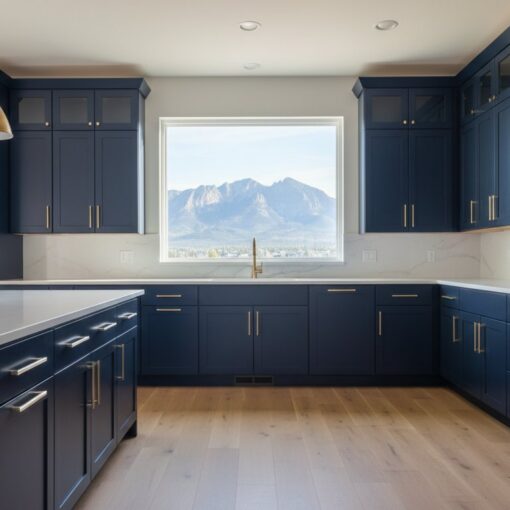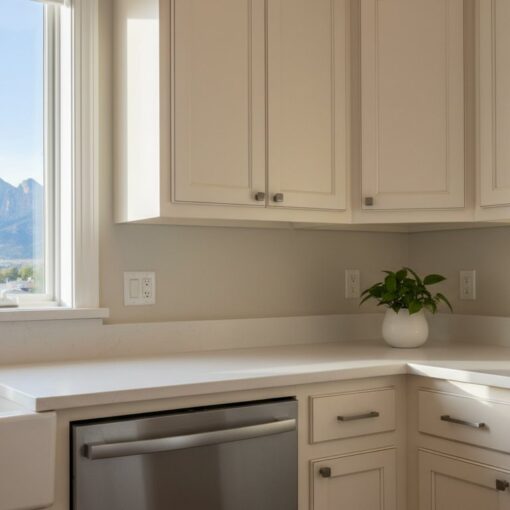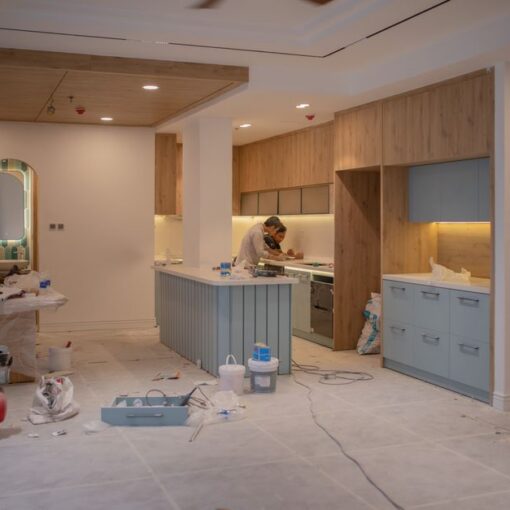
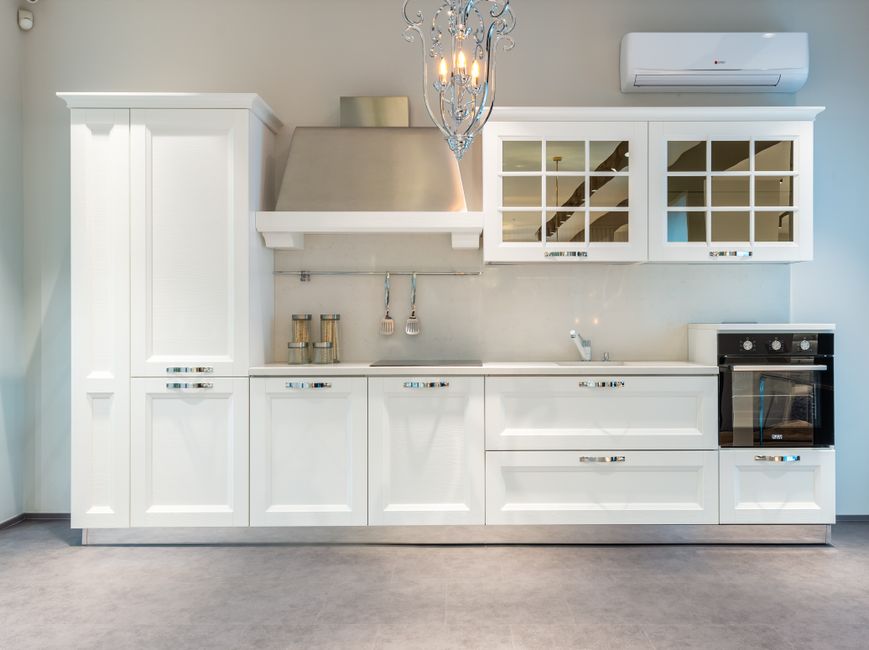
Yes, kitchen cabinet refinishing in Boulder CO is worth it for most homeowners. A shop-sprayed pre-catalyzed lacquer primer plus acrylic satin topcoat lasts 8 to 12 years at 5,400 feet of altitude, while brushed latex enamel chips and peels in 2 to 3 years. Most Boulder kitchens cost $5,500 to $9,500 for a full factory refinish, compared to $25,000 to $40,000 to replace with custom cabinets, according to cabinetrefinishing.info.
Table of Contents
- Why are Boulder County cabinets so hard on paint and finish?
- What is the difference between refinishing, refacing, and resurfacing cabinets?
- What finish system actually holds up at Boulder altitude?
- How long does a shop-sprayed cabinet finish last compared to brushed latex?
- How much does kitchen cabinet refinishing cost in Boulder CO?
- Is a low-VOC cabinet finish possible in Boulder County?
- What does the refinishing process look like, and can you stay home?
- How does cabinetrefinishing.info handle Boulder County cabinet refinishing?
- Key Takeaways
- References
Why are Boulder County cabinets so hard on paint and finish?
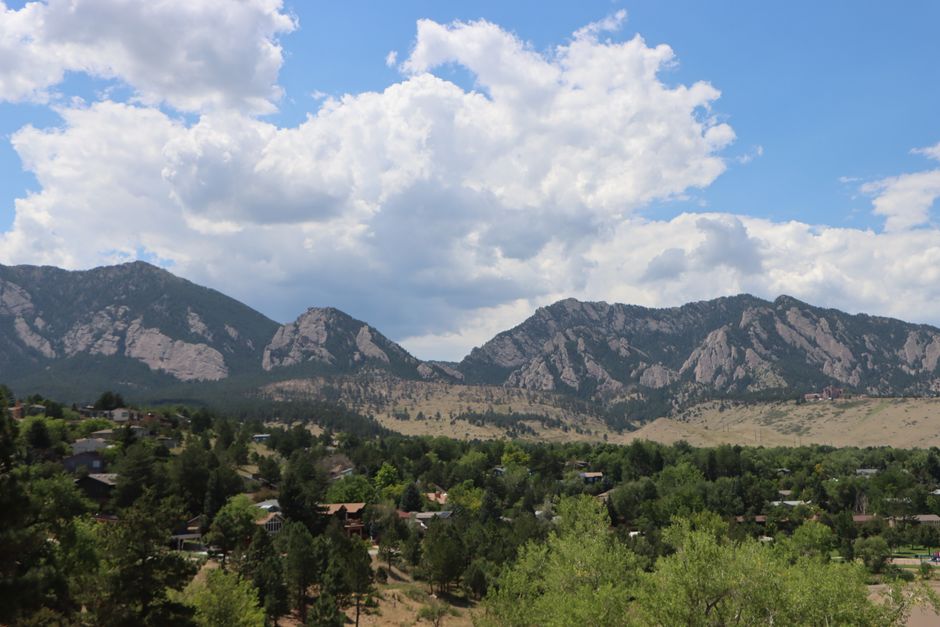
Boulder County cabinets fail faster than cabinets at lower elevations because the local climate punishes rigid film finishes. Boulder sits at about 5,400 feet, where UV intensity and dry air combine to stress wood more than in lower-altitude communities. According to N-Hance, Boulder's low humidity and significant temperature swings between seasons put more stress on cabinet finishes than most homeowners realize.
Seasonal temperature swings drive wood expansion and contraction throughout the year. Solid wood doors and face frames move with every change in indoor humidity and outdoor temperature. Rigid film finishes such as brushed latex enamel cannot flex with that movement. The finish cracks along seams and joints, then begins lifting away from the wood.

Boulder's low humidity pulls moisture out of wood during dry winter months and hot summer afternoons. Brushed or rolled latex enamel loses adhesion when the wood beneath it shrinks. The paint film stays rigid while the wood moves, and peeling follows. cabinetrefinishing.info states that house painters using brushed or rolled latex paint see peeling in as little as six months on Boulder County cabinets.
Cabinets facing south or west windows take the worst sun load and fail first. Direct high-altitude sunlight heats the finish surface and accelerates oxidation. The combination of UV exposure, dry air, and thermal cycling means a finish that survives in a shaded hallway may fail within two years above a sunny Boulder countertop.
What is the difference between refinishing, refacing, and resurfacing cabinets?
Refinishing keeps the original doors and drawer fronts and applies a new finish after cleaning and sanding. According to Miracle Method, cabinet refinishing involves keeping the original doors and drawer fronts and updating their appearance with a finish, involving cleaning, sanding, and applying a high-quality finish. The cabinet boxes stay in place, and the existing wood is preserved.
Refacing installs new doors, drawer fronts, hinges, and hardware, and refinishes the exterior of the boxes to match. Miracle Method describes cabinet refacing as installing new doors and drawer fronts, new hinges, and new hardware, and refinishing the exterior of the cabinet boxes in the matching color. Refacing costs more than refinishing because it involves manufacturing new components.
Resurfacing is the umbrella term homeowners use for either approach. A contractor may say resurfacing when they mean refinishing, or use the term to describe a partial refacing job. Asking for a written scope of work clarifies whether the original doors stay or get replaced.
Refinishing preserves solid wood boxes, which matters for both cost and landfill waste. Boulder County homeowners with solid maple, oak, or cherry cabinets can keep that material in service instead of sending it to a landfill. cabinetrefinishing.info states that refinishing costs about 70% less than replacing cabinets, a savings that comes directly from keeping the existing boxes and doors.
What finish system actually holds up at Boulder altitude?
A pre-catalyzed lacquer primer plus acrylic topcoat system holds up at Boulder altitude because it combines a bonding primer with a hard-curing topcoat. The pre-catalyzed lacquer primer is the adhesion layer. It bonds to sanded wood, blocks tannin bleed-through from oak and cherry, and seals the grain so the topcoat lays down evenly. cabinetrefinishing.info sprays this system in its Northern Colorado factory finish shop.
An acrylic topcoat cures hard like lacquer paint rather than staying soft like latex enamel. Latex enamel remains slightly flexible and rubbery after drying, which makes it vulnerable to scratching and chemical damage in a kitchen. An acrylic topcoat formulated for cabinetry cross-links as it cures, producing a harder surface that resists scuffs from pots, pans, and cleaning products.
Satin sheen sits between gloss and flat. A satin finish hides minor surface imperfections better than gloss, wipes clean without showing every fingerprint, and does not look plastic the way high-gloss finishes can. For Boulder County kitchens with strong natural light, satin reads as a calm, even surface rather than a reflective glare.
The pre-catalyzed lacquer primer plus acrylic topcoat system resists scratches, kitchen chemicals, and yellowing better than oil-modified or latex finishes. Oil-modified finishes amber over time, especially on white or light-colored cabinets. Latex enamels soften when exposed to cooking oils and common cleaners. The acrylic topcoat described by cabinetrefinishing.info avoids both problems.
How long does a shop-sprayed cabinet finish last compared to brushed latex?
A shop-sprayed pre-catalyzed lacquer system in Boulder County holds up roughly 8 to 12 years before a refresh is needed. That lifespan assumes normal kitchen use and reasonable cleaning habits. The finish may show wear at high-contact points such as around knobs and pulls before the rest of the kitchen needs attention.
House painters using brushed or rolled latex have seen peeling in as little as six months on the same cabinets, according to cabinetrefinishing.info. The failure usually starts at edges, seams, and areas near the stove or sink. Once peeling begins, the only fix is stripping and starting over.
Brushed latex in Boulder County typically needs redoing every 2 to 3 years. The dry air and seasonal wood movement simply work against a soft, thick film that cannot flex or breathe. Homeowners who choose brushed latex often budget for a second refinish before the first one has fully paid for itself.
A sprayed film is uniform in thickness, while brush and roller leave thin spots that fail first. Shop spraying applies the finish in controlled, overlapping passes that build a consistent film across the entire door or drawer front. Brushed finishes vary in thickness with every stroke, and the thin areas become the first points of failure under Boulder's sun and dry air.
How much does kitchen cabinet refinishing cost in Boulder CO?
A full factory refinish runs $5,500 to $9,500 for most Boulder kitchens, according to cabinetrefinishing.info. The same source puts replacement with custom cabinets at $25,000 to $40,000. That price gap is the core financial argument for refinishing rather than replacing.
Small kitchens with 15 to 25 doors fall in the $3,800 to $5,500 range. These are typically galley kitchens or compact L-shaped layouts without an island. The lower door count means less labor in the shop and less time on site.
Large kitchens with an island, 45 or more doors, and a pantry run $9,500 to $14,000, according to cabinetrefinishing.info. These kitchens often include tall pantry cabinets, appliance panels, and multiple drawer banks. The added square footage and door count drive the price upward.
Refinishing generally costs about 70% less than replacement, and some sources put it at roughly one-third the cost of new cabinets. CertaPro states that professional cabinet refinishing usually costs approximately one-third of the cost of purchasing and installing new cabinets. Miracle Method states that cabinet refinishing saves up to 70% compared to full replacement.
Is a low-VOC cabinet finish possible in Boulder County?
Yes, a low-VOC cabinet finish is possible in Boulder County, and it is the standard for several refinishing operations serving the area. N-Hance uses low-odor, low-VOC products, so homeowners do not need to leave during the project. Low-VOC and low-odor products let homeowners stay in the house while doors and drawers are sprayed.
Keeping solid wood cabinet boxes out of the landfill is the bigger environmental win in a county that recycles aggressively. Boulder County residents tend to weigh waste reduction heavily in home improvement decisions. Refinishing preserves the embodied energy and material in existing cabinets rather than sending them to a landfill and manufacturing new ones.
Shop spraying contains overspray and solvent exposure in a controlled space instead of the kitchen. When doors and drawers go to a spray booth, the finish lands on the parts, not on countertops, floors, or the air inside the home. cabinetrefinishing.info removes doors and drawers to a shop and sprays them with precatalyzed lacquer.
A durable finish that lasts 8 to 12 years avoids the waste of a second refinish in year three. A brushed latex job that peels after two years generates another round of sanding, priming, painting, and disposal. A shop-sprayed pre-catalyzed lacquer primer plus acrylic topcoat stretches that cycle out by a decade.
What does the refinishing process look like, and can you stay home?
Yes, most homeowners can stay home during a cabinet refinishing project in Boulder County. Doors and drawers are removed and taken to the shop, while the cabinet boxes are prepped and sprayed on site. The on-site portion involves masking off the kitchen and spraying the face frames and end panels.
Shop spraying delivers a factory-smooth finish that cannot be matched with a brush indoors. The doors and drawer fronts are sanded, primed, and sprayed in a controlled environment free of dust, pet hair, and household humidity swings. cabinetrefinishing.info describes this as a factory finish shop process.
Dustless reinstall puts doors and drawers back after the finish has cured. The installer aligns each door and drawer front, adjusts hinges, and reinstalls hardware. The kitchen is usable the same day the doors go back on.
Turnaround runs 5 to 10 days for cabinetrefinishing.info, 3 to 5 business days for CertaPro, and 2 to 4 days for N-Hance depending on kitchen size. The difference comes down to curing time and whether the shop is running multiple projects at once.
How does cabinetrefinishing.info handle Boulder County cabinet refinishing?
cabinetrefinishing.info is a Northern Colorado factory finish shop that has operated since 1981, with 45-plus years of experience in cabinet refinishing. The company works specifically in Boulder County and the surrounding communities, not as a general painting contractor. Its process is built around shop spraying rather than on-site brushing.
The company sprays pre-catalyzed lacquer primer plus acrylic topcoat in satin, the exact system this article describes as the most durable option for Boulder altitude. The pre-catalyzed lacquer primer bonds to sanded wood, blocks tannins, and seals the grain. The acrylic topcoat cures hard and resists scratches, kitchen chemicals, and yellowing.
cabinetrefinishing.info backs the work with a 3-year warranty and a 5 to 10 day turnaround. The warranty covers the finish system against premature failure. The turnaround reflects the time needed to remove doors and drawers, spray them in the shop, allow curing, and reinstall them.
The company serves Boulder, Longmont, Lafayette, Louisville, Superior, Erie, Niwot, Gunbarrel, Lyons, and Nederland. That service area covers the full Boulder County corridor and the foothills communities where altitude and sun exposure are most intense.
Homeowners can ask for a sample door in satin finish and compare a shop-sprayed panel against a brushed one side by side. A sample door shows the difference in film thickness, smoothness, and sheen before committing to a full kitchen. cabinetrefinishing.info is one Boulder County option that sprays in shop and can provide that comparison.
Key Takeaways
- A shop-sprayed pre-catalyzed lacquer primer plus acrylic satin topcoat lasts 8 to 12 years in Boulder County, while brushed latex enamel fails in 2 to 3 years.
- Boulder's 5,400-foot altitude, dry air, seasonal temperature swings, and strong sun are the specific reasons latex and enamel chip and peel there.
- Most Boulder kitchens cost $5,500 to $9,500 for a full factory refinish, compared to $25,000 to $40,000 to replace with custom cabinets.
- Refinishing keeps original doors and drawer fronts; refacing replaces them along with hinges and hardware.
- Satin is the recommended sheen because it hides imperfections, cleans easily, and avoids the plastic look of gloss.
- Low-VOC, low-odor products mean homeowners can usually stay in the house during the project.
- cabinetrefinishing.info has operated as a Northern Colorado factory finish shop since 1981 and offers a 3-year warranty with a 5 to 10 day turnaround.
References
- Cabinet Refinishing Boulder CO — date unknown
- Cabinet Refinishing & Painting Services in Boulder, CO — date unknown
- Painting kitchen cabinets in boulder — date unknown
- Cabinet Refinishing in Longmont, CO — date unknown