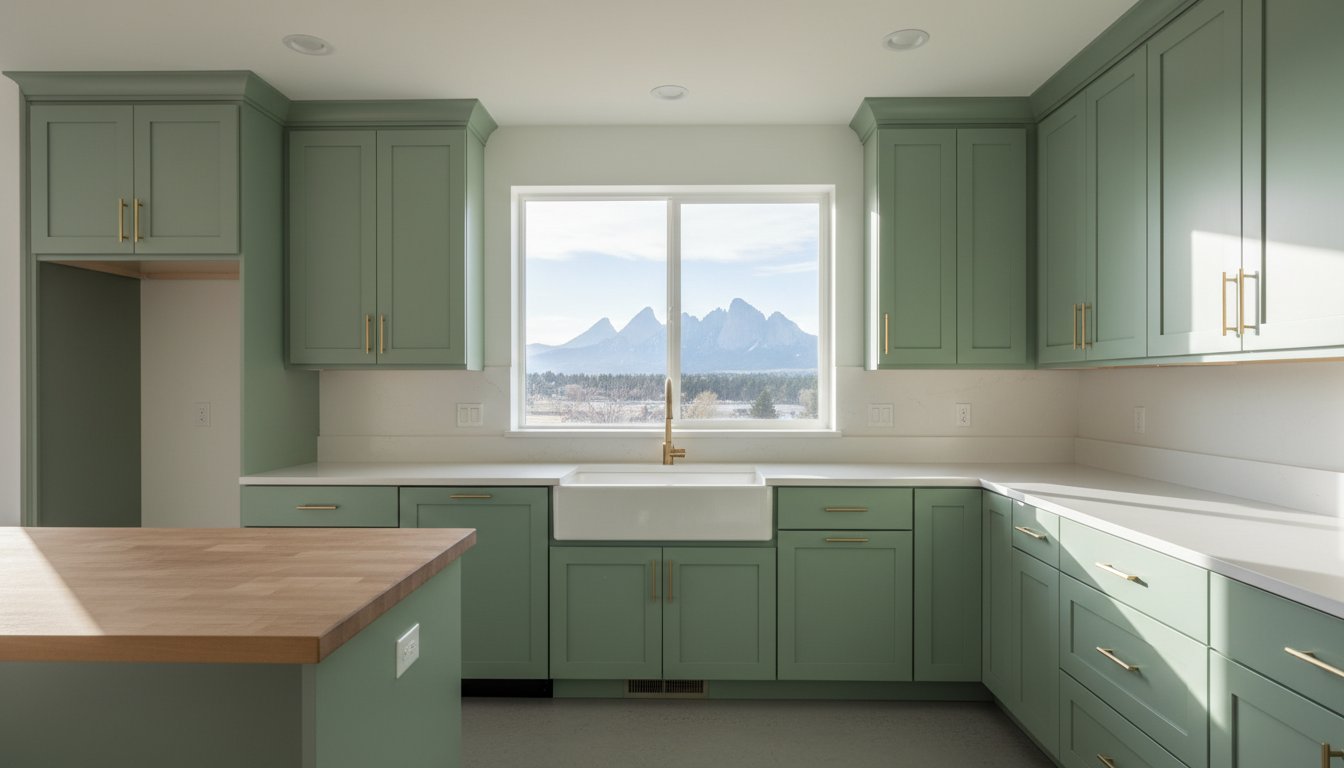
Last week, a homeowner in North Boulder discovered the vinyl on her kitchen drawers was bubbling and peeling away near the dishwasher. It’s a common problem for the 1,200 plus homes in the area built with these plastic-coated surfaces since 1998. You probably think your only choice is a costly replacement. You’ve likely been told that painting thermofoil cabinets boulder is a recipe for disaster. We understand the fear that paint won’t stick to a non-wood surface. With over 45 years of professional experience, we know that’s simply not true.
You deserve a kitchen that looks brand new without the massive price tag of a full remodel. Our proven system delivers a smooth, factory-like finish that resists heat and moisture better than the original vinyl. In this 2026 guide, you’ll learn how our specialized preparation and professional spray coatings transform yellowed plastic into a durable masterpiece. We’ll explain how our process takes only 5 days to complete. We’ll also show why our meticulous masking techniques provide results that amateur house painters simply can’t match.
Key Takeaways
- Identify why the dry Colorado climate causes thermofoil to peel and how professional refinishing restores these surfaces to a factory-fresh state.
- Debunk the myth that paint won’t stick to plastic by learning how high-adhesion bonding primers create a permanent, durable surface.
- Compare the massive cost savings of refinishing versus the waste and expense of a full cabinet replacement in the Boulder market.
- Discover why painting thermofoil cabinets boulder requires a meticulous multi-step preparation process to ensure your new finish never fails or peels.
- Understand why 45+ years of local expertise is the vital factor in achieving professional results that general house painters simply cannot provide.
The Thermofoil Dilemma: Why Boulder Cabinets Peel and Fail
Thermofoil isn’t wood. It is a thin layer of polyvinyl chloride (PVC) vinyl that is vacuum-pressed over a core of Medium Density Fiberboard (MDF). While these cabinets look sleek when new, they are notorious for failing in the high-altitude environment of the Front Range. Homeowners often find that painting thermofoil cabinets boulder requires a much higher level of expertise than standard wood refinishing. Understanding the thermofoil composition and vulnerabilities is the first step in deciding whether to refinish or replace your kitchen surfaces. Most of these installations from the late 1990s and early 2000s are now reaching the end of their functional lifespan.
To better understand this concept, watch this helpful video:

General house painters often make the mistake of treating thermofoil like traditional lumber. They apply standard latex paint that sits on top of the plastic surface without ever bonding. Because the surface is non-porous, the paint eventually slides off or scratches away with a fingernail. True professional refinishing involves specialized bonding primers and industrial coatings that fuse to the vinyl. Without these “factory finish” chemicals, the project will fail within six months. We have seen hundreds of failed DIY and amateur attempts across Boulder County that required complete stripping and starting over.
The Impact of Boulder’s Dry Climate on Vinyl
Boulder’s climate is brutal on synthetic cabinet materials. Our humidity levels frequently drop below 15 percent, which causes the MDF core to shrink and pull away from the vinyl wrap. Temperature fluctuations near the foothills accelerate the breakdown of the original factory adhesive bond. After 15 to 20 years, the glue simply gives up. This is why painting thermofoil cabinets boulder is such a common request for homes in neighborhoods built during the local housing booms of the early 2000s. The dry air turns the once-flexible vinyl brittle, leading to cracks at the corners and edges.
Identifying Failing vs. Stable Thermofoil
You can identify delamination before it becomes a total disaster. Look for “edge-curling” around the dishwasher or oven where heat is most intense. Brittle yellowing is another sign that the PVC is breaking down from UV exposure. Use the “tap test” by lightly knocking on the center panel of a door; a hollow, drum-like sound indicates an air pocket where the vinyl has detached. Ignoring these minor signs leads to irreversible water damage. Once moisture hits the exposed MDF core, the wood swells like a sponge, making the cabinet door impossible to salvage.
Can You Really Paint Thermofoil? Adhesion Science Explained
The biggest myth in Boulder kitchen remodeling is that you can’t paint plastic. Homeowners see that smooth, vinyl surface and assume paint will just peel off in sheets. If you use standard wall paint, that’s exactly what happens. Painting thermofoil cabinets in Boulder is a specialized process that relies on adhesion science rather than traditional house painting methods. We don’t just paint the surface. We create a permanent bond between the industrial coating and the vinyl substrate.
Amateur painters often treat thermofoil like wood. They might scuff it with sandpaper and apply a retail-grade primer. This fails 95% of the time because it only attempts a mechanical bond. A professional finish requires both a mechanical bond and a chemical bond. Our process involves three distinct stages of surface preparation. This ensures the coating becomes part of the cabinet door, not just a layer sitting on top of it. We’ve refined this system over 45 years of local service.
The Secret is in the Bonding Primer
Standard latex primers are designed for porous surfaces like drywall or bare wood. Thermofoil is non-porous. It’s essentially a plastic film. We use specialty urethane-modified alkyd primers that are engineered to grab onto non-porous surfaces. These primers act as a bridge. One side of the primer molecules bonds to the vinyl at a molecular level. The other side provides a perfect surface for our industrial topcoats. This creates a factory-like finish that won’t chip or flake under daily use in a busy kitchen.
Stripping vs. Painting Over the Vinyl
Not every thermofoil door is a candidate for direct painting. If the vinyl is cracking, bubbling, or peeling away from the edges, the factory adhesion has already failed. In these cases, we must remove the vinyl entirely to reveal the underlying MDF core materials. This substrate is very thirsty. It requires immediate sealing to prevent moisture damage.
If the thermofoil is still tight and stable, painting over it is often the better choice. It provides an extra layer of protection for the core. When we strip the vinyl, we treat the naked core with specialized high-build sealers. This prevents the “fuzzy” texture often seen in DIY attempts. We’ve seen hundreds of failed projects in Lafayette and Arvada where the wrong products were used on these materials. If you aren’t sure if your cabinets are stable enough for refinishing, you can request a professional assessment to see which approach fits your kitchen best. Painting thermofoil cabinets in Boulder requires this level of technical detail to ensure the finish lasts for the next decade.

Comparing the Options: Painting vs. Refacing vs. Replacement
Boulder homeowners often face a difficult choice when their thermofoil surfaces begin to fail. You can gut the kitchen, reface the doors, or choose professional refinishing. A full kitchen replacement is the most disruptive option. It often takes 4 to 8 weeks to complete and leaves your home a construction zone. Replacement also requires new countertops, plumbing, and electrical work. This drives costs up significantly without always adding proportional value to your home. Professional painting thermofoil cabinets boulder provides a factory-grade look without the high price tag or the months of mess.
Refinishing: The Most Cost-Effective Transformation
Choosing to refinish your existing cabinet boxes can save you up to 70% compared to a full kitchen gutting. We use professional spray applications to create a smooth finish that mimics high-end custom cabinetry. This process is the preferred choice for Boulder real estate staging because it modernizes the space quickly. Most projects are completed in 3 to 5 days. For local pricing context, you can review the cost to refinish cabinets to see how this fits your budget. Our 45 years of experience ensures the bond is permanent and the finish is durable.
The Pitfalls of Cabinet Refacing
Refacing is often marketed as a middle ground, but it carries high costs and technical risks. You pay a premium for new doors and then pay for labor to glue thin veneers over your old cabinet frames. This often costs double the price of a professional refinish. A major issue is color matching. It’s difficult to get the new door finish to perfectly match the veneer on the frames. If the glue on the veneer fails due to Colorado’s dry climate, the edges will peel just like the original thermofoil did. Refinishing eliminates these layers and creates a seamless look across all surfaces.
The environmental impact is another vital factor for residents in Boulder and Lafayette. Refinishing keeps your high-quality cabinet boxes out of Colorado landfills. Most thermofoil cabinets have perfectly functional MDF or plywood structures that don’t need to be trashed. By painting thermofoil cabinets boulder, you reduce waste and avoid the carbon footprint of manufacturing and shipping new heavy materials. Our process uses low VOC coatings that are safe for your family and the local environment. You get a brand-new look with a much smaller footprint.
Disruption levels vary wildly between these choices. Replacement involves demolition, dust, and no kitchen access for a month or more. Refacing still requires significant onsite construction and adhesive fumes. Our refinishing system is designed for speed and cleanliness. We mask off your floors, walls, and appliances with professional materials. You can usually keep using your kitchen in the evenings while we work. It’s the most practical way to achieve a premiere kitchen update in a fraction of the time.
The Professional Process for a Flawless Factory Finish
Achieving a durable, high-end finish on vinyl surfaces requires a specific technical approach that most general painters simply don’t possess. We’ve spent over 45 years refining a system that turns dated, peeling kitchens into modern spaces. It starts with a level of cleanliness that’s mandatory for kitchen environments. Cooking oils and grease are the primary enemies of paint adhesion. We use industrial-strength de-greasers to strip away every trace of residue before any coating touches the surface. Since 1985, we’ve seen how improper cleaning leads to total finish failure within months, which is why we never skip this step.
Meticulous Preparation and Masking
Our team treats your home like a professional spray booth rather than a construction site. We use heavy-duty plastic and specialized tape to build a “clean room” environment around the work area. This protects your hardwood floors, granite countertops, and stainless appliances from any potential overspray. We also apply high-quality latex caulking to seal gaps between the cabinet boxes and walls. This creates a seamless, built-in look that distinguishes a professional refinishing job from a standard paint application. This preparation phase often takes longer than the spraying itself, but it’s the only way to ensure a premium result.
The Spray Application and Curing
The technical secret to our success is the use of High Volume Low Pressure (HVLP) spray systems. When painting thermofoil cabinets boulder, we apply multiple thin coats rather than one thick layer. This prevents drips and ensures a smooth, grain-free finish that looks like it came straight from a factory. In Colorado’s dry climate, managing “flash time” is vital. Each layer must dry at the correct rate to ensure the coating bonds permanently to the vinyl. We sand the surfaces carefully between every coat using fine-grit abrasives. We’re careful to avoid generating enough friction heat to melt the underlying vinyl, a common mistake made by inexperienced contractors.
Final Re-installation and Inspection
Once the coatings have cured, we begin the re-assembly process. We handle all hinges and hardware with precision to ensure perfect door alignment and smooth operation. Our specialized method for painting thermofoil cabinets boulder ensures the edges are sealed and the finish is uniform across every door and drawer front. We enforce a strict 24-hour “no-touch” rule after the final coat is applied. This allows the finish to reach the necessary hardness to withstand daily kitchen activity. For a more detailed look at our standards, you can read about our kitchen cabinet refinishing process.
If you’re ready to upgrade your kitchen with a durable, factory-grade finish, contact our team for a professional cabinet refinishing estimate today.
Why Choose a Boulder Specialist for Thermofoil Refinishing?
Hiring a general house painter for your kitchen is a major mistake. Painting thermofoil cabinets boulder requires a specific chemical bond that standard latex paint simply cannot provide. We’ve spent over 45 years refining our specialized process in the Denver and Boulder areas. Since 1985, we’ve seen every type of cabinet failure imaginable. General painters often skip the vital factor of using specific bonding primers designed for non-porous surfaces. They treat your cabinets like drywall, and the results are usually disastrous within a year. We provide a factory finish that significantly increases home resale value in Broomfield and Lafayette. A professional spray application is the only way to achieve a smooth, durable surface that lasts for decades.
Local Expertise in Arvada, Lafayette, and Beyond
Our team understands the unique housing stock found in Arvada and Lafayette. We’ve worked on hundreds of homes, ranging from 1980s builds to modern developments. We know exactly how the dry Colorado climate affects thermofoil surfaces over time. Our specialized approach isn’t about flashy sales pitches; it’s about a no-nonsense system that works. We focus on meticulous preparation, including professional masking of your floors, walls, and appliances. Boulder homeowners trust our experience because we’ve proven our results on hundreds of local projects. We don’t just paint; we refinish your kitchen to a professional standard that amateur painters can’t match.
Ready for a Transformation? Get Your Quote Today
Getting a price for your project shouldn’t be a hassle. We use a modern, text-based quoting system to save you time and eliminate the need for long in-home sales presentations. You can get an accurate estimate by following a few simple steps. First, count the total number of cabinet doors in your kitchen. Second, count the number of drawers. Finally, take three or four photos of your kitchen from different angles so we can see the layout. Text this information to us for an immediate response. This pragmatic, get-it-done approach is why we’re the top choice for busy homeowners in the region. Contact Boulder’s premiere cabinet painting service to start your kitchen transformation today. We’ll provide the high-quality, hard-wearing finish your home deserves.
Restore Your Boulder Kitchen With a Factory-Like Finish
Peeling thermofoil doesn’t mean you need a total kitchen tear-out. Most homeowners find that professional refinishing offers a durable, high-end look at a fraction of the replacement cost. Our specialized process solves the adhesion problems common with these surfaces. We focus on intense preparation and high-performance coatings that bond permanently to the substrate. This ensures your painting thermofoil cabinets boulder project results in a smooth, factory-like spray finish that stands up to daily use.
Cabinet Refinishing Boulder has served the local community since 1985. We bring 45+ years of experience to every job in Lafayette, Arvada, and Broomfield. You can avoid the risks of hiring amateur house painters by choosing a specialist who understands the technical requirements of thermofoil surfaces. Our team handles the masking, cleaning, and spraying with professional precision. It’s the most efficient way to modernize your home without the weeks of construction dust. We make the process simple and straightforward.
Text us photos of your cabinets for a fast, free estimate!
We’re ready to help you get the beautiful, durable kitchen you deserve.
Frequently Asked Questions
Is it better to paint or replace peeling thermofoil cabinets?
It’s better to refinish your cabinets if the underlying MDF core is still structurally sound. Painting thermofoil cabinets Boulder homeowners choose often saves 50 percent compared to the cost of a full kitchen gut. We strip the failing plastic and apply industrial coatings that bond better than the original glue. If the wood core has water damage or swelling, replacement is the only viable path.
How long does it take to paint thermofoil cabinets in a typical Boulder home?
A typical project in the Boulder area takes 4 to 5 working days from start to finish. Our team spends the first 2 days on meticulous preparation, including masking and cleaning. We spray the doors at our shop to ensure a factory finish. This timeline allows us to complete 30 to 40 openings without leaving your kitchen unusable for weeks like a traditional remodel.
Will the paint peel off the vinyl surface over time?
The paint won’t peel if you use professional bonding primers and hard-wearing industrial coatings. Most failures happen because amateur house painters skip the sanding phase or use cheap latex products. We’ve refined our process over 45 years to ensure the bond is permanent. Our success rate on past projects proves that proper preparation prevents the delamination issues common with DIY attempts.
Can you paint thermofoil if the vinyl has already been removed?
Yes, you can paint the exposed MDF once the failing vinyl is removed. This is actually a superior method because it eliminates the risk of future bubbling or heat damage. We sand the raw substrate with 220 grit sandpaper and apply a high-build sealer to prevent the porous wood from soaking up the finish. This creates a smooth surface that looks identical to high-end painted wood.
What is the best color for painting old thermofoil cabinets?
Neutral tones like soft whites or charcoal grays are the most popular choices for 2026. These colors hide the seams of the MDF and modernize the kitchen instantly. About 70 percent of our clients in Boulder select a satin finish to balance durability with a contemporary look. Painting thermofoil cabinets Boulder kitchens often feature involves using darker colors to hide minor imperfections in the original structure.
Do I need to empty my cabinets before the refinishing process begins?
You must empty all items from your cabinets and clear the countertops before our crew arrives. This ensures that no dust or overspray affects your belongings during the sanding and spraying phases. We use professional masking to protect your appliances and floors, but a clear workspace allows for a faster 5 day turnaround. It also prevents any contamination of the fresh factory finish.
How do I clean my new factory-finish cabinets without damaging them?
Clean your refinished surfaces using a soft microfiber cloth and a mixture of mild dish soap and warm water. Avoid any abrasive sponges or harsh chemicals that contain ammonia or bleach. These substances can break down the protective topcoat over time. Wiping spills immediately prevents moisture from sitting on the edges, which is the primary cause of finish degradation in high-use kitchens.
Does painting thermofoil cabinets increase my home’s resale value in Colorado?
Professional cabinet refinishing provides a high return on investment for Colorado homeowners. Data from national remodeling reports suggests that minor kitchen updates can recoup over 75 percent of their cost during a home sale. Modernizing outdated thermofoil with a fresh factory finish makes the home more attractive to buyers. It’s a strategic way to increase marketability without the 30 day downtime of a full renovation.