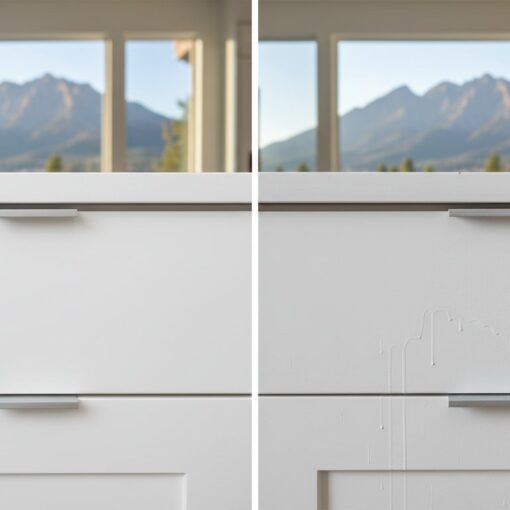
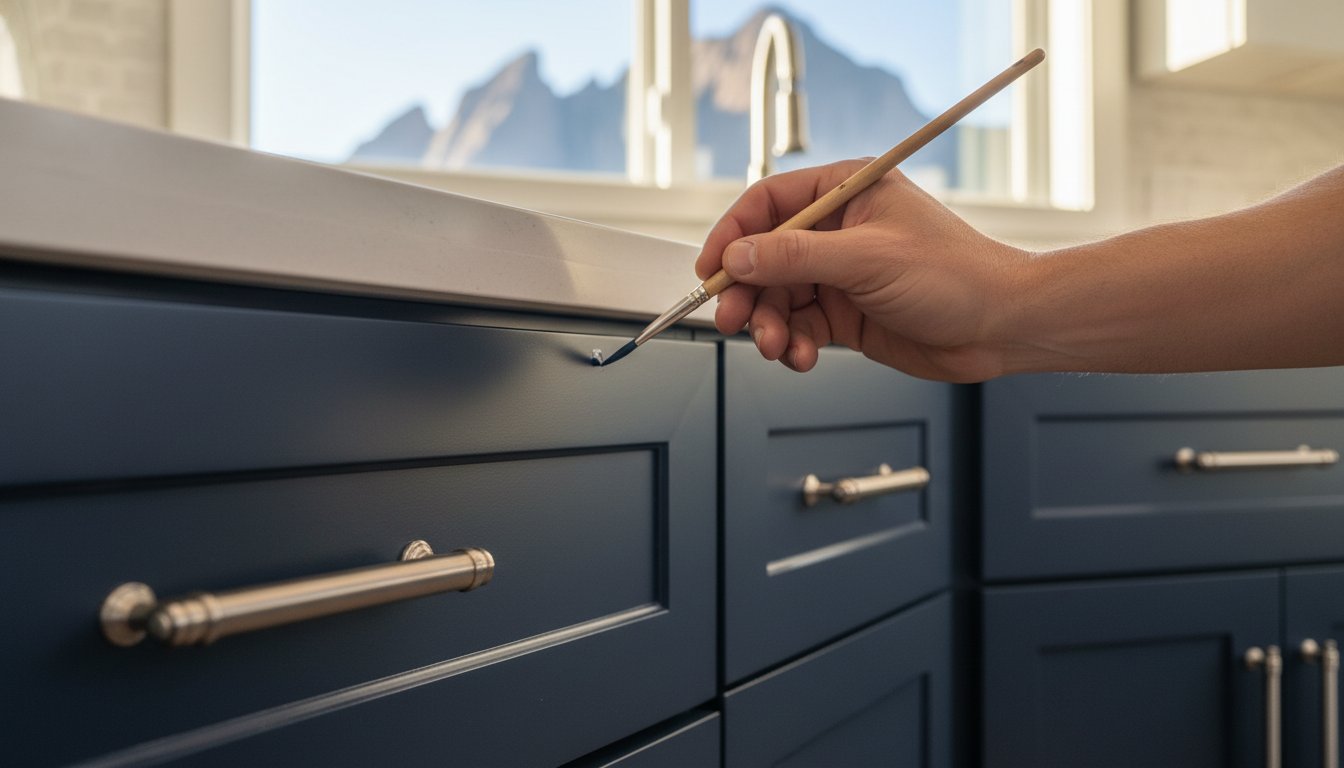
Does a single chip on your kitchen island make the whole room feel dated? You invested heavily in your Boulder home, and seeing the underlying wood peek through a painted finish is frustrating. It’s even worse when you try to fix it yourself and end up with a mismatched, blotchy sheen that catches the light. Most homeowners in the 80304 zip code agree that visible wear in high-traffic areas like the sink base or spice drawer can quickly lower the aesthetic value of a high-end kitchen.
Learning how to touch up painted cabinets properly is the only way to maintain that seamless look without a total overhaul. At Cabinet Refinishing Boulder, we’ve spent 45 years perfecting factory-grade finishes across more than 1,200 local projects. We know exactly when a minor repair will hold up and when the original coating is simply failing. This guide provides the professional methods for addressing minor cabinet chips while explaining the vital factors that determine if your kitchen is salvageable. You’ll learn the difference between a quick brush-on fix and the durable spray applications used by experts to protect your property investment.
Key Takeaways
- Understand how Boulder’s dry climate and temperature swings cause wood expansion and common cabinet joint cracks.
- Apply the “Three-Foot Rule” to decide if your kitchen damage requires a simple fix or a professional refinishing service.
- Learn how to touch up painted cabinets using professional-grade degreasers and proper sanding techniques to avoid a messy finish.
- Discover why DIY touch-up pens often create a visible “halo effect” that ruins the look of your factory-sprayed cabinets.
- Identify when to stop patching minor wear and invest in a full refinishing project to maximize your home’s value in the local market.
Understanding Cabinet Wear and Tear in the Boulder Climate
Cabinet refinishing Boulder requires an understanding of our unique high-desert environment. In Colorado, we deal with extreme temperature swings and humidity levels that often drop below 15 percent. These conditions force wood to expand and contract constantly. This movement puts immense stress on paint films. Most homeowners notice the first signs of wear on trash pull-outs or sink bases. These areas face daily moisture and high impact. Learning how to touch up painted cabinets starts with identifying why the finish failed in the first place. Quality is our number one priority and preparation is a vital factor in long-term durability.
Proper maintenance depends on understanding wood finishing and how different coatings react to stress. A failure in the primer bond is a much larger issue than a simple surface scratch. If the primer isn’t sticking to the wood, touch-ups won’t last. We’ve seen hundreds of projects where amateur house painters skipped the cleaning phase. This leads to paint peeling off in sheets rather than small chips. To better understand this concept, watch this helpful video:

Surface Scuffs vs. Structural Chips
Surface scuffs often look like “witness marks” where the topcoat is abraded but the wood remains sealed. Structural chips are different. These occur when an impact breaks through every layer of the finish. Grease and oils from hands are silent killers for cabinet paint. They slowly soften the finish around handles over 5 to 10 years. In Boulder, we see many joint cracks caused by wood movement. We use high-quality latex caulking to manage these gaps. This allows the wood to move without the paint cracking at the seams. Identifying the depth of the damage is the first step in how to touch up painted cabinets effectively.
The Impact of Original Application Methods
The way your cabinets were first painted dictates your success. Brush-painted cabinets are the easiest to fix. The texture of the brush helps hide new paint. Sprayed finishes are much harder to match. Most professional shops use high-volume low-pressure (HVLP) systems to create a factory-like finish. When you try to touch up cabinets that were originally sprayed, the levelness of the finish is the biggest hurdle. Professional coatings like post-catalyzed lacquers react differently than standard latex paints. They are harder, more durable, and require specific preparation before any new paint will stick. Our 45 plus years of experience shows that professional-grade coatings always outperform DIY materials in the Denver housing market.
Evaluating the Damage: When a Touch-Up Pen Isn’t Enough
Before you start searching for tools, you must take a hard look at the current state of your kitchen. Most homeowners want to know how to touch up painted cabinets without making the surfaces look like a patchwork quilt. Start by counting every single chip and scratch across all your doors and drawers. If you find more than 10 damaged areas throughout the room, a simple touch-up pen won’t provide the uniform look you want. Cabinet Refinishing Boulder has seen many DIY attempts that end up looking like splotchy bandaids because the homeowner didn’t assess the scale of the job first.
The “Three-Foot Rule” is a professional standard we’ve used for over 45 years. Stand exactly three feet away from your cabinets in bright, natural light. If the chips or scratches are clearly visible from this distance, they require more than a quick dab of paint. Minor scuffs that disappear at three feet are often candidates for a DIY fix, but deep gouges or wide-scale wear suggest the finish has reached the end of its functional life. In cities like Lafayette and Broomfield, the dry climate can make finishes brittle over time, leading to more significant failure than just a few random chips.
Check your doors for “alligatoring,” which looks like a pattern of small cracks resembling reptile skin. This is a sign that the paint is losing its bond with the wood. You also need to consider the factors affecting finish performance, such as moisture exposure near the sink or dishwasher. If the underlying wood or MDF is swollen or crumbling, no amount of paint will stick. Structural damage to the cabinet material means a touch-up is a waste of time. Professional refinishing involves sanding back to a stable surface, which is something a touch-up kit cannot achieve.
Criteria for a Successful Touch-Up
- Surface Area: The total damage is limited to less than 5% of the entire cabinet surface.
- Paint Match: You have the exact original paint and the specific batch number from the initial application.
- Finish Type: The original coating was a standard latex or oil-based paint, not a specialized high-build conversion varnish or a factory-applied glaze that is nearly impossible to mimic with a brush.
Signs You Need Professional Cabinet Refinishing
- Widespread Failure: You see multiple chips on more than three doors or drawers, suggesting the original prep work was insufficient.
- Adhesion Issues: The paint is flaking off in large pieces or can be easily scraped away with a fingernail.
- Aesthetic Changes: You want to change the color entirely or upgrade to a durable, factory-like spray finish that resists future chipping.
If your inspection reveals that the paint is failing across multiple surfaces, a manual touch-up won’t restore the value of your home. Learning how to touch up painted cabinets is useful for tiny accidents, but widespread wear usually requires a professional system. For homeowners in the Denver metro area, requesting a professional assessment can save you from a frustrated weekend of failed DIY repairs.

The Professional Approach to Minor Cabinet Repairs
Achieving a factory-like finish requires more than just dabbing paint on a chip. Professionals at Cabinet Refinishing Boulder know that 90% of a successful touch-up happens before the brush hits the wood. You must start by removing every trace of kitchen grease. Use a professional-grade degreaser like TSP or a dedicated wax and grease remover. Household dish soap isn’t enough for 15 years of accumulated cooking oils and skin oils found near door handles.
Once the surface is clean, you need to feather the edges of the damage. Use 320-grit sandpaper to lightly sand the area. This prevents a “crater” effect where the new paint meets the old finish. After sanding, apply a high-adhesion primer specific to your substrate. Whether it’s maple, oak, or MDF, the primer creates the bond that prevents future peeling. For the application, skip the standard 2-inch brush. Use micro-brushes or foam dabbers. These tools allow you to deposit small amounts of paint exactly where they’re needed for a seamless look. This is the standard we’ve maintained since 1985.
Preparation: The Secret to Longevity
Don’t use household cleaners containing silicone or wax. These chemicals cause “fish-eye” defects where the paint won’t stick. Clean the area with a tack cloth right before you paint. A single dust particle can ruin the texture of a smooth cabinet door. When you’re learning how to touch up painted cabinets, remember that professional results come from meticulous cleaning and sanding. We’ve seen hundreds of projects fail because homeowners skipped these 5-minute steps. Proper preparation is why our finishes last for decades in homes across Denver and Lafayette.
Color and Sheen Matching
A color that is “close enough” will look like a mistake once it dries. Paint often darkens by 5% to 10% as it cures over 24 to 48 hours. Always test your match on a hidden spot or a piece of scrap wood first. Sheen is just as vital as color. Matte finishes hide imperfections, while Semi-Gloss reflects light and highlights every bump. If your cabinets have a factory finish, matching the sheen requires precision. Most modern kitchens use a Satin or Semi-Gloss finish. If you don’t match the light reflection, the repair will stand out even if the color is perfect. Knowing how to touch up painted cabinets involves understanding that the finish must be uniform across the entire surface. This is why we specialize in spray applications for our full refinishing projects in Boulder and Arvada.
- Remove grease with professional degreasers, not just soap.
- Feather edges with 320-grit sandpaper to avoid visible ridges.
- Use micro-brushes to control paint volume.
- Verify sheen levels (Matte, Satin, Semi-Gloss) before application.
- Allow 48 hours for a full cure before assessing the color match.
Why DIY Touch-Ups Often Fail to Match Factory Finishes
Most homeowners research how to touch up painted cabinets after noticing a small chip or scratch. They expect a quick fix, but the results often stand out more than the original damage. This happens because of the “Halo Effect.” When you apply a small dab of paint, the new layer creates a ring that looks either shinier or duller than the surrounding area. It’s nearly impossible to blend these edges by hand without specialized blending agents.
Texture is another major hurdle. Your original cabinets likely have a smooth, sprayed finish. Using a brush or roller for a repair creates a visible stipple or brush mark. This disruption in the surface catches light differently. The repair becomes obvious from across the room. If you don’t use the exact same application method, the patch will never disappear.
- Inferior Products: Standard latex paints from big-box stores don’t bond with professional industrial coatings. They sit on top of the surface rather than becoming part of it.
- Poor Adhesion: If you don’t sand and clean with specific industrial deglossers, the new paint will peel off within 14 to 21 days.
- Chemical Sensitivity: DIY paints often soften when they come into contact with common kitchen cleaners or skin oils.
The Problem with General House Painters
Amateur house painters often treat cabinets like walls. They use standard wall paint that lacks the hardness needed for high-touch areas. These painters don’t carry the specialized HVLP sprayers required for fine-finish repairs. Their products might take 30 days to fully cure. Professional systems are ready for use much faster. A general painter won’t have the training to match the chemical resistance of a factory finish.
The Value of Professional Systems
True Cabinet Refinishing creates a monolithic, durable surface. We use high-performance coatings specifically engineered to resist household chemicals and moisture. Our 45 years of experience in Boulder and Denver ensures your kitchen gets a factory-like result that DIY methods cannot replicate. We focus on meticulous preparation to ensure the coating lasts for years. We don’t just cover up damage; we restore the integrity of the finish. This level of quality is vital for maintaining home value in the competitive Colorado market.
If your kitchen needs more than a quick fix, contact us for a professional assessment of your cabinets.
Professional Cabinet Refinishing: The Long-Term Solution for Boulder Kitchens
Knowing how to touch up painted cabinets is a helpful skill for minor accidents. Eventually, every kitchen reaches a point where small patches no longer hide the wear and tear. If your cabinet doors show widespread peeling or the finish feels sticky to the touch, stop patching. Professional refinishing provides a uniform, durable surface that DIY methods cannot replicate. It is the transition from a temporary fix to a permanent investment in your home.
The Boulder housing market demands high-quality interiors. A professional factory finish increases home value and provides a clean, modern look that attracts buyers. Choosing the Professional Kitchen Cabinet Refinishing Process ensures your kitchen looks brand new without the massive price tag of a full remodel. Most homeowners save between 60 and 75 percent by refinishing their existing solid wood boxes rather than tearing them out. This process is also much faster. A full replacement can take six weeks, while our professional team finishes most kitchens in about one work week.
The Cabinet Refinishing Boulder Difference
Cabinet Refinishing Boulder has over 45 years of experience in the Denver and Boulder area. We don’t use brushes or rollers that leave ugly textures. We specialize in factory finishes that stand up to daily use and heavy cleaning. Our team follows a meticulous masking and preparation process. We protect your floors, walls, and appliances with professional-grade plastic and paper. This ensures a flawless kitchen environment where the only thing getting painted is your cabinets. We use high-performance coatings that are much harder than the standard latex paint found at big-box stores.
Get Your Professional Estimate
Getting a quote for your project is simple and fast. You can text us the number of doors and the number of drawers along with a few pictures of your current kitchen. We provide quick, honest estimates based on our decades of local expertise. We understand the specific needs of homeowners in Arvada, Broomfield, and Lafayette. Our team knows Kitchen Cabinet Painting and refinishing inside and out. Don’t trust your kitchen to amateur house painters who lack the right equipment. Contact us today for a consultation in Lafayette, Arvada, or anywhere in the Boulder area. We take pride in our reputation and our history of serving Colorado homeowners since 1985.
Restore Your Boulder Kitchen with a Professional Finish
Learning how to touch up painted cabinets is a good first step for minor nicks, but it won’t fix the damage caused by Boulder’s dry climate. DIY touch-up pens often fail to match the depth of a professional coating. Our team has spent 45+ years perfecting specialized factory-grade coating systems that outperform standard house paint. We’ve transformed hundreds of Boulder kitchens since 1985. We focus on heavy preparation and professional spray applications. This ensures your kitchen looks brand new and stays that way for years.
Don’t settle for the messy results of amateur house painters. Our local expertise means we know exactly what your cabinets need to withstand daily use. We provide a smooth, durable finish without the massive cost of a full replacement. Refinishing is a smart, cost-effective way to update your home. It’s a faster process than a remodel and adds immediate value to your property. Your kitchen deserves a high-end look that lasts.
We look forward to helping you transform your kitchen into a space you love.
Frequently Asked Questions
Can I use a Sharpie or furniture marker for cabinet touch-ups?
You shouldn’t use a Sharpie or furniture marker because the ink lacks the durability and correct sheen of professional cabinet coatings. These markers often change color when exposed to UV light, turning a strange purple or blue within 180 days. For a true factory finish, always use a small amount of the original paint. This ensures the repair matches the chemical makeup of the existing surface and lasts as long as the rest of the kitchen.
What is the best type of brush for touching up small chips on cabinets?
The best tool for fixing small chips is a high-quality synthetic artist brush or a micro-applicator. Amateur house painters often use brushes that are too large, which leaves visible texture and ruins the smooth look. A size 0 or 1 round brush allows you to deposit paint exactly where it’s needed without overlapping onto the surrounding finish. This precision is vital for maintaining the professional standards we set at Cabinet Refinishing Boulder.
How long should I wait for a cabinet touch-up to dry before cleaning it?
You must wait at least 24 hours before touching the area and 30 full days before using any cleaning agents. While the paint feels dry to the touch in 4 hours, it takes 720 hours to reach its maximum hardness. Cleaning too early can cause the new paint to peel or smudge. We recommend using only a dry microfiber cloth during this initial curing period to protect the integrity of the finish.
Is it possible to touch up cabinets if I don’t have the original paint?
You can still learn how to touch up painted cabinets by taking a drawer front or door to a local paint supplier for a computer color match. Most professional paint stores in Denver use spectrophotometers to achieve a 95 percent color match or better. If you can’t remove a piece, use a sharp utility knife to carefully peel a 1 inch square of paint from an inconspicuous area to provide a sample for the technicians.
Why does my touch-up paint look like a different color even though it’s from the same can?
Paint colors often appear different because the pigments have settled or the sheen has changed over 2 or 3 years of storage. If you don’t stir the can for at least 5 minutes, the heavy minerals stay at the bottom, which alters the visible hue. Additionally, the original factory finish was likely applied with a spray system. A brush-applied touch-up reflects light differently, creating a slight visual mismatch compared to the sprayed surface.
Can I touch up cabinets that were originally spray-painted?
You can touch up spray-painted cabinets, but you must be careful not to create a halo effect around the repair. Since spray applications provide a perfectly smooth surface, any brush marks will be visible to the naked eye. Thin your paint with 5 percent water or a flow extender to help it level out. This technique helps DIY repairs mimic the high-end results seen in our Cabinet Refinishing Lafayette CO projects.
What should I do if the paint is peeling near the dishwasher or sink?
Peeling near water sources indicates a failure in the bond, often caused by 100 percent humidity or heat from dishwasher cycles. You must sand the area back to a solid edge, apply a moisture-resistant primer, and then re-coat. If the damage covers more than 10 percent of the surface, a professional refinishing service is usually necessary to ensure the wood is properly sealed against future water intrusion and rot.
Does touching up cabinets void any professional warranties?
Most professional warranties are voided if a homeowner applies unapproved coatings or performs their own repairs. Our 45 years of experience shows that DIY fixes often use incompatible materials that react poorly with professional-grade lacquers. Always consult your original contract or contact your contractor in Arvada or Broomfield before attempting repairs. This ensures you don’t lose your long-term protection or the value of your investment.