Did you know that using the wrong “natural” cleaner can strip a professional factory finish in under 30 seconds? You just invested in a high-end kitchen transformation in Denver or Boulder, and it looks incredible. It is completely normal to feel nervous about that first spill or the steam rising from your toaster. You want that smooth, durable surface to stay perfect. Most homeowners worry that a single mistake will ruin their new look, and the internet is full of conflicting advice that can actually cause permanent damage.
Properly caring for refinished cabinets is the only way to protect your investment and keep that factory-like finish for decades. Since 1985, our team has completed hundreds of projects across Lafayette, Arvada, and Broomfield. We know exactly what products work and what chemicals destroy professional coatings. This guide provides the exact steps to maintain your kitchen without the stress. We will cover the specific ingredients to avoid, how to manage heat damage, and a clear cleaning schedule to keep your home looking brand new.
Key Takeaways
- Understand why the first 30 days are vital for a professional spray finish to achieve the hardness needed to withstand daily kitchen use.
- Master a professional cleaning protocol using pH-neutral solutions for properly caring for refinished cabinets without damaging the topcoat.
- Identify how to protect your investment from the hidden dangers of localized heat and steam produced by common kitchen appliances.
- Learn how the semi-arid Colorado climate and high-altitude UV rays affect wood expansion and paint pigments in Boulder and Denver.
- Recognize the difference between normal wear and coating failure to determine when expert maintenance or hardware updates are required.
Understanding the Curing Process: The First 30 Days
Caring for refinished cabinets begins the moment our team completes the final spray application. Many homeowners in Boulder and Denver mistake a surface that is dry to the touch for a surface that is fully hardened. Your cabinets will feel dry within 4 to 6 hours, but the chemical transformation is just beginning. Professional factory-style finishes require a full 30-day window to reach their maximum hardness and durability. This timeframe is non-negotiable for high-performance coatings.
The chemistry behind our low-VOC professional coatings relies on cross-linking. During this phase, the coating molecules form tight bonds to create a resilient, protective barrier. Understanding the refinishing process helps you see why patience is necessary. Curing is the chemical process where the coating reaches its ultimate hardness and adhesion. If you rush the process, you risk damaging the finish before it has a chance to protect itself. We have refined these systems over 45 years to provide a finish that outlasts standard paint jobs from amateur house painters.
The 30-Day Care Roadmap
Properly caring for refinished cabinets requires patience during the first month. We recommend a strict zero-contact policy for the first 7 days. Don’t attempt to clean the surfaces or use heavy kitchen appliances near the new finish. From day 8 to day 30, you can begin light handling and use the hardware. You must avoid hanging damp towels over cabinet doors during this entire 30-day window. Moisture trapped against a curing finish can cause the coating to soften or fail prematurely. This is a common mistake that leads to permanent damage in many Lafayette and Arvada kitchens.
Handling Freshly Refinished Surfaces
Always use the knobs and pulls to open and close your doors. Your skin contains natural oils and acids that can interfere with the cross-linking process if you touch the finished wood directly. Avoid the temptation to slam doors or drawers. Even if we’ve installed new bumpers, the impact can create indentations in the coating while it’s still reaching peak density. We see these issues often when homeowners in Broomfield or Westminster rush back into their normal routines too quickly. Treat your cabinets with extra care for these first 720 hours to ensure the finish stays beautiful for decades.
The Professional Cleaning Protocol for Painted Cabinets
Maintaining a factory-like spray finish requires a minimalist approach. When we perform Cabinet Refinishing Boulder, we use specialized coatings that don’t need harsh scrubbing. Aggressive cleaning is the fastest way to ruin a premium topcoat. Caring for refinished cabinets is about preserving the integrity of that smooth, non-porous surface. We’ve spent 45 years refining these methods to ensure your kitchen stays looking fresh without unnecessary wear.
The “less is more” philosophy is vital for high-quality spray finishes. Unlike standard house paint applied with a brush, a professional factory finish is designed to be sleek and easy to wipe. Using the wrong chemicals can cause the finish to soften or lose its sheen. Stick to pH-neutral solutions to keep the chemical bond of the topcoat intact for decades.
Safe Cleaning Materials and Solutions
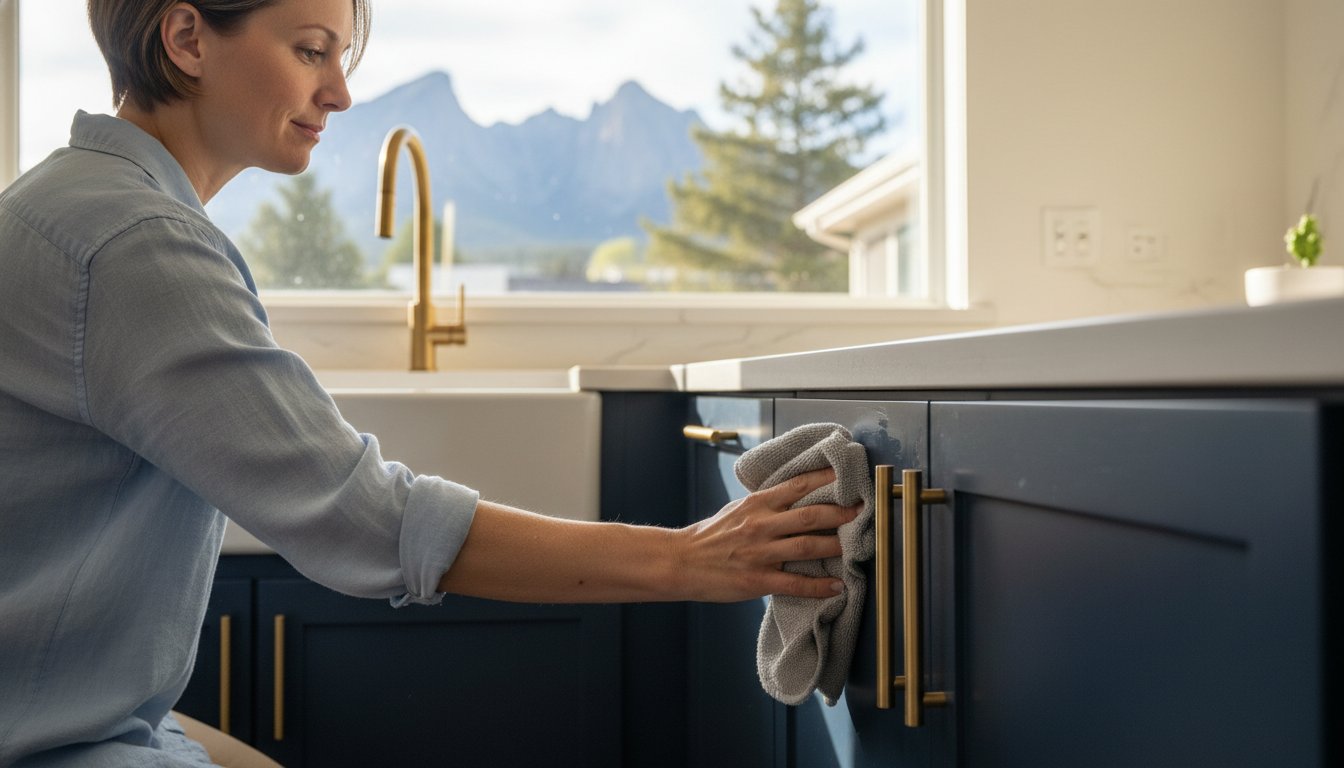
The gold standard for cleaning is simple: warm water and a single drop of mild dish soap. This combination effectively breaks down surface oils without attacking the paint. Microfiber cloths are superior to paper towels for factory finishes because they lack abrasive fibers. Avoid these three hazardous substances at all costs:
- Ammonia: It eats through clear coats and causes yellowing.
- Bleach: This causes discoloration and makes the coating brittle.
- Petroleum-based solvents: These leave a sticky residue that attracts more grease.
Never use abrasive pads or “Magic Erasers” on refinished wood. These products act like fine-grit sandpaper. They will strip the sheen off your Cabinet Painting Lafayette CO project in seconds, leaving dull spots that require professional repair.
Step-by-Step Maintenance Routine
Consistency prevents the need for heavy scrubbing. Use the “two-cloth method” for every cleaning task. One damp microfiber cloth removes the dirt, and one dry microfiber buffs the surface immediately. This prevents water spots and ensures a streak-free result. Following a schedule keeps the surface pristine.
- Daily: Spot clean spills around high-traffic areas like the sink. Moisture is a primary threat to wood integrity.
- Weekly: Dust all surfaces with a dry microfiber cloth. This stops 90% of airborne grease from bonding to the paint.
- Monthly: Deep clean around handles and stove areas. Skin oils can soften finishes if left sitting for more than 30 days.
Dealing with Tough Grime and Grease
Cooking grease is a reality in any active kitchen. To remove it safely, let a damp, warm cloth sit on the spot for 60 seconds to emulsify the oils. Always wipe following the grain of the wood to avoid creating cross-grain micro-scratches. If a stain doesn’t budge after two gentle attempts, stop immediately. Forcing the issue will damage the substrate. Our local cabinet experts can provide guidance if you encounter a stubborn stain that seems bonded to the finish.

Protecting Your Cabinets from Heat, Steam, and Moisture
Heat and moisture are the two biggest threats to the longevity of your kitchen’s aesthetic. Caring for refinished cabinets involves more than just regular cleaning; it requires strategic management of your kitchen environment. In the dry Colorado climate, homeowners in Boulder and Denver often forget that localized humidity from cooking can be incredibly destructive. Heat from small appliances often causes a phenomenon known as “blushing.” This is a milky white discoloration that occurs when moisture becomes trapped within the coating layers. If you notice this cloudiness, it is a sign that your finish is being compromised by heat exposure.
Standing water is the absolute enemy of even the most durable professional coatings. While a factory-like finish is water-resistant, it is not waterproof. If water sits on a horizontal surface or drips down a door edge, it will eventually find a way into the wood grain. This leads to swelling, cracking at the joints, and eventual peeling. You must be proactive. Keep a dry microfiber cloth nearby to wipe up every splash or spill as it happens.
Appliance Placement Strategies
Small appliances like toasters, coffee makers, and electric kettles generate significant localized heat. You should never operate these directly under your upper cabinets. Steam from a coffee maker can reach temperatures exceeding 160 degrees. This constant heat and moisture cycle will soften the finish over time. Always pull these appliances forward so they vent into the open room.
Dishwashers are another common culprit for finish failure. Modern “Sanitize” or “High-Heat” cycles often exceed 150 degrees. This intense heat can cause the coating on the lower edges of adjacent doors to peel or delaminate. If your dishwasher vents steam from the front or sides, consider installing heat shields or spacers. These small adjustments prevent the heat from making direct contact with your cabinetry.
Moisture Management Near Sinks
The sink base cabinet is almost always the first area to show signs of wear. In fact, 90% of moisture-related finish failures in Lafayette and Broomfield homes occur right under the kitchen sink. This area is a high-traffic zone for splashes and drips. You should never hang wet dish towels over cabinet doors. This practice traps moisture directly against the wood joints, which causes the wood to expand and the paint to crack.
Check your under-sink plumbing every 30 days for slow leaks. A small drip from a P-trap can saturate the cabinet floor and wick up into the side panels before you even notice it. If you find standing water, dry it immediately and use a fan to ensure the wood is completely moisture-free.
Ventilation and Airflow
Proper airflow is vital for protecting your investment and maintaining that smooth, professional feel. You should use your range hood every time you cook, even if you aren’t searing meat. The hood pulls grease and steam out of the air before they can settle on your cabinet tops. This prevents the “sticky” feeling that results from a mixture of airborne grease and dust.
Our 45 years of experience has proven that durability starts long before the final coat is applied. The kitchen cabinet refinishing process includes meticulous cleaning and sanding to ensure the coating bonds perfectly. This professional preparation is what allows the finish to resist the daily humidity of a busy kitchen. Without these proven systems, moisture would easily penetrate the surface and cause the finish to fail prematurely.
Local Considerations for Boulder and Denver Homeowners
Colorado’s semi-arid climate creates unique challenges for wood surfaces that most national blogs don’t mention. In cities like Boulder and Denver, outdoor humidity levels often plummet below 15% during the winter. This extreme dryness causes wood to contract. When the summer monsoons arrive, the wood expands as it absorbs moisture. This constant cycle can destroy a standard paint job within 24 months. Professional kitchen cabinet painting in Boulder requires specific elastic caulking to survive these shifts. We use high-performance, stretchable materials in every joint. Unlike the cheap latex caulk used by amateur house painters, our materials move with the wood instead of cracking and peeling away.
Caring for refinished cabinets in the Front Range involves more than just cleaning. It requires an understanding of how our 5,280-foot elevation impacts materials. Our team brings 45 plus years of experience to every project, ensuring your finish is engineered for the local environment. We focus on the practical physics of wood movement to prevent the common failures seen in DIY or low-bid projects.
Managing Low Humidity in Colorado
Homeowners in Arvada and Broomfield should aim to keep indoor humidity between 30% and 40% year-round. When levels drop too low, wood cabinets suffer from “checking,” which manifests as tiny hairline cracks in the finish. You’ll likely notice seasonal movement in door panels during January and February when the air is driest. Installing a whole-home humidifier is a vital factor in protecting your kitchen. This equipment stabilizes the wood and prevents the joints from pulling apart. Our factory-grade coatings are significantly more flexible than retail paint, but maintaining a consistent environment is the best way to ensure your kitchen looks new for a decade.
UV Protection for Sunny Kitchens
The Colorado sun is a major threat to paint pigments. At our elevation, UV rays are approximately 25% more intense than at sea level. If you own a home with a south-facing kitchen in Lafayette CO, window treatments are a necessity. Caring for refinished cabinets in high-altitude environments requires proactive sun management to prevent fading. We utilize professional-grade factory finishes that contain industrial UV inhibitors. These coatings provide a level of color stability that amateur house paint cannot match. While standard latex paint may yellow or chalk under intense sunlight, our catalyzed finishes remain vibrant and clear. This durability is why we emphasize the difference between a simple paint job and a professional refinishing process.
Ready to update your kitchen with a finish built for the Colorado climate? You can text us the number of doors and the number of drawers with pictures to get started with our cabinet refinishing services today.
Long-Term Maintenance: When to Call the Experts
Properly caring for refinished cabinets keeps your kitchen looking sharp for decades. Most homeowners in Boulder and Denver see minor wear over 10 years, which is normal. Coating failure is different. Look for peeling, bubbling, or cracking near the sink or dishwasher. These issues usually stem from moisture or poor preparation by amateur painters. Professional refinishing offers a 75% savings compared to the cost of full cabinet replacement. It provides a long-term value that keeps your equity high without the mess of a full remodel. Use touch-up kits sparingly. They are for tiny nicks, not for fixing large areas of wear. If you see wide-scale fading or peeling, it’s time to call a professional to assess the bond.
Hardware and Bumper Maintenance
Small parts protect your big investment. Replace felt or rubber bumpers every 3 years. These prevent the door from slamming directly against the frame. Constant friction eventually wears down even the hardest factory finish. Check your hinges twice a year. Tighten loose screws immediately. If a door hangs crooked, it will rub against the cabinet box and chip the paint. Consider upgrading to larger pulls or knobs. This reduces how often oily fingers touch the cabinet surface. Less contact means less cleaning and a longer lifespan for the finish. These small mechanical adjustments are the easiest way to stay ahead of caring for refinished cabinets in a busy home.
The Value of Professional Quality
A cabinet refinishing company uses methods that DIY kits can’t match. We use professional spray-applied coatings in a controlled environment. This creates a smooth, factory-like surface. Brush-on paint leaves ridges that trap dirt and grease. Our 45 years of experience in the Denver metro area proves that professional preparation is the vital factor. We handle the cleaning, sanding, and masking that amateur house painters skip. This ensures the bond lasts through thousands of openings and closings. You want a finish that stands up to daily life in Lafayette or Arvada.
Professional finishes are designed for durability. They resist the chemicals found in common cleaners that strip away standard latex paint. When you invest in a professional spray application, you’re choosing a finish that won’t require constant maintenance. It’s the most cost-effective way to modernize your kitchen while caring for refinished cabinets
Protect Your Kitchen Investment for the Long Term
Your kitchen is the heart of your home in Boulder or Denver. Taking the right steps for caring for refinished cabinets ensures your investment remains beautiful for decades. The first 30 days are the most important period while the coating fully cures. Use only soft cloths and mild cleaners to protect that factory-grade spray finish. Moisture and heat are the biggest enemies of any wood surface. Wiping down areas near your dishwasher or stove prevents the premature wear and peeling often caused by poor preparation or low-quality materials.
Cabinet Refinishing Boulder has provided homeowners in Boulder County and the surrounding areas with durable finishes since 1985. We rely on 45 years of local experience to deliver results that outperform standard house painters. Our proven system focuses on thorough preparation and specialized, hard-wearing coatings that won’t fail under daily use. Professional refinishing is a smart way to update your home without the massive cost or disruption of a full cabinet replacement.
Ready for a kitchen transformation that lasts? Text us photos of your kitchen for a free refinishing quote!
We look forward to helping you achieve a high-end look for your kitchen.
Frequently Asked Questions
How soon can I use my cabinets after they are refinished?
You can touch your cabinet doors after 4 hours, but you must wait 24 hours before resuming light use. The industrial coatings we use require 21 to 30 days to reach a full chemical cure. Avoid any heavy cleaning or scrubbing during this first month to ensure the finish stays durable for the next 15 years.
What is the best cleaner for professionally painted kitchen cabinets?
A mixture of mild dish soap and warm water applied with a soft microfiber cloth is the most effective method for caring for refinished cabinets. This simple solution removes 99% of daily grime without reacting with the professional finish. Never use abrasive sponges, as they create micro-scratches that dull the sheen over 6 to 12 months of repeated use.
Can I use vinegar or Windex to clean my refinished cabinets?
No, you shouldn’t use vinegar, Windex, or any ammonia-based cleaners on your new finish. These substances are highly acidic or alkaline and will break down the protective topcoat within 3 to 5 months of regular application. Using the wrong chemicals can void warranties and cause the paint to soften or peel prematurely.
Why does the paint feel sticky near the stove or handles?
Stickiness usually occurs because cooking grease or skin oils have sat on the surface for more than 7 days. These oils act as a slow-acting solvent that softens the high-performance coating. To prevent this, wipe down high-touch areas every 48 hours to maintain the integrity of the finish in your Boulder or Denver kitchen.
How do I prevent the paint from chipping around the dishwasher?
Keep the edges of the cabinet doors dry by wiping away steam and water droplets immediately after a wash cycle finishes. Excessive moisture and heat cause 90% of finish failures in this specific area. Check that your dishwasher seal is 100% effective to prevent hot steam from blowing directly onto the cabinet frames.
What should I do if I get a small scratch on my new finish?
Use the touch-up kit provided by Cabinet Refinishing Boulder to fix any 1 or 2 millimeter scratches as soon as they happen. Apply a tiny amount of paint using a toothpick rather than a brush for a seamless repair. This seals the surface and prevents moisture from getting under the coating and causing larger chips.
Do I need to wax or polish my refinished cabinets?
You don’t need to apply wax, furniture polish, or oils to your refinished cabinets. These products contain silicone or wax that creates a greasy buildup over 12 months and makes future touch-ups impossible to perform. Our factory-like finish is designed to be self-sufficient and only requires a damp cloth for routine maintenance.
How long will a professional cabinet refinishing job last with proper care?
A professional refinishing job lasts between 10 and 15 years when homeowners follow standard maintenance guidelines. We’ve seen projects in Lafayette and Broomfield that still look brand new after 12 years of daily family use. This longevity is why our 45 years of experience matters compared to the 2 or 3 years you might get from amateur house painters.