
Don’t let a general house painter ruin your expensive kitchen cabinets. The dream of a beautiful, updated kitchen can quickly become a nightmare of chipping paint, visible brush strokes, and a finish that fails in months. The difference between a durable, factory-like finish and a peeling mess comes down to hiring a true specialist. Knowing the right questions to ask a cabinet painter is the single most important step in protecting your investment and getting the results you deserve.
Cabinet Painting Service Areas in Lafayette CO, Boulder CO & Surrounding Cities, Cabinet Refinishing in Boulder County, CO
Cabinet Painting in Boulder County & Northern Colorado
Brighton, CO, and Broomfield, CO.
Including Superior, CO, Louisville, CO, Niwot CO,
Lafayette, CO, Erie, CO, Firestone, CO,
Frederick, CO, Longmont, CO, Loveland, CO,
We also service projects throughout the entire state of Colorado.
We’ve seen the disastrous results of shoddy prep work and improper materials for over 45 years. That’s why we’ve created this essential checklist. Arm yourself with these 20 critical questions to confidently vet any contractor, avoid costly mistakes, and ensure you hire a professional who understands the specialized process of cabinet refinishing. This guide will help you secure a smooth project and a flawless, durable finish that increases your home’s value for years to come.
Key Takeaways
-
Learn how to quickly identify a true cabinet specialist and avoid hiring a general house painter who lacks the right experience for the job.
-
Understand the critical difference between a rushed job and a professional process that guarantees a durable, factory-like finish.
-
Arm yourself with the right questions to ask cabinet painter about their specific paints and primers to ensure your finish won’t chip or peel.
-
Get our checklist for clarifying project timelines, understanding the full cost, and securing a written guarantee to protect your investment.
Table of Contents
-
Vetting Their Business: Key questions to ask a cabinet painter about experience and professionalism
-
The Heart of the Job: Questions About the Refinishing Process
-
Project Logistics: More questions to ask a cabinet painter about timeline, cost, and guarantees
Vetting Their Business: Questions About Experience and Professionalism
Before you get into the details of color and cost, you need to know exactly who you are hiring. The first few questions to ask cabinet painter candidates are designed to weed out the amateurs and general handymen immediately. A true cabinet refinishing professional has built their business on quality and reputation; they will have confident, straightforward answers ready for you. If a contractor hesitates, deflects, or gets defensive with these basic questions, it’s a clear sign to walk away.
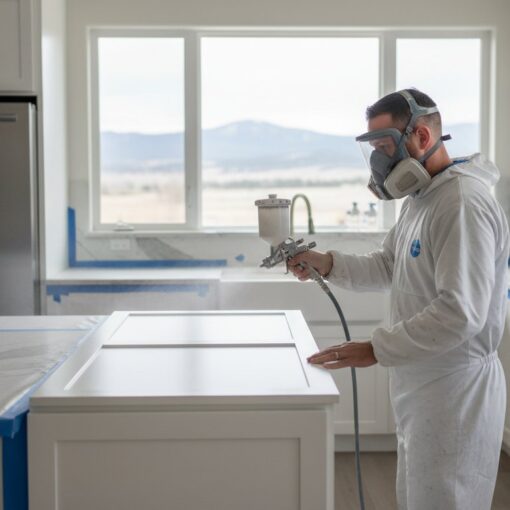
To see the kind of specialized equipment and attention to detail a professional brings to the job, watch this short video:

Are you a cabinet refinishing specialist or a general painter?
This is the most critical question. Painting kitchen cabinets is a highly specialized trade that is completely different from painting walls. It involves meticulous prep work, spray application for a factory-smooth finish, and a deep knowledge of durable coatings. A specialist knows that understanding paint types and their chemical composition is crucial for a finish that won’t chip or peel.
-
Good Answer: "We specialize exclusively in cabinet refinishing. It’s 90% of our work, and we have a dedicated process and spray shop for it."
-
Red Flag: "We can paint anything – houses, decks, cabinets…" This usually means they are a generalist who lacks the specific tools and experience for a durable, high-quality cabinet finish.
Are you fully insured and can you provide proof?
Never hire a contractor who isn’t fully insured. This is non-negotiable. Proper insurance protects you and your home from liability in case of an accident or property damage. A professional operation sees insurance as a standard cost of doing business, not an optional extra.
-
Good Answer: "Yes, we carry full general liability and workers’ compensation insurance. I can have our agent email you the certificate of insurance today."
-
Red Flag: "We’re very careful, we don’t need it." or any hesitation to provide immediate, verifiable proof.
Can I see a portfolio of recent projects and speak to references?
Past work is the best indicator of future results. A proud contractor will be eager to show you their finished projects. Look for high-quality, well-lit photos-not blurry pictures on a phone. Speaking to recent, local clients gives you unfiltered insight into their process, cleanliness, and the long-term quality of their work.
-
Good Answer: "Absolutely. You can see our gallery on our website, and I can provide contact information for my last two clients so you can ask them directly."
-
Red Flag: A sparse portfolio, an unwillingness to provide references, or only having references from years ago.
The Heart of the Job: Questions About the Refinishing Process
The difference between a durable, factory-like finish and a peeling, chipping disaster comes down to one thing: the process. Any house painter can apply a coat of paint, but a true cabinet refinishing specialist understands that the real work happens long before the color goes on. Amateur painters cut corners on preparation, leading to guaranteed failure. The following are the most critical questions to ask a cabinet painter to understand their methods, attention to detail, and commitment to a quality, long-lasting result.
What is your step-by-step preparation process before painting?
This is the most important question you can ask. Proper prep is at least 80% of the job. A contractor who rushes this stage is setting you up for failure. A true professional, who follows industry best practices like those outlined by the Painting Contractors Association (PCA), will have a detailed, non-negotiable system for preparing your cabinets for their new finish.
-
Good Answer: "First, we remove all doors and drawers. We then degrease and clean every surface with a professional-grade solution to remove years of grime. After that, we scuff sand everything to create a profile for the primer to grip, make any necessary repairs, and then apply a high-adhesion bonding primer."
-
Red Flag: "We just give them a light scuff sand and start painting."
Do you spray the cabinet doors and frames or use brushes and rollers?
The application method directly impacts the final look and feel of your cabinets. While a skilled painter can get decent results with a brush on a wall, it’s impossible to achieve a perfectly smooth, hard-wearing finish on cabinets without spraying. Brush marks and roller texture have no place on a professional cabinet job.
-
Good Answer: "We spray everything. Doors and drawers are sprayed in our controlled shop environment, and the cabinet frames are meticulously masked off and sprayed on-site for a seamless, factory-like finish."
-
Red Flag: "We get great results with our high-quality brushes and rollers."
Where is the work done? Do you take doors and drawers off-site?
This is one of the key questions to ask a cabinet painter to understand the level of disruption in your home and the quality control they maintain. A professional setup involves doing the majority of the messy, detailed work off-site. Trying to sand, prime, and spray 20-40 cabinet doors in a makeshift space in your garage or kitchen is a recipe for a dusty mess and a flawed finish.
-
Good Answer: "We remove all doors and drawers and take them to our dedicated spray shop. This allows us to control the environment for perfect results and minimizes the dust, fumes, and disruption in your home."
-
Red Flag: "We do everything right here in the kitchen to get it done fast for you."

Tools of the Trade: Questions About Paints and Materials
A painter’s skill is only half the equation. The products they use determine whether your cabinets look amazing for a decade or start chipping within a year. An amateur house painter might grab a can of wall paint from the hardware store, leading to disastrous results. A true cabinet refinishing specialist uses industrial-grade coatings designed specifically for high-touch surfaces like cabinetry. These are the key material-related questions to ask cabinet painter to ensure you get a durable, factory-like finish.
What specific type of primer and paint do you use and why?
This is one of the most important questions you can ask. The answer separates the professionals from the pretenders. You are listening for specific, high-performance product names, not vague assurances. Standard latex or acrylic wall paint is not designed for the abuse cabinets endure; it will fail, leaving you with a peeling, sticky mess.
-
A Good Answer: "We use a high-adhesion bonding primer followed by an industrial-strength two-component acrylic urethane or a conversion varnish. These products cure to a hard, non-porous surface that resists chemicals and wear."
-
A Major Red Flag: "We use a top-of-the-line paint-and-primer-in-one." This is an immediate deal-breaker and the sign of a painter who doesn’t specialize in cabinets.
How durable is the finish and what is the full cure time?
A professional finish is incredibly durable, but it doesn’t happen overnight. Understanding the curing process is vital for the long-term performance of your cabinets. A contractor should be direct and clear about the timeline to prevent accidental damage to the new surface. While the paint may be dry to the touch in hours, it needs time to fully harden. Expect a full cure time of 14-30 days, during which you should treat the surfaces with care. Anyone who tells you the kitchen is ready for heavy, normal use the next day is using an inferior product or doesn’t understand its chemistry.
How do you handle filling grain, seams, and caulking?
The difference between a good and a great cabinet finish is in the details. Oak cabinets, for example, have a deep, open grain. If this isn’t filled correctly, you will see distracting pits and lines through the paint. A true craftsman has a meticulous process for creating a smooth foundation.
They should explain their use of high-quality wood fillers for grain and flexible, paintable caulks for seams that won’t crack as the wood expands and contracts. If a painter dismisses the importance of filling grain or can’t explain their caulking process, they are cutting corners. At Cabinet Refinishing Boulder, we know that this level of preparation is what creates a lasting, high-end look.
Project Logistics: Questions About Timeline, Cost, and Guarantees
You’ve covered the process and materials. Now it’s time for the final, critical questions to ask your cabinet painter. These details about logistics and protections are what separate a professional operation from a risky hire. Getting clear, written answers ensures a smooth project with no surprises. A true professional will have no problem providing detailed, transparent answers to protect you and set clear expectations from the start.
How long will the entire project take from start to finish?
This question is about managing your life. You need to know exactly how long your kitchen will be a work zone. A vague answer isn’t good enough. Look for a contractor who can provide a clear, phased timeline.
-
Good Answer: "A standard project takes 5 to 10 business days. We’ll remove doors and drawers to work on them off-site, then spend a few days in your home prepping and painting the cabinet boxes. We’ll give you a detailed schedule."
-
Red Flag: "We can knock it out in a weekend." This almost always means they are skipping vital prep and curing steps, leading to a finish that will peel and fail quickly.
Is your quote a fixed price and what does it include?
Surprise charges are a homeowner’s worst nightmare. A quote should never be a mystery. A verbal price or a single number scribbled on a business card is a sign of an amateur. You need a detailed, itemized contract that protects you from unexpected costs down the line.
-
Good Answer: "This is a firm price that covers all labor, materials, prep work, and cleanup. It’s all broken down in our written contract so you know exactly what you’re paying for."
-
Red Flag: "We’ll figure it out as we go." Any hesitation to put the full scope and cost in writing should make you walk away.
What kind of warranty or guarantee do you offer on your work?
A warranty isn’t just a piece of paper; it’s a contractor’s promise that they stand behind the quality of their work. A painter who is confident in their preparation and application process will always offer a guarantee against workmanship defects. This is one of the most important questions to ask a cabinet painter to gauge their professionalism.
-
Good Answer: "We offer a multi-year written guarantee that covers any paint failure, like chipping or peeling, caused by improper preparation or application."
-
Red Flag: "Our work is so good, we don’t need a warranty." This is pure arrogance and a massive risk for you. If they won’t guarantee their work, they don’t truly believe in it.
We stand behind our work because we do it right the first time. Text us for a professional, detailed quote.
Make the Right Choice for Your Cabinet Refinishing Project
Choosing a professional for your kitchen cabinets is the most important decision you’ll make. By focusing on a painter’s experience, their detailed preparation process, and the quality of their materials, you can avoid the costly mistakes that come from hiring an amateur. Armed with these questions to ask cabinet painter, you are now equipped to separate the true specialists from general house painters and ensure you get a durable, beautiful finish.
Here in Boulder County, we make the choice simple. Cabinet Refinishing Boulder has specialized in creating flawless, factory-like finishes for local homeowners since 1985. With over 38 years of dedicated experience, we know what it takes to do the job right the first time. We believe in quality, and our work proves it.
Ready to see the difference a true specialist can make? Get a no-nonsense quote from a Boulder cabinet specialist. Text us photos of your kitchen. You are one step closer to the stunning, updated kitchen you deserve.
Frequently Asked Questions About Hiring a Cabinet Painter
What is a reasonable cost for professional cabinet painting?
The cost for professional cabinet painting typically ranges from $3,000 to $8,000 for an average-sized kitchen. The final price depends on the number of doors and drawers, the extent of prep work required, and the type of finish you choose. A detailed, itemized quote is a sign of a professional contractor. Beware of extremely low bids, as they almost always mean corners are being cut on crucial preparation steps, which leads directly to a failed finish.
Is it better to refinish, reface, or replace kitchen cabinets?
Refinishing (painting) is your best option if your cabinet boxes are in good condition and you like your kitchen’s layout. It offers a dramatic transformation for the least cost. Refacing involves replacing doors and drawer fronts, which is more expensive. A full replacement is a major renovation and the most costly option. For most homeowners looking for a modern update without a complete remodel, professional refinishing provides the greatest value and return on investment.
How long should a professional cabinet paint job last?
A professional cabinet paint job, done with proper preparation and high-quality materials, should last 8 to 15 years. The key is the process. A true cabinet specialist will degrease, sand, and use a bonding primer to ensure the finish adheres properly. A cheap paint job from a general house painter might look good for a year, but it will quickly begin to chip and peel because the vital prep work was skipped. Quality is not a shortcut.
What are the biggest red flags to watch for when hiring a painter?
The biggest red flags are a lack of a detailed process, no proof of insurance, and pressure for a large cash deposit. Ask to see a portfolio of completed cabinet jobs, not just walls. A vague contract is another warning sign. A true professional will explain their multi-step preparation and finishing process in detail. If they can’t explain how they will guarantee a durable, factory-like finish, you should not hire them for your project.
Can you paint any type of cabinet material, like laminate or thermofoil?
Yes, almost any cabinet material can be painted, but the process is critical. While wood is straightforward, surfaces like laminate, thermofoil, and MDF require specialized knowledge. They must be prepped with the correct cleaners and high-adhesion bonding primers to prevent peeling. This is one of the most important questions to ask a cabinet painter; if they don’t have a specific process for your material, they lack the necessary experience for a lasting finish.
What do I need to do to prepare my kitchen before the painters arrive?
Before our team arrives, we ask that you clear all items from your countertops. You should also decide if you want the interiors of your cabinets painted; if so, they will need to be emptied as well. This is a great time to declutter. We handle all the masking of floors, appliances, and backsplashes. Your main job is to clear the work area so we can begin the crucial preparation process without delay.