The fear of chipping paint, ugly brush strokes, and a finish that fails in six months is real. We’ve seen countless kitchen projects ruined because the wrong product was used. Homeowners and even general house painters often discover too late that finding the best paint for kitchen cabinets is about more than just color. It’s the single most important factor for a job that lasts, and getting it wrong means all your hard prep work goes to waste.
Cabinet Painting Service Areas in Lafayette CO, Boulder CO. & Surrounding Cities, Cabinet Refinishing in Boulder County, CO
Cabinet Painting in Boulder County & Northern Colorado
Brighton, CO, and Broomfield, CO.
Including Superior, CO, Louisville, CO, Niwot CO,
Lafayette, CO, Erie, CO, Firestone, CO,
Frederick, CO, Longmont, CO, Loveland, CO,
We also service projects throughout the entire state of Colorado.
Don’t let confusing terms like alkyd, enamel, or urethane stop you from getting the professional results you want. In this guide, we’re cutting through the marketing noise. With over 38 years of experience, we’ll show you exactly what to look for to achieve a durable, factory-smooth finish that stands up to daily kitchen life. You’ll learn the difference between paint that just covers and paint that protects, giving you the confidence to choose the right product for a beautiful, long-lasting transformation.
Key Takeaways
-
Kitchen cabinets require specialized paint that can withstand high traffic, grease, and constant cleaning in ways that standard wall paint cannot.
-
The best paint for kitchen cabinets is a professional-grade coating, like a urethane or alkyd enamel, chosen for superior hardness and a smooth, factory-like finish.
-
A flawless paint job depends on the right foundation; using a high-adhesion bonding primer is critical for long-term durability and adhesion.
-
Even the highest quality paint will fail without proper preparation and professional application techniques, which are essential for a lasting result.
Table of Contents
-
The Foundation of Success: Primer’s Role in a Flawless Finish
-
From DIY to Done Right: Why Professional Application Matters
Why Paint Choice is Critical for a Lasting Cabinet Finish
Choosing the best paint for kitchen cabinets is not a minor detail-it is the single most important factor for a durable, long-lasting finish. Your kitchen cabinets are not like your walls. They are high-touch, high-abuse surfaces that face daily wear and tear from opening, closing, and contact with hands, dishes, and cookware. A cheap or incorrect paint job will quickly reveal its weakness through chipping, peeling, and staining, forcing you to spend more time and money on repairs.
To better understand why the right product is essential, this video provides a helpful overview of professional-grade cabinet coatings.

The Unique Challenges of Kitchen Environments
A kitchen is a hostile environment for any painted surface. The finish on your cabinets must be engineered to withstand constant attack from multiple sources. These challenges include:
-
Moisture and Steam: Boiling water, dishwashers, and sinks create a humid environment that can weaken paint adhesion and cause blistering.
-
Grease and Food Splatters: Airborne cooking oils and food residue create a sticky film that attracts dirt and can chemically break down the paint over time.
-
Constant Cleaning: Cabinet doors and drawer fronts require frequent wiping and scrubbing. A weak paint film will quickly wear away under this abrasive cleaning, leaving the wood exposed.
Because of this, you need a hard, non-porous finish that seals the surface and can stand up to repeated scrubbing without failing.
Not All Paints Are Created Equal: Wall Paint vs. Cabinet Coatings
Using standard interior latex paint on your cabinets is a recipe for disaster. While wall paint is designed for flexibility to handle temperature changes on broad surfaces, it remains too soft for the concentrated abuse that cabinets endure. This is where professional-grade coatings make all the difference. Understanding the science behind different wood finishing techniques is vital for a successful project.
When searching for the best paint for kitchen cabinets, you will often see the term ‘enamel.’ An enamel paint dries to a hard, durable, shell-like finish that resists chipping and stains. Unlike standard latex, these specialized cabinet coatings are formulated to cure into a tough, furniture-grade surface. Using the wrong product guarantees a finish that will scratch easily, absorb stains, and begin to peel within months, wasting your entire investment.
The Pro’s Checklist: 4 Qualities of the Best Cabinet Paint
When a professional selects a coating for your cabinets, they aren’t just looking at the color chip. They’re evaluating the product’s performance against a strict set of criteria. The goal is always to replicate a durable, smooth "factory finish"-the kind of flawless surface you’d find on brand new, high-end cabinetry. Using the right product is what separates a paint job that looks good for a year from a refinished kitchen that lasts for a decade or more. This is the inside look at what we demand from a cabinet coating.
Superior Hardness and Durability
Your kitchen cabinets are a high-impact, high-traffic area. They get bumped by pots, scraped by keys, and wiped down constantly. The best paint for kitchen cabinets must cure to a rock-hard finish that resists this daily abuse. Standard wall paint is too soft and will easily scratch and scuff. We look for coatings with superior block resistance (so doors don’t stick to the frames) and chemical resistance for cleaning. This is why many expert reviews of top-rated cabinet paints focus heavily on scrubbability and hardness tests. A pro knows the finish must stand up to real-world wear and tear.
Excellent Adhesion and Bonding
Paint that chips or peels is a complete failure. A premium cabinet coating is formulated with advanced chemistry that allows it to bond tenaciously to a properly prepared surface. It’s designed to stick to slick, non-porous materials that would cause regular latex paint to fail. However, this quality is directly tied to the most vital factor in our process: preparation. The best coating in the world will peel if it’s applied over grease, grime, or an improperly sanded surface. Adhesion is a partnership between a great product and meticulous prep work.
Self-Leveling Properties for a Smooth Finish
Ever see a DIY paint job with visible brush strokes and roller texture? That’s because most wall paints are not designed to level out. The secret to a professional, spray-like appearance is a paint with excellent self-leveling properties. This means the paint is formulated to flow out smoothly after application, minimizing and often eliminating brush or roller marks as it dries. This single quality is one of the biggest differentiators between a standard house paint and a true cabinet enamel, delivering that smooth, glass-like surface that defines a high-end finish.
Paint Types Explained: Urethane, Alkyd, and More
Choosing the right paint goes far beyond the color chip. The chemical makeup of the coating is what determines the durability and final appearance of your cabinets. A professional cabinet painter does not use the same latex paint meant for your walls. We rely on specialized enamels designed for high-traffic, high-touch surfaces. Understanding these professional-grade options is the first step in selecting the best paint for kitchen cabinets.
Water-Based Urethane Enamels: The Modern Standard
This is the top choice for most high-end cabinet refinishing projects today. Urethane-modified acrylic enamels, like those from Sherwin-Williams, offer a factory-like finish that is exceptionally hard and durable. Its key benefits include extreme resistance to chipping and scuffing, excellent self-leveling properties for a smooth surface, and a non-yellowing formula that keeps white cabinets pure white. These modern coatings are also low in VOCs (Volatile Organic Compounds), making them safer for your home and compliant with strict US EPA VOC regulations.
Waterborne Alkyds: The Best of Both Worlds
Waterborne alkyds, such as Benjamin Moore ADVANCE, are advanced hybrid paints. They are engineered to provide the smooth, glass-like finish of a traditional oil-based paint but with the major advantage of water cleanup. This paint type has exceptional flow, which helps eliminate brush and roller marks. The primary drawback is the cure time. While it may feel dry to the touch in a few hours, it can take up to 30 days to fully harden, requiring careful handling by the homeowner. This is a critical factor that inexperienced painters often fail to account for.
Traditional Oil-Based Paints: Use Cases and Cautions
For decades, oil-based (or solvent-borne) enamels were the standard for a hard finish. While their durability is well-known, their significant downsides have led most professionals to abandon them for cabinet work. The cons are simply too great for an interior project:
-
Strong Odor: The high VOC content creates powerful, lingering fumes that are unpleasant and unhealthy.
-
Slow Drying: They take much longer to dry and cure, extending project timelines significantly.
-
Guaranteed Yellowing: Oil-based paints will yellow and amber over time. This is especially noticeable and damaging on white and light-colored cabinets.
With the superior performance and safety of modern technologies, there is little reason for a professional to consider oil-based products the best paint for kitchen cabinets today.

The Foundation of Success: Primer’s Role in a Flawless Finish
In our 38+ years of experience, we’ve seen one mistake ruin more cabinet jobs than any other: improper preparation. Many homeowners and, frankly, most amateur house painters, think primer is just a thin first coat of paint. This is wrong. Primer is not paint. It is a specialized bonding and sealing agent, and it is the absolute foundation of a durable, factory-grade finish. Skipping or skimping on this step guarantees failure.
The final topcoat gets all the attention, but the primer does the real work. It ensures the expensive finish coat you’ve chosen actually lasts. Without the right foundation, even the best paint for kitchen cabinets will peel, chip, or stain within a year. We consider proper priming a non-negotiable part of a professional job.
Why You Can’t Skip the Primer
Primer is engineered to solve specific problems before the first drop of color is ever applied. It’s the difference between a finish that looks good for a few months and one that looks great for years. Its main jobs include:
-
Ensuring Adhesion: Primer is formulated to "bite" into the cabinet surface, whether it’s wood, laminate, or a previous finish. It creates a powerfully adhesive layer that your topcoat can lock onto, preventing peeling and chipping, especially in a high-use area like a kitchen.
-
Blocking Stains and Bleed-Through: Woods like oak, cherry, and mahogany contain natural oils called tannins. Over time, these tannins will leach through water-based paints, creating ugly yellow or brown stains. A quality stain-blocking primer permanently seals these in.
-
Creating a Uniform Surface: Primer creates a smooth, consistent, non-porous surface. This ensures your final color looks even and rich across every door and drawer, without blotchy or dull spots.
Choosing the Right Primer: Shellac vs. Water-Based
Using the correct type of primer is just as important as using it at all. An experienced professional knows that not all primers are created equal. For kitchen cabinets, the choice almost always comes down to two types. A pro knows which situation calls for which product, a critical decision that determines the longevity of the entire project.
For problematic surfaces, especially raw oak or previously stained dark woods, a shellac-based primer is the ultimate solution. It offers unparalleled stain-blocking power and adhesion. For cabinets that are already painted and in good condition, a high-quality water-based bonding primer may be sufficient. Making the right call is what separates true cabinet refinishing experts from general painters. At Cabinet Refinishing Boulder, we use the specific primer system required to guarantee your finish lasts.
From DIY to Done Right: Why Professional Application Matters
You can spend weeks researching and buy the absolute best paint for kitchen cabinets, but if it’s applied incorrectly, the entire project will fail. The product is only half the equation; the process is what guarantees a beautiful, long-lasting result. This is the critical difference between a weekend DIY project and a professional cabinet refinishing service.
An amateur application can lead to chipping, peeling, and an uneven finish that highlights every flaw. A professional understands that the final coat of paint is simply the last step in a meticulous system designed for durability and a flawless appearance.
The Pursuit of a Factory Finish
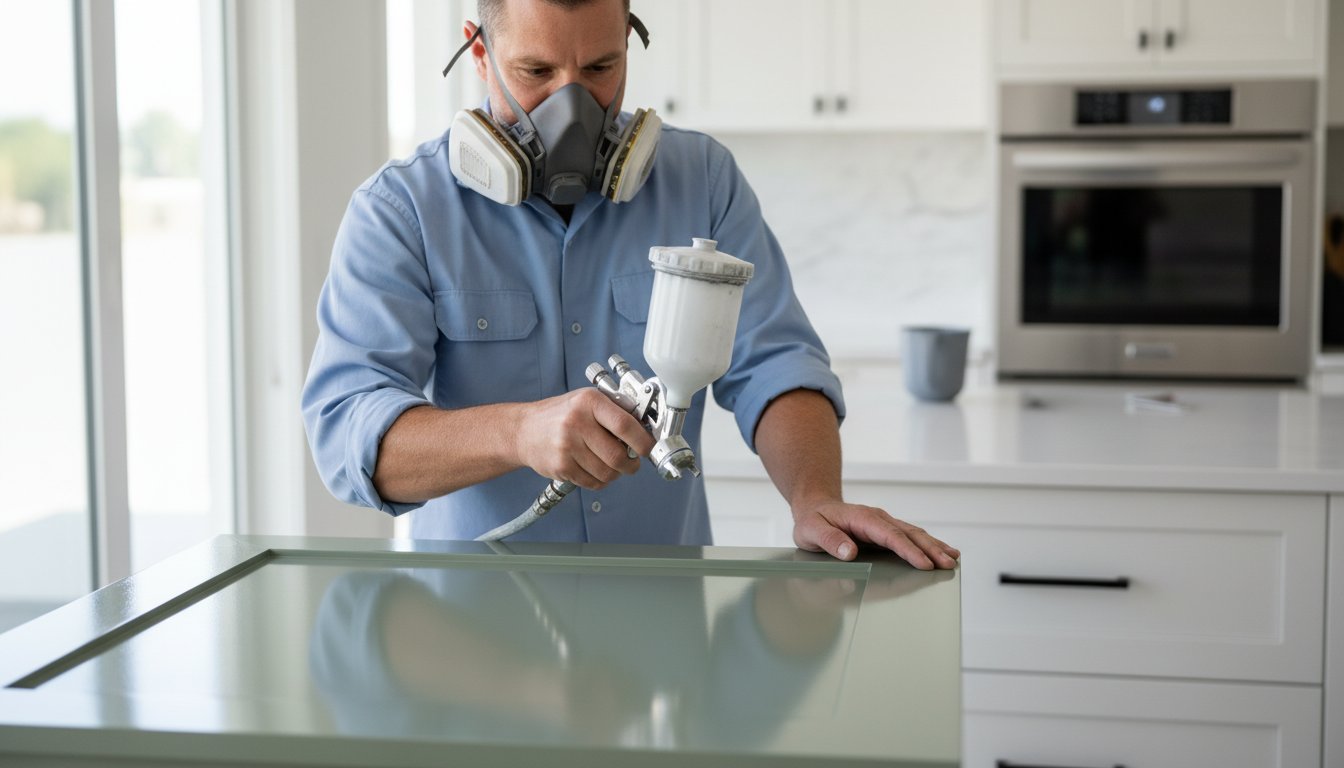
When you imagine perfectly painted cabinets, you’re thinking of a "factory finish." This means a smooth, hard, and even surface with no imperfections. Professionals achieve this using specialized High-Volume, Low-Pressure (HVLP) sprayers. This equipment atomizes the paint, laying down thin, even coats that self-level perfectly. Contrast this with DIY methods, which often leave behind tell-tale brush marks or the bumpy texture of a roller, known as stipple. We take your doors and drawers off-site to our controlled spray shop to ensure a dust-free environment for a pristine, durable cure.
It’s More Than Just Paint: It’s a Process
Achieving a lasting finish isn’t about slapping on a coat of paint. It’s a multi-step process where every stage is vital. Skipping or rushing any of these steps is why most DIY and amateur jobs fail within a year. Our proven system includes:
-
Degrease & Clean: Removing all built-up kitchen grease, grime, and contaminants.
-
Sand: De-glossing the old finish to create a surface the new primer and paint can grip onto.
-
Prime: Applying a high-adhesion bonding primer to ensure the topcoat never peels.
-
Caulk & Fill: Sealing all cracks and filling imperfections for a seamless look.
-
Paint: Applying multiple thin coats with professional spray equipment for a perfect finish.
This expertise saves you time, money, and the frustration of a failed project. While choosing the best paint for kitchen cabinets is a great start, the professional process ensures it looks and performs its best for years to come. Ready for a perfect finish? Get a professional quote from us.
Your Path to a Perfect, Lasting Cabinet Finish
Choosing the right paint for your kitchen cabinets is more than a matter of color-it’s the key to a finish that lasts. We’ve seen how crucial durability, proper priming, and professional-grade coatings are. These elements separate a temporary fix from a long-term investment in your home. Ultimately, the best paint for kitchen cabinets is a high-performance coating that is applied with expert skill and meticulous preparation.
This level of quality isn’t found in a can at the local hardware store. At Cabinet Refinishing Boulder, we bring over 38 years of specialized experience to every project in the Boulder area. We don’t take shortcuts. We use only the highest-grade professional coatings to deliver a durable, factory-like finish that stands up to daily life.
Tired of research? Let the pros give you a flawless finish. Get your free quote today!
Your dream kitchen is closer than you think.
Frequently Asked Questions About Cabinet Paint
What paint sheen is best for kitchen cabinets?
For kitchen cabinets, a satin or semi-gloss sheen is the best choice. These sheens offer excellent durability and are easy to clean, which is essential in a high-traffic area like a kitchen. A flat or matte finish will scuff easily and is difficult to wipe down. High-gloss shows every imperfection. We recommend a quality satin finish for a modern, low-lustre look that holds up to daily use and provides a factory-like appearance.
How long does professional cabinet paint take to fully cure?
Do not confuse "dry to the touch" with a full cure. While a professional cabinet coating may feel dry in a few hours, it takes 21 to 30 days to fully cure and achieve maximum hardness. During this crucial period, you must be gentle with the surfaces. Avoid aggressive scrubbing or impact to ensure the finish hardens properly. This patience is key to a durable, long-lasting result that withstands the demands of your kitchen.
Is Sherwin-Williams or Benjamin Moore better for cabinets?
Both brands produce high-quality coatings, but the specific product line is more important than the brand name itself. A professional will not use standard house paint. We use premium, industrial-grade products like Sherwin-Williams Kem-Aqua® Plus or Benjamin Moore’s Command™ Waterborne Acrylic Urethane. The key is using a coating designed for the high-demand use of cabinetry, not just a popular brand. The application technique is just as vital as the product.
Can you paint over dark wood or stained cabinets?
Yes, you can absolutely paint over dark or stained cabinets, but only with proper preparation. This is not a simple DIY job. The surface must be professionally cleaned, degreased, sanded, and then coated with a high-adhesion bonding primer. This process prevents the dark stain from bleeding through and ensures the new paint forms a strong, permanent bond. Skipping any of these steps is the number one cause of paint failure on cabinets.
Why does my freshly painted cabinet feel sticky or tacky?
A sticky or tacky finish is a sign of a problem. This is often caused by applying the paint too heavily, high humidity during the drying process, or not allowing enough time between coats. It can also be a result of using cheap, low-quality latex paint not formulated for cabinetry. A professional finish should feel smooth and hard. If your cabinets remain tacky, the coating was likely applied incorrectly and may need to be stripped and redone.
Is it cheaper to paint cabinets or replace them?
Professionally painting your cabinets is significantly more cost-effective than replacing them. A full cabinet replacement is a major construction project that can cost tens of thousands of dollars. Using the best paint for kitchen cabinets in a professional refinishing process typically costs 60-75% less than a full replacement. It provides a transformative, factory-fresh look for a fraction of the price and disruption, making it an excellent investment for updating your kitchen.