
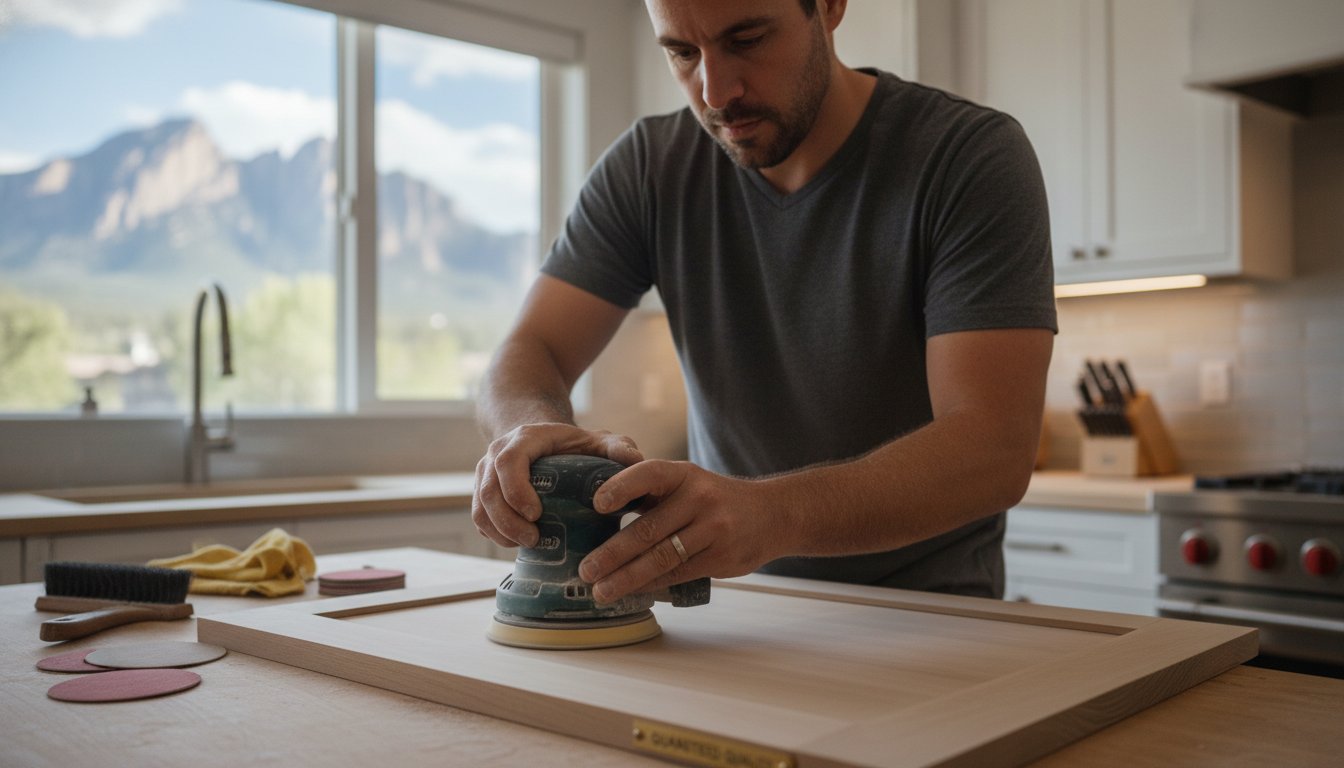
Skipping the sanding phase is the fastest way to turn a kitchen remodel into a costly disaster. You’ve likely seen “no-sand” products promising a shortcut to a new look. It’s natural to want to avoid the dust and mess in your home. We understand that homeowners in Denver and Boulder want a beautiful kitchen without the headache of a long, dirty process. However, the importance of sanding cabinets before painting is the difference between a finish that lasts decades and one that peels before the year is out.
Discover why professional sanding is the non-negotiable foundation for a durable, factory-grade cabinet finish that stands up to daily kitchen use. This guide explains how we use specialized equipment to create a “mechanical tooth” for our coatings while keeping your home clean. Our proven cabinet refinishing system is backed by 45 years of local expertise in Lafayette, Arvada, and Broomfield. This process ensures your kitchen cabinet painting investment is protected. We detail the technical reasons why proper preparation is the only way to achieve a flawless, smooth result that rivals brand-new cabinetry in the Denver area.
Key Takeaways
- Learn why creating a “mechanical tooth” through professional sanding is the only way to prevent paint peeling and ensure long-term adhesion.
- Understand the importance of sanding cabinets before painting to protect your investment and achieve a durable, factory-grade result.
- Discover the hidden risks of “no-sand” products and liquid deglossers that often lead to catastrophic finish failure in high-use kitchens.
- Find out why our proven sequence of cleaning, degreasing, and sanding is the standard for premium cabinet refinishing in the Denver and Boulder areas.
- Recognize why hiring a specialist with 45 years of local experience ensures a finish that withstands the daily wear of a busy Colorado household.
Does Every Cabinet Painting Project Require Sanding?
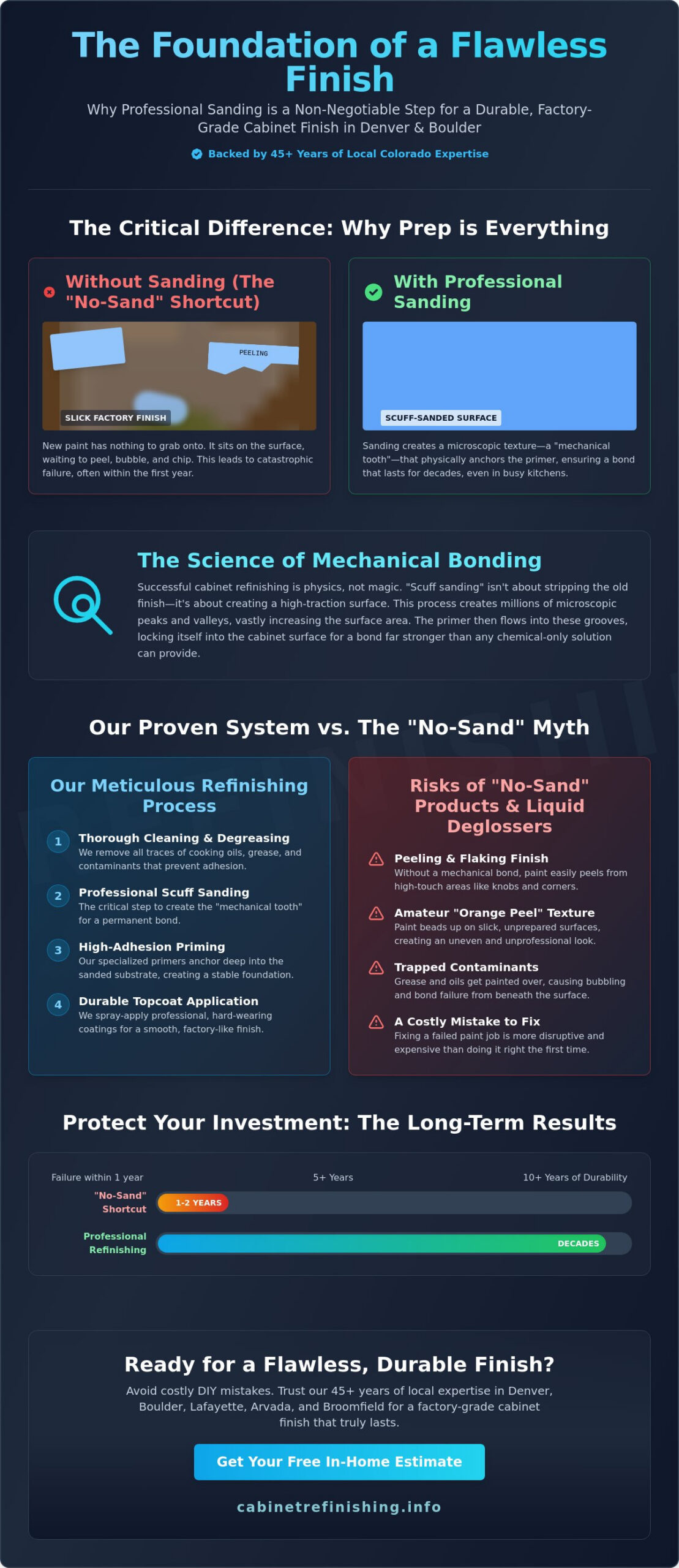
Every homeowner wants a shortcut when it’s time to update the kitchen. It’s tempting to believe marketing claims about “no-sand” paints or miracle primers. However, the short answer is yes; every professional project requires some level of abrasion. Most modern cabinets come with a UV-cured factory finish. These coatings are engineered to be incredibly slick and durable. While that’s great for cleaning, it’s a nightmare for new paint. Without sanding, the new coating has nothing to grab onto. It simply sits on the surface like a thin sheet of plastic waiting to peel.
Understanding the importance of sanding cabinets before painting starts with The Science of Mechanical Bonding. This isn’t about removing all the old wood or stripping the cabinets to a raw state. Instead, we perform “scuff sanding” to break the surface tension of the existing topcoat. This process creates millions of microscopic grooves. These tiny valleys allow the primer to anchor itself deep into the substrate. We’ve spent over 45 years perfecting this in homes across Boulder and Denver. We know that skipping this step is the primary reason why DIY and general painting projects fail within the first year.
To better understand this concept, watch this helpful video:

Debunking the ‘No-Sand’ Paint Myth
All-in-one paints are popular in big-box stores. They promise a one-step solution for busy homeowners in Arvada and Lafayette. These products often rely on high levels of resins to stick, but they can’t overcome a greasy or ultra-smooth factory finish. If the surface is too glossy, the paint will bead up during application. This creates an “orange peel” texture that looks amateur. Materials like laminate or thermofoil absolutely require mechanical abrasion because they are non-porous. Without sanding, there is zero chance of a permanent bond. We treat every project with a specialized approach because we know that “one-size-fits-all” products don’t work in the diverse Colorado climate.
The Risk of Skipping Prep in High-Traffic Kitchens
Kitchens are the most demanding rooms in a home. Cooking oils, steam, and hand greases penetrate every nook and cranny over time. If you don’t sand, these contaminants stay trapped under your new finish. They will eventually cause the paint to bubble or flake off around handles and high-touch areas. Professional kitchen cabinet painting always includes a meticulous sanding phase to ensure these oils are completely removed. It’s far more expensive to fix a peeling paint job than it is to do it right the first time. Our proven system in Broomfield and surrounding areas focuses on this preparation to ensure your investment lasts for decades, not just months.
The Science of Mechanical Bonding: How Sanding Prevents Failure
Successful cabinet refinishing depends on physics, not just aesthetics. Many homeowners in Denver and Boulder underestimate the technical importance of sanding cabinets before painting. When you apply a professional coating to a smooth surface, the paint relies entirely on chemical adhesion. This is often insufficient for the high-gloss, factory finishes found on most modern cabinetry. Sanding changes the game by introducing mechanical bonding into the equation. It transforms a slick, uncooperative surface into a high-traction substrate that is ready to receive a primer.
Mechanical tooth is the physical anchor point for professional primers. By scuffing the existing finish, we create millions of microscopic peaks and valleys. This process significantly increases the total surface area of the cabinet door. A flat, unsanded surface offers limited space for molecules to connect. A sanded surface provides a complex landscape where the primer can wrap around and “lock” into the material. This creates a bond that is far stronger than any chemical-only solution could provide. This technical approach is why our finishes don’t just look like a factory result; they perform like one too.
Chemical vs. Mechanical Adhesion
Most “no-sand” products claim that chemical deglossers are enough to prep a surface. While chemicals can remove some surface oils, they don’t create the physical profile needed for long-term durability. Our 45 years of local experience in Lafayette and Arvada confirms that mechanical abrasion is the gold standard. Professional primers are designed to “bite” into the profile created by sanding. Without that bite, the coating remains a separate layer that is susceptible to chipping. If you want to ensure your kitchen project is handled with this level of technical precision, consider a professional cabinet refinishing service.
Surface Profile and Coating Longevity
Proper substrate preparation prevents a common issue known as delamination. This occurs when the paint layer separates from the wood or laminate underneath. In Colorado, our extreme temperature fluctuations cause wood to expand and contract rapidly. This movement puts immense stress on the bond between the coating and the cabinet. A finish that only has a weak chemical bond will crack and flake under these conditions. A sanded surface ensures the primer is physically integrated into the substrate. This allows the coating to move with the wood, which is essential for a finish that lasts for decades in the Broomfield area. We use a specific sequence of grit sizes to match the thickness of our professional-grade coatings, ensuring the profile is deep enough for a grip but fine enough for a smooth, mirror-like finish.
Sanding vs. Liquid Deglossers: Why Professionals Don’t Cut Corners
Many DIY tutorials recommend liquid deglossers as a miracle shortcut for kitchen updates. These products, often marketed as “liquid sandpaper,” claim you can simply wipe a chemical over your doors to prepare them for a new coat. This is a dangerous oversimplification. These products are essentially strong solvents that soften the existing finish. They do nothing to level the surface or remove physical defects. The importance of sanding cabinets before painting is most obvious when you consider the bond. A liquid cannot replace the physical “tooth” created by a sanding pad. We’ve seen hundreds of failed projects in Denver where homeowners used chemicals instead of elbow grease. The result is always the same; the paint peels off in sheets within months. We use high-end, dust-controlled sanding equipment to provide a superior surface without the mess.
When Liquid Deglossers Are (and Aren’t) Useful
Liquid deglossers can help strip away heavy layers of cooking grease. This is their only real benefit. However, they often leave behind a soapy or oily film that is difficult to neutralize. If any chemical residue remains, the new primer will fail to stick. We prioritize mechanical sanding because it is a clean, predictable process. Our HEPA-filtered vacuum systems capture the vast majority of dust at the source. This is a much healthier alternative to filling your home with the harsh fumes of volatile chemicals. For families in Arvada and Lafayette, this professional approach provides peace of mind. It ensures the air stays clean while the cabinets get the best possible preparation.
The ‘Factory Finish’ Requirement
Achieving a smooth, factory-like look requires a substrate that is as flat as glass. Most cabinets have minor dings, grain raising, or old paint drips from previous years. A liquid deglosser follows the existing contour of these flaws. It doesn’t fix them. Sanding is the only tool that can level the surface. We use a sequence of fine-grit abrasives to shave down imperfections. This creates the furniture-grade foundation necessary for professional cabinet refinishing. When we spray our hard-wearing coatings, they lay flat over this prepared surface. This is how we provide that high-end look homeowners in Boulder and Broomfield demand. Cutting corners with “liquid sanders” will always result in a finish that looks like a cheap cover-up rather than a professional restoration.
The Professional Sanding Process: A Step-by-Step Breakdown
A factory-grade finish isn’t an accident. It’s the result of a disciplined, multi-step system. Many general painters rush through the preparation phase to save on labor costs. We don’t. Our 45 years of local experience in Denver and Boulder has taught us that the first hour of work determines the final quality. This begins with protecting your home. We perform meticulous masking of floors, walls, and appliances before any abrasive touches your cabinets. This professional containment ensures that the rest of your house remains clean and dust-free throughout the project.
Initial Prep and Cleaning
You must clean before you sand. This is a critical rule that many amateurs ignore. Kitchen cabinets are often coated in invisible layers of cooking oils and skin grease. If you start sanding immediately, the heat from the friction will gum up the sandpaper. More importantly, it will drive those oils deeper into the wood grain or old finish. This ruins the bond before you even start painting. We use industrial-strength degreasers to ensure the surface is chemically clean. Only after the grease is gone do we address the mechanical profile. This prevents contaminants from being trapped under your new coating, which is a primary reason for premature peeling in high-traffic kitchens.
The Grit Progression for Cabinets
The sequence of grits is vital for a smooth result. We start with a 120 to 150 grit for the initial scuff. This is aggressive enough to break the factory seal but fine enough to avoid leaving deep gouges in the wood. This step highlights the importance of sanding cabinets before painting, as it creates the necessary texture for the primer to anchor. After the primer is applied and dried, we sand again with a finer 220 grit. This removes any “nibs” or airborne dust that settled during the drying process. This meticulous kitchen cabinet refinishing process is how we achieve a mirror-smooth surface that feels like furniture, not a DIY project.
Sanding between the primer and topcoat is the final secret to a professional look. It ensures the final layer of paint lays down perfectly flat without any texture or “orange peel.” We use HEPA-filtered vacuum systems attached directly to our sanders in Arvada and Lafayette. This captures dust at the point of contact. If you want a kitchen that looks like it came straight from a showroom, you need a team that respects every step of the preparation. Schedule your on-site estimate today to see the difference our professional preparation makes for your home.
Choosing a Cabinet Painting Specialist in Boulder for a Durable Result
General house painters are not cabinet specialists. They often treat your high-end cabinetry like drywall, which is a massive mistake for long-term durability. Many contractors skip the labor-intensive steps of deep cleaning and mechanical abrasion to underbid the job. This creates a high risk of finish failure. We’ve spent 45 years fixing peeling projects that were handled by less-qualified competitors. When you interview a contractor for your kitchen, ask specifically about their sanding sequence. If they don’t mention HEPA-filtered equipment or a multi-grit progression, they aren’t providing a factory-grade result. A specialist understands that the foundation of the job is the most important part of the investment.
Local Expertise in the Denver Metro Area
Colorado’s semi-arid climate is brutal on wood. The low humidity in the Denver area causes cabinet doors to shrink and expand more aggressively than in other parts of the country. This constant movement puts extreme stress on the bond between the paint and the wood. We understand the technical importance of sanding cabinets before painting specifically for the local housing market. Our systems are proven in Boulder, Lafayette, Arvada, and Broomfield. We don’t use generic house paint that sits on the surface. We use professional-grade coatings that anchor into the wood profile. This ensures your kitchen withstands the dry air and temperature swings common in the Front Range.
Investing in Quality Over Shortcuts
Choosing cabinet refinishing over a full replacement can save you thousands of dollars. However, those savings only matter if the finish lasts for decades. A high-quality job is a direct investment in your home’s resale value. It provides a hard, durable surface that resists the daily grease and steam of a busy kitchen. We make it easy to get started without the typical contractor headaches. You can get an immediate estimate by texting us clear photos of your current kitchen layout. This efficient, no-nonsense approach is why local homeowners trust us with their most important rooms. We value your time and take personal pride in every project we complete in the community.
Don’t settle for a contractor who cuts corners on the preparation phase. Meticulous sanding and cleaning are the only ways to achieve a result that doesn’t chip or peel. We have the experience, the tools, and the local reputation to do the job right the first time. Ready for a factory finish? Contact Boulder’s cabinet experts for a free estimate.
Achieve a Factory Finish That Lasts
Your kitchen is the heart of your home. Protecting that space requires a commitment to the fundamentals of proper preparation. Mechanical bonding is the only way to ensure a finish that doesn’t peel or chip under heavy daily use. Shortcuts like liquid deglossers or skipping the abrasive phase lead to expensive failures that compromise your investment. By choosing a specialist who uses specialized dust-controlled sanding systems, you get a factory-grade result without the mess in your home.
Understanding the importance of sanding cabinets before painting ensures your kitchen stays beautiful for decades. We bring 45+ years of local experience and hundreds of completed projects in Boulder and Denver to every job we touch. Our proven systems deliver the durable, furniture-grade look you deserve without the disruption of a full replacement. Don’t risk your kitchen with generalists who cut corners on the most critical steps.
Get a Fast Estimate for Your Cabinet Refinishing Project
We look forward to helping you achieve a flawless finish that adds lasting value to your Colorado home.
Frequently Asked Questions
Is it possible to paint cabinets without sanding at all?
Painting without sanding is technically possible, but it’s a guaranteed recipe for failure. Modern factory finishes are designed to repel liquids, which includes new paint. Without scuffing the surface, the coating has no mechanical tooth to grip. You might get the paint to stay on temporarily, but it will eventually peel away in large sheets. We never skip this step because our 45 years of experience proves it’s the only way to ensure longevity.
Will sanding my cabinets create a huge mess in my kitchen?
Professional sanding is a clean process when performed with the right equipment. We use specialized dust-controlled sanding systems that connect directly to HEPA-filtered vacuums. This setup captures nearly all airborne particles at the point of contact. We also perform meticulous masking of your countertops, floors, and appliances. Homeowners in Boulder and Denver can rest easy knowing their living space stays clean while we achieve a factory-grade finish.
How much sanding is actually required for a professional finish?
You don’t need to strip the cabinets to bare wood for a successful refinishing project. Most jobs require a thorough scuff sanding to break the gloss of the existing topcoat. This creates the necessary profile for the primer to bond. We then perform a light, fine-grit sand after the primer dries to remove any imperfections. This sequence is what creates the smooth, furniture-grade feel that distinguishes professional work from a standard house painting job.
What happens if you don’t sand cabinets before painting?
Skipping the prep work leads to catastrophic paint failure, often within the first few months. Without the tooth created by abrasion, the paint simply sits on top of the old finish. This highlights the importance of sanding cabinets before painting to prevent chipping around handles and high-traffic edges. Once the bond fails, the only solution is to strip everything off and start over. This makes the initial prep the most cost-effective part of the project.
Do I need to sand between every coat of paint and primer?
Yes, sanding between coats is essential for a smooth, high-end result. Even in a clean environment, microscopic dust particles or nibs can settle into wet paint. A quick pass with a very fine 220-grit abrasive levels these small bumps. It also provides a fresh surface for the next layer to grip. This attention to detail is why our kitchen cabinet painting results look like they came straight from a high-end showroom.
Can I use a liquid deglosser instead of sanding for my kitchen cabinets?
Liquid deglossers are not an effective substitute for physical sanding in a professional setting. These chemicals soften the finish but they don’t create the mechanical grooves needed for a permanent bond. They also leave behind chemical residues that can actually interfere with paint adhesion. We prioritize mechanical sanding because it’s predictable and cleaner. It’s the only method we trust to provide a durable finish for our clients in Arvada and Lafayette.
Does sanding remove the wood grain or just the finish?
Professional sanding is designed to target the slick factory topcoat, not the wood itself. We use specific grit progressions to ensure we only remove the sheen and any surface defects. If your cabinets have a heavy oak grain, the sanding will smooth out the peaks without stripping the character of the wood. This controlled approach is a core part of the importance of sanding cabinets before painting because it preserves the structural integrity of your doors.
How do professionals handle the dust during the sanding process?
We use a combination of containment and high-tech extraction to manage dust. Our team masks off the entire kitchen with professional-grade plastic and tape to protect your walls and floors. Every sander is attached to a powerful vacuum system that pulls dust away before it can enter the air. This meticulous process ensures that your home in Broomfield or Denver remains livable and safe throughout the entire cabinet refinishing project.