Nothing ruins the look of a new kitchen faster than a bad cabinet finish. You know the signs: visible brush strokes, a bumpy texture from a roller, and a finish that looks cheap and starts to fail within a year. You want that perfectly smooth, durable surface that looks like it came straight from the factory, but you’re worried that professional methods are too messy or expensive. This brings us to the most critical decision in any cabinet refinishing project: the debate over spraying vs rolling cabinets.
Cabinet Painting Service Areas in Lafayette CO, Boulder CO & Surrounding Cities, Cabinet Refinishing in Boulder County, CO
Cabinet Painting in Boulder County & Northern Colorado. Brighton, CO, and Broomfield, CO.Including Superior, CO, Louisville, CO, Niwot CO,Lafayette, CO, Erie, CO, Firestone, CO,Frederick, CO, Longmont, CO, Loveland, CO,We also service projects throughout the entire state of Colorado.
As cabinet refinishing specialists with over 45 years of experience, we’ve seen the costly results of choosing the wrong application method. A roller simply cannot achieve the flawless, hard-wearing surface that protects your investment. In this article, we’ll give you the professional’s verdict. We will break down the critical differences between spraying and rolling, show you why spraying delivers a superior, long-lasting finish, and give you the confidence to know exactly what to ask for when hiring a pro. It’s time to get a clear, definitive answer.
Key Takeaways
-
The application method is the single most important factor in achieving a durable, factory-quality finish on your cabinets.
-
The debate over spraying vs rolling cabinets comes down to long-term durability and cleanability, not just initial appearance.
-
Discover why professionals choose specialized spray equipment for a flawless, hard-wearing surface that rolling cannot replicate.
-
Learn the hybrid approach that quality-focused painters use to maximize results on-site while minimizing disruption in your home.
Table of Contents
-
Spraying Cabinets: The Professional Standard for a Factory Finish
-
The Verdict: Why Spraying is the Only Choice for a Lasting Investment
The Core Difference: Finish Quality and Durability
When you refinish your kitchen cabinets, the end goal is a surface that is smooth, hard, and easy to clean. The single most important factor in achieving a professional result is the application method. This is the heart of the spraying vs rolling cabinets discussion. One method atomizes paint into a fine mist for a flawless layer, while the other transfers it from a textured surface. The difference is not subtle.
To see a direct comparison of the final texture, watch this helpful video:

Texture and Smoothness: The Feel of the Finish
A sprayed finish is perfectly seamless. It creates a glass-like surface with absolutely no texture, identical to what you find on high-end, factory-manufactured cabinets. Rolling, even when done by a meticulous painter with the best foam roller, inevitably leaves behind a slight stipple or "orange peel" texture. This texture is the number one sign of an amateur job and is most visible on flat panels and in certain lighting conditions.
Durability and Adhesion: How the Finish Wears Over Time
Durability is directly linked to the consistency of the paint film. The process of spray painting applies a measurably thicker and more uniform coat of material across the entire cabinet door and frame. This even layer cures into a hard, resilient shell that resists chipping and stands up to daily cleaning and use. In contrast, rolled coats are thinner and can have microscopic inconsistencies that create weak spots in the finish. A sprayed finish provides superior coverage on sharp corners and edges, which are the most common points of failure for a rolled cabinet finish.
Spraying Cabinets: The Professional Standard for a Factory Finish
When it comes to achieving a truly flawless, factory-grade finish on your cabinets, there is no debate. Spraying is the undisputed professional standard. While the discussion of spraying vs rolling cabinets often comes up with homeowners, any seasoned expert will tell you the methods are in different leagues. The smooth, durable surface achieved by a professional sprayer is simply impossible to replicate with a brush or roller. However, this superior result is not just about the equipment; it’s a direct product of extensive preparation, specialized tools, and years of hands-on experience.
Pros: Why Experts Choose to Spray
For a company specializing in high-end cabinet refinishing, the benefits of spraying are non-negotiable. It’s the only way to deliver the quality our clients expect and deserve.
-
Unmatched Finish Quality: Spraying atomizes the paint, laying down a perfectly even layer that dries to a hard, mirror-smooth surface. There are no brush strokes or roller marks—ever.
-
Superior Durability: A sprayed finish provides a thicker, more uniform coating that cures into a resilient shell, protecting your cabinets against the daily wear and tear of a busy kitchen.
-
Efficiency on Doors: We can apply multiple perfect coats to dozens of cabinet doors and drawer fronts in a fraction of the time it would take to roll them, ensuring consistency across the entire project.
-
Perfect Coverage: Paint is forced into every corner, crevice, and piece of detailed trim, providing seamless coverage without the risk of drips or pooling common with hand painting.
Cons: The Challenges of Professional Spraying
The pristine results of cabinet spraying come at a cost of intense labor and expertise. This is precisely why it is not a DIY-friendly method and where amateur house painters often fail, leaving homeowners with a mess.
-
Extensive Preparation: To contain overspray, the entire work area must be meticulously masked off. This includes floors, countertops, appliances, walls, and ceilings. It is a time-consuming but vital step for a clean job.
-
High Skill Requirement: Using professional equipment like HVLP (High Volume, Low Pressure) or airless sprayers takes years of practice. An inexperienced hand will cause runs, drips, and an uneven "orange peel" texture.
-
Expensive Equipment: A professional-grade sprayer, along with necessary ventilation and safety gear, represents a significant investment. This is not the equipment you rent from a big-box store.
-
Not for Amateurs: In the spraying vs rolling cabinets debate, the high risk of a disastrous result is why amateurs should avoid spraying. The skill, prep, and equipment involved mean their results will never compare to a professional’s.
Rolling Cabinets: When Is It a Viable Option?
Many homeowners and general house painters attempt to refinish cabinets with a roller. It’s a common method for DIY projects because it seems simple. From a professional standpoint, however, rolling is almost never the right choice for a full kitchen remodel. The difference in equipment tells the story: a simple foam roller and a paint tray versus a high-volume, low-pressure (HVLP) spray system that requires extensive training and maintenance.
Let’s be perfectly clear: a rolled finish will never look like a factory-sprayed finish. While there are a few limited situations where it might be considered, it’s crucial to understand its significant drawbacks. The debate of spraying vs rolling cabinets is not a close one when quality is the number one priority.
Pros: The Practical Advantages of Rolling
While we don’t recommend it for a full kitchen, we acknowledge that rolling has a few practical benefits that make it appealing for certain, very specific tasks.
-
Less Mess: The biggest advantage is the absence of overspray. This means significantly less time spent on masking and protecting your kitchen. You don’t need to create a fully sealed spray booth in your home.
-
Lower Upfront Cost: The tools are inexpensive. A high-quality foam roller, a tray, and a brush for corners cost a fraction of a professional spray system.
-
Good for Minor Touch-Ups: For a very small, isolated repair or a single piece of furniture like a bathroom vanity where a flawless finish isn’t critical, rolling can be a passable solution.
-
Accessibility: Anyone can pick up a roller and start painting. This accessibility makes it the go-to for weekend projects, though the results will always reflect the method’s limitations.
Cons: The Unavoidable Downsides for Cabinets
Here is why professional cabinet refinishers avoid rollers. The downsides directly impact the two things that matter most: the final appearance and long-term durability.
-
Visible Texture: No matter the quality of the roller or the skill of the painter, rolling will always leave behind a slight "orange peel" or stipple texture. It is impossible to achieve the perfectly smooth, glass-like surface of a sprayed finish.
-
Inconsistent Coverage: Cabinet doors have detailed profiles, corners, and edges. A roller struggles to apply an even coat in these areas, often leading to drips, runs, and thick, uneven buildup.
-
Slower Application: Applying multiple thin, even coats by hand is incredibly time-consuming. What takes a professional sprayer a few hours can take days with a roller, increasing labor time and kitchen disruption.
-
Lower Durability: The final paint film from a roller is often uneven and less uniform than an atomized, sprayed coat. This inconsistency makes it more susceptible to chipping, peeling, and premature wear, especially in a high-traffic kitchen environment.
When comparing spraying vs rolling cabinets, the verdict from a professional perspective is decisive. For a finish that is durable, beautiful, and looks like it came from a factory, spraying is the only method that meets the standard.

The Hybrid Approach: How We Deliver Flawless Results
When homeowners debate spraying vs rolling cabinets, they often assume it’s an all-or-nothing choice. The truth is, a true cabinet refinishing specialist knows the secret isn’t picking one method, but combining them for a superior result. A general house painter might try to spray everything inside your home, creating a massive mess and risking a flawed finish. Others will take the easy way out and roll the surfaces, leaving behind brush marks and an unprofessional texture.
Our proven hybrid method is different. It’s a systematic process designed to deliver a factory-quality finish with minimal disruption to your life. This meticulous approach is what separates a dedicated cabinet professional from a handyman with a paint can. It’s how we guarantee a flawless, durable finish every time.
Off-Site Perfection: Spraying Doors and Drawers
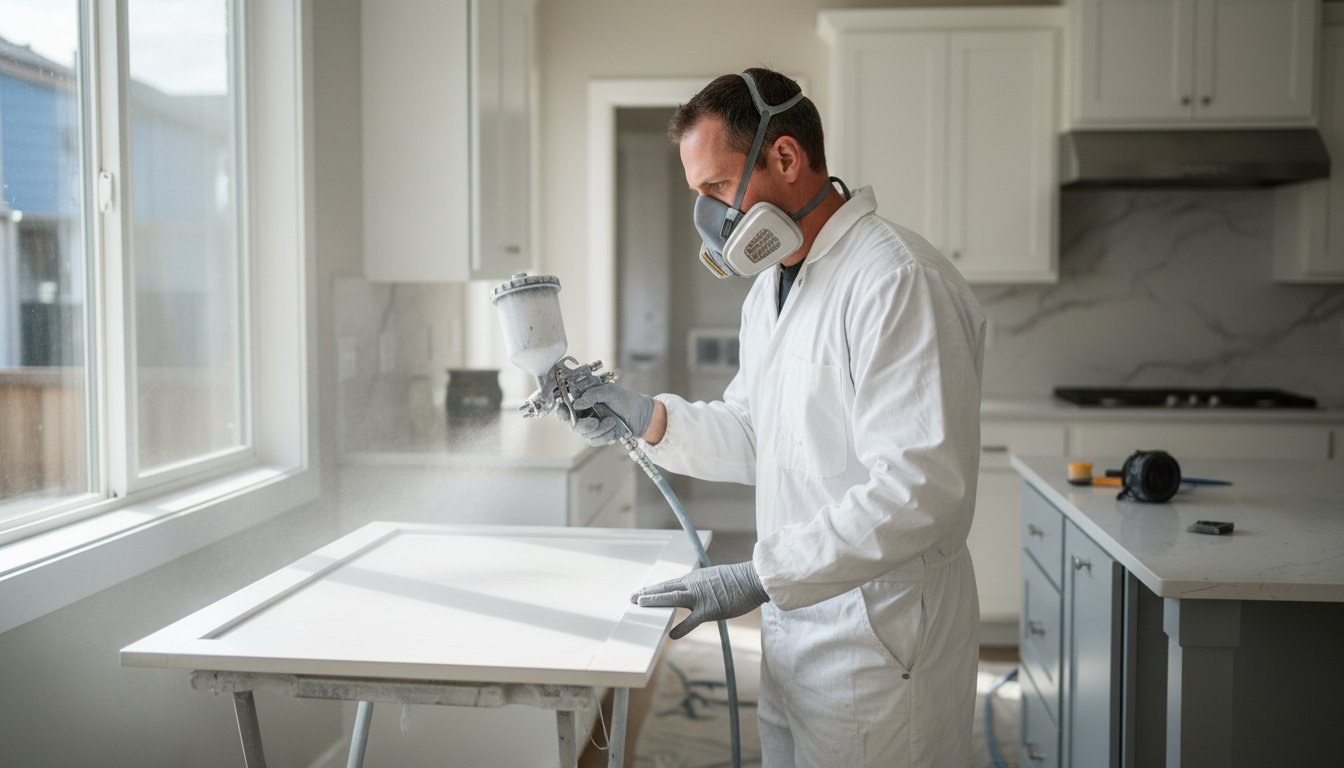
The parts of your cabinetry you see and touch most—the doors and drawer fronts—demand a perfect, glass-smooth finish. To achieve this, we carefully remove every door and drawer front and transport them to our dedicated finishing shop. In this controlled, dust-free environment, we perform the critical work:
-
Meticulous Prep: Each piece is thoroughly cleaned, degreased, sanded, and primed.
-
Flawless Application: We apply multiple coats of premium, industrial-strength lacquer using professional spray equipment.
-
Proper Curing: The finish is allowed to cure in ideal conditions, free from household dust, humidity, or potential damage. This ensures maximum hardness and durability.
On-Site Precision: Finishing the Cabinet Boxes
While your doors and drawers are being perfected off-site, our team works efficiently in your home. We meticulously prep and mask your kitchen, protecting your countertops, floors, appliances, and walls. With everything shielded, we then spray the cabinet boxes (frames) on-site. We use professional ventilation and extraction systems to manage overspray and ensure a clean environment. This crucial step ensures the finish on your cabinet frames is a perfect match to the factory-quality finish of your doors, creating a seamless, cohesive, and stunning final look. The argument over spraying vs rolling cabinets ends here—this is the professional standard. See examples of our flawless sprayed finishes to witness the quality for yourself.
The Verdict: Why Spraying is the Only Choice for a Lasting Investment
After more than 38 years in this business, our verdict is clear: for a professional, durable finish that looks like it came from the factory, spraying is non-negotiable. This isn’t just about appearance; it’s about investing in your home’s value. A rolled finish is a short-term cosmetic fix that often looks like a DIY project. A professionally sprayed finish is a long-term upgrade that protects your cabinets and enhances your entire kitchen.
When considering spraying vs rolling cabinets, you are choosing between a temporary patch and a permanent solution. Any painter who suggests rolling your cabinets is signaling a lack of specialized skill and equipment. True cabinet refinishing is a craft, not just another paint job.
Spraying vs. Rolling: At a Glance
.comp-table { width: 100%; border-collapse: collapse; margin: 20px 0; }
.comp-table th, .comp-table td { border: 1px solid #ccc; padding: 12px; text-align: left; }
.comp-table th { background-color: #f2f2f2; font-weight: bold; }
.comp-table td { vertical-align: top; }
| Feature | Spraying | Rolling |
|---|---|---|
| Finish Smoothness | Factory-smooth, flawless, and even. No texture. | Slight texture (stipple), potential for drips and brush marks. |
| Durability | Extremely high. Creates a hard, cross-linked shell that resists chipping and wear. | Moderate at best. Prone to peeling and chipping in high-use areas. |
| Speed | Faster application time after extensive prep, ensuring efficient project completion. | Slow, laborious application process, especially on detailed cabinet doors. |
| Best For… | A lasting, high-end kitchen transformation that increases home value. | Small DIY touch-ups or low-traffic areas where perfection is not required. |
Cost vs. Long-Term Value
Yes, a professional spray job costs more upfront. That higher price covers the vital factors for success: extensive prep work, disassembly, specialized equipment like HVLP sprayers, and the skill required to apply industrial-grade coatings correctly. You are paying for an expert process, not just paint.
However, this initial cost provides far greater long-term value. A sprayed finish can last for a decade or more with proper care. A poorly rolled finish may begin to fail in just a year or two, forcing you to pay all over again to have it stripped and done correctly. The most expensive paint job is the one you have to do twice. Don’t settle for a temporary fix that devalues your home. For a finish that lasts, trust the professionals at Cabinet Refinishing Boulder.
The Verdict: A Sprayed Finish is the Only Choice for Your Cabinets
The debate over spraying vs rolling cabinets comes down to one thing: professional, lasting quality. A rolled finish will always show brush marks and lack the durability needed for high-traffic areas like a kitchen. Spraying is the only method that creates a truly flawless, factory-like surface that looks and feels new. This isn’t just about appearance; it’s about an investment in your home that will stand the test of time.
Don’t trust your kitchen to a general house painter. With over 38 years of local experience, we specialize in creating the durable, factory-like finishes your home deserves. Serving Boulder, CO, and the surrounding communities, our reputation is built on doing the job right, from meticulous preparation to the final coat. We understand that quality is the most vital factor for a lasting result.
Ready to see the difference a professional sprayed finish can make? Get Your Free Quote for a Professional Sprayed Finish and let us transform your kitchen with a finish you’ll be proud of for years to come.
Frequently Asked Questions
Can you really get a smooth finish on cabinets with a roller?
A high-quality roller can provide a decent finish, but it will never match the flawless, glass-smooth surface of a professional spray job. Rollers inevitably leave behind a slight texture, often called stippling. This is the key difference between a DIY look and a true factory finish. For cabinets, that texture is the tell-tale sign of a job done by a general house painter, not a cabinet refinishing specialist. Quality is in the details.
Is spraying kitchen cabinets messy and will it get paint everywhere?
When amateurs attempt to spray, it is extremely messy. Professionals, however, make preparation the number one priority. We spend hours meticulously masking off your kitchen—floors, countertops, appliances, and walls are completely covered. We also set up professional ventilation systems to control overspray. With proper containment, the process is clean and controlled, ensuring paint only goes where it belongs: on the cabinets. Your home is always protected.
What kind of paint do professionals use for spraying cabinets?
We do not use standard latex wall paint from a hardware store. True cabinet refinishing professionals use high-performance, industrial-grade coatings. These are typically pre-catalyzed lacquers or conversion varnishes specifically formulated for spraying. These products cure to a much harder, more durable finish than any paint a homeowner can buy. This is vital for standing up to the daily wear and tear of a kitchen and achieving a true factory finish.
How much more does it cost to have cabinets professionally sprayed versus rolled?
Professional spraying is a more significant investment than having a painter roll your cabinets. The higher cost reflects the extensive preparation time, specialized equipment, and higher skill level required. While rolling is cheaper upfront, you’re paying for a far superior, more durable, and flawless finish when you choose spraying. It’s a classic case of getting what you pay for. The results are not comparable, and the value is in the longevity and quality.
Why shouldn’t I just buy a paint sprayer and do it myself?
Owning a sprayer doesn’t make you a professional, just like owning a wrench doesn’t make you a mechanic. Achieving a flawless finish requires mastering the equipment, understanding paint viscosity, and executing flawless prep work. Most DIY attempts result in drips, runs, and uneven coverage. When it comes to the debate of spraying vs rolling cabinets, the skill of the operator is far more important than the tool itself. Hire a specialist to avoid a costly mistake.
How do you ensure the sprayed finish on the boxes matches the doors?
This is a critical part of our process. We take the doors and drawer fronts to our off-site spray shop for a controlled, factory-like application, while the cabinet boxes are prepped and sprayed on-site. We use the exact same batch of industrial coating and the same professional spray equipment for both. This guarantees a perfect, seamless match in color, sheen, and texture for a unified, professional look across your entire kitchen.