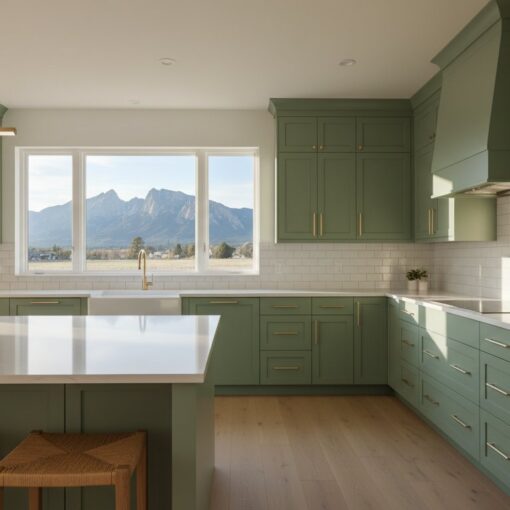

A high-end kitchen transformation has very little to do with the color you choose and everything to do with the work completed before the first drop of coating is applied. Most homeowners worry that their new look will eventually peel or chip. This concern is valid if the cabinet surface preparation for painting is handled by a general painter instead of a specialized expert. You deserve a smooth, factory-like finish that stands up to daily life in Denver, Boulder, or Arvada without the massive disruption and cost of a full cabinet replacement.
We’ve spent over 45 years perfecting a system that focuses on the fundamentals of quality. You’ll discover the meticulous professional steps required to achieve a durable finish that lasts for decades. We’ll preview the essential degreasing, precision sanding, and expert masking techniques used to protect your home and increase its value. This guide explains the technical process that separates professional cabinet refinishing from a temporary, low-quality job.
Key Takeaways
- Learn why professional cabinet surface preparation for painting accounts for 90% of the labor required to achieve a durable, factory-grade finish.
- Understand the industrial degreasing protocols used to remove years of kitchen oils and wax, ensuring your new coating bonds permanently to the wood.
- Discover how multi-stage mechanical sanding with HEPA-filtered equipment creates a smooth surface while keeping your Denver or Boulder home dust-free.
- See how professional masking techniques protect your countertops and appliances, establishing a controlled environment for a flawless spray application.
- Gain confidence in choosing cabinet refinishing over replacement by learning how meticulous prep work prevents common issues like peeling and chipping.
The Critical Role of Cabinet Surface Preparation for Painting
Professional cabinet surface preparation for painting isn’t just a quick wipedown with a damp cloth. It’s a rigorous, multi-stage mechanical and chemical process designed to ensure a permanent bond. Many homeowners in Boulder and Denver are tempted by “scuff and spray” contractors who offer lower prices. However, these generalists often ignore the foundational steps required for a factory-like result. At Cabinet Refinishing Boulder, we’ve spent over 45 years refining these standards. We know that a beautiful finish is useless if it peels within a year.
To better understand how these preparation steps look in practice, watch this overview:

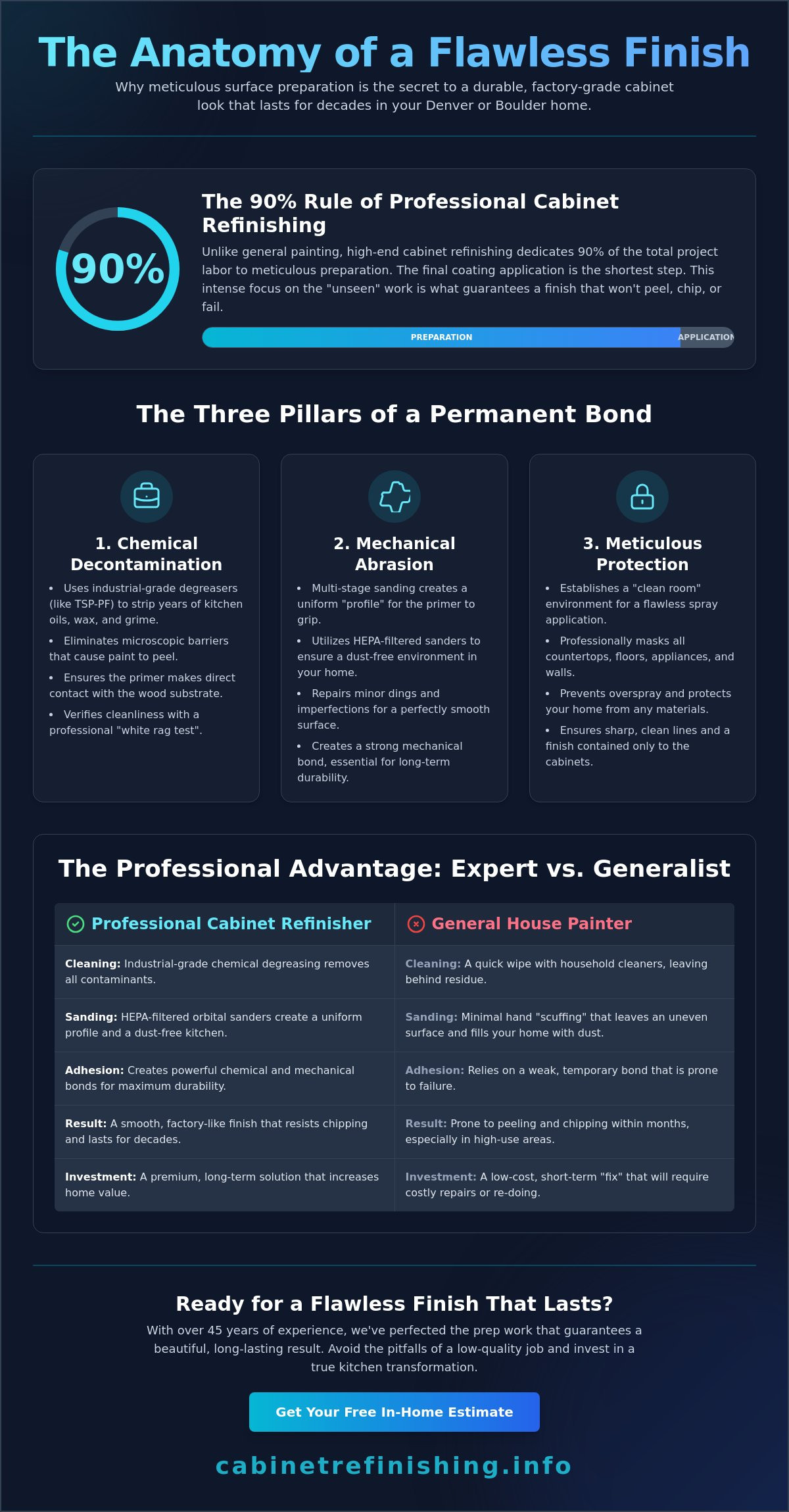
Our clients in Lafayette and Broomfield often ask why our estimates reflect a higher labor cost than a standard wall painting job. The answer lies in the 90% rule. In high-end cabinet refinishing, almost all of the total labor is dedicated to preparation. The actual spraying of the coating is the final, shortest step of the project. This heavy focus on the “unseen” work is what separates a professional job from a DIY effort. For a deeper look at the foundational techniques involved, you can consult this comprehensive guide to wood finishing which outlines how materials must be treated for long-term durability. Skipping these steps is why many low-cost jobs fail within months.
Why General Painters Fail at Cabinet Prep
Most general house painters treat cabinets like walls. They skip deep degreasing, which leads to immediate paint failure when the coating hits leftover cooking oils. They also rarely possess the specialized equipment needed for dust-free sanding in residential kitchens. Without HEPA-filtered orbital sanders, your kitchen becomes a dust-filled construction zone. A generalist might scuff the surface with a hand block, but this doesn’t provide the uniform texture needed for industrial-grade resins. These contractors often don’t understand the chemistry of high-performance coatings used in kitchen cabinet painting. These specialized products require specific surface profiles to adhere correctly.
The Science of Adhesion: Chemical vs. Mechanical Bonds
We focus on two distinct types of bonding to ensure longevity. Chemical cleaning is the first step. It removes molecular barriers like grease, wax, and skin oils that would otherwise prevent the primer from touching the wood. Once the surface is chemically clean, we move to mechanical preparation. This involves sanding the surface to create a “profile,” which gives the primer a physical texture to “bite” into. Adhesion is the physical and chemical attraction between the cabinet substrate and the coating, a key result of thorough cabinet surface preparation for painting that prevents delamination in high-traffic kitchen environments. Without both bonds, the finish will eventually chip.
Professional Cleaning and Degreasing Protocols
Kitchen cabinets endure a relentless assault of airborne grease, steam, and cooking oils. These contaminants create a microscopic barrier that prevents paint from bonding. Standard household cleaners like dish soap or vinegar are insufficient for professional cabinet surface preparation for painting. While these products might remove surface dirt, they often leave behind a film that interferes with industrial-grade coatings. We utilize heavy-duty, professional-grade cleaners like TSP-PF and specialized de-glossers to strip away every layer of accumulation. This intensive cleaning process ensures the substrate is chemically neutral before any mechanical work begins.
Our process begins with the complete removal of all hardware. We don’t just clean the door faces; we scrub the hidden hinge pockets and the areas behind the handles where skin oils collect. To verify that a surface is truly ready, we perform a “white rag test.” We wipe the cleaned surface with a clean white cloth soaked in a specific solvent. If any discoloration appears on the rag, the cleaning cycle repeats. This level of detail is why our experts at Cabinet Refinishing Boulder consistently deliver results that outlast generalist contractors. We’ve spent decades identifying which solvents work best for the specific types of grease found in Colorado kitchens. If you want to see how this meticulous cleaning fits into our full process, you can request a detailed project estimate for your kitchen today.
Eliminating Hidden Contaminants
Silicone is a silent enemy in cabinet refinishing. Many common furniture polishes contain silicone-based agents that embed deep into the wood grain. If these aren’t completely neutralized, they cause a defect known as “fish eyes,” where the new finish pulls away in small, crater-like circles. Steam cleaning or generic disinfectant wipes cannot break down these chemical bonds. We use specific industrial solvents to ensure these contaminants are neutralized before we ever move to the sanding phase. This step is critical because sanding a contaminated surface actually drives the oils deeper into the wood fibers. Neutralizing these cleaners is a mandatory step in our system to prevent chemical reactions with the new primer.
The Impact of Grease on Long-Term Durability
Areas near the stove and range hood require triple-cleaning protocols. Grease in these zones is often baked on by heat, making it incredibly stubborn. If any residual oil remains, the new paint will stay soft and tacky. It will never fully cure, leading to premature peeling and chipping. We serve homeowners in Boulder, Lafayette, and Arvada who expect a finish that handles the heat and humidity of a working kitchen. Proper degreasing ensures the coating becomes a permanent part of the cabinet rather than just a layer sitting on top of it. This foundation is the only way to achieve a true factory finish that stands up to daily use.
Mechanical Preparation: Sanding and Surface Repair
Once the surfaces are chemically decontaminated, we begin the mechanical phase of cabinet surface preparation for painting. This stage is where the physical bond is created. Unlike general painters who might quickly hand-sand with a block, we use a sophisticated progression of sanding grits. This is a core component of the kitchen cabinet refinishing process. We typically start with a lower grit to level the existing finish and move to higher grits to create a perfectly smooth, uniform profile. This meticulous approach ensures the primer has the ideal surface to anchor itself to for the next several decades.
Dust control is a major concern for homeowners in Boulder and Arvada. We address this by using professional, HEPA-filtered orbital sanders. These machines are connected to high-suction vacuums that capture 99% of dust at the source. This keeps your home clean and prevents airborne particles from landing in the wet coating later. During this phase, we also identify and repair every minor defect. Dents, deep scratches, and failed previous finishes are filled and leveled. We treat different wood species with specific techniques. Oak requires aggressive pore management, while smooth maple or MDF demands a lighter, high-precision touch to avoid damaging the delicate wood fibers.
Grain Filling and Surface Leveling
If you have oak cabinets but want a modern, smooth factory look, grain filling is mandatory. Oak has deep, open pores that remain visible even after multiple coats of paint. We apply high-solids fillers across the entire surface and sand them back until the grain is completely leveled. This professional leveling is vastly superior to standard DIY wood putty applications. Putty often shrinks or cracks over time, whereas our industrial fillers create a stable, glass-smooth substrate. This extra step is essential for achieving the premium aesthetic our Lafayette and Broomfield clients expect.
Scuff Sanding vs. Stripping to Bare Wood
Not every cabinet needs to be stripped to bare wood. Most professional projects require a thorough scuff-sanding to remove the gloss and create “tooth” for the new coating. We only recommend full stripping if the existing finish is failing, peeling, or was previously painted with incompatible materials. To bridge the gap between old finishes and new high-performance coatings, we utilize specialized bonding primers. These primers are engineered to stick to difficult surfaces that have been properly prepared. Over-sanding can be as damaging as under-sanding because it can distort the wood’s profile and compromise the integrity of the substrate. Our 45 years of experience allows us to find the perfect balance for every unique kitchen.
Masking and Protection: Establishing a Clean Room Environment
After completing the mechanical cabinet surface preparation for painting, we transition into what we call the “masking marathon.” This phase is where we transform your kitchen into a controlled, professional spray environment. While general house painters might simply throw down a few canvas drop cloths, our standards are much higher. We use professional-grade masking films and high-quality tapes to create a total seal around your countertops, floors, and appliances. Every square inch of your kitchen that isn’t being refinished is completely protected from overspray and fine particles.
A critical part of this process involves using high-quality latex caulking to seal the gaps between cabinet frames and walls. This ensures a seamless, factory-like transition once the final coating is applied. We also pay close attention to the internal cabinet boxes. If you are only refinishing the exterior doors and frames, we mask off the interior shelves and openings to keep your dishes and belongings clean. This level of protection is a primary factor in the cost to refinish cabinets, as it requires significant time and high-end materials to execute correctly. If you’re ready to see how this professional setup looks in your own kitchen, contact us for a professional project estimate today.
Protecting Your Boulder Home from Overspray
We take containment seriously. In high-end Arvada and Broomfield remodels, we use zip-walls and negative air machines to manage airflow. These systems create a “clean room” environment that prevents dust and vapors from migrating into the rest of your home. We often utilize on-site spray booths that are vented to the exterior, ensuring that the air in your living space remains clean. Masking is the most time-consuming part of our professional prep process. It requires a level of patience and precision that generalists simply don’t provide. This meticulous setup is what allows us to achieve a smooth, mirror-like finish without any contamination from the surrounding environment.
Hardware and Appliance Safeguarding
Organization is just as important as protection. We follow a strict protocol for labeling and storing every hinge, screw, and handle we remove. This ensures a perfect re-installation once the finish has cured. For integrated appliances like built-in ovens and refrigerators, we use specialized techniques to mask sensitive vents and control panels. We don’t just cover them; we seal them. This guarantees a sharp, clean line between the cabinet frame and your kitchen wall or backsplash. This attention to detail prevents paint from bleeding onto your expensive tile or stone surfaces. Our goal is to leave your kitchen looking like the cabinets were installed that way from the factory.
The Professional Advantage: Why Prep Justifies the Investment
Meticulous cabinet surface preparation for painting isn’t just about the first day of the project. It’s about how your kitchen looks and performs in year ten. When the foundation is handled correctly, the final finish is incredibly easy to maintain. These professional-grade coatings create a non-porous surface that resists household stains and oils. For Boulder homeowners, this durability translates directly into a high return on investment. A factory-like finish significantly increases home value, providing a high-end look that stands up to the scrutiny of any home inspector or potential buyer. Cabinet Refinishing Boulder brings over 45 years of specialized experience to every job, ensuring your kitchen remains a centerpiece of your home for decades.
Refinishing vs. Replacement: The Prep Connection
Many homeowners believe they need to spend tens of thousands on new installations to get a modern look. This is rarely the case if your cabinet “bones” are structurally sound. Professional prep makes old wood look and feel brand new for a fraction of the cost of replacement. We serve communities throughout the region, including Louisville, Longmont, and Westminster, helping families avoid the massive waste and disruption of a full demolition. When the mechanical and chemical bonding is performed to our standards, the result is indistinguishable from new custom cabinetry. It’s a smarter, faster, and more sustainable way to transform your space.
Next Steps for Your Kitchen Transformation
Your kitchen is the most high-traffic area in your home. Don’t trust it to a general house painter who treats your cabinets like drywall. You need a specialist who understands industrial resins and precision equipment. Generalists often skip the deep cleaning and detailed sanding steps that we’ve outlined, leading to finishes that fail within 24 months. We make it easy to start your project with a practical, modern approach. Simply take clear photos of your current kitchen layout, including all cabinet banks and islands, and provide them to us for a fast, accurate quote. This allows us to assess your specific needs and provide a professional estimate without a long, drawn-out sales process.
Ready to see the difference that 45 years of expertise can make? Contact Cabinet Refinishing Boulder for your free estimate today!
Achieve a Lasting Kitchen Transformation Today
You now understand that a factory-like finish isn’t achieved through paint alone. It’s the result of rigorous cabinet surface preparation for painting that includes deep chemical degreasing and precision mechanical sanding. These steps ensure your cabinets won’t peel or chip under the pressure of a busy kitchen. By choosing a specialist over a general house painter, you protect your home from dust and overspray while securing a long-term return on your investment.
Cabinet Refinishing Boulder brings 45+ years of local experience and hundreds of completed projects in Boulder County to your home. Our specialized factory-finish spray systems deliver results that generalist methods simply can’t match. We’re ready to help. You can increase your home’s value without the massive cost and disruption of a full cabinet replacement. Take the first step toward a beautiful kitchen by sending us photos of your space for an immediate project assessment.
Get a Fast Quote for Professional Cabinet Refinishing in Boulder
We look forward to helping you create the durable, high-end kitchen you’ve always wanted.
Frequently Asked Questions
Is cabinet surface preparation for painting really necessary if my cabinets look clean?
Yes, meticulous preparation is mandatory regardless of how clean your cabinets appear. Over time, cabinets accumulate microscopic layers of cooking oils, steam, and skin oils that are invisible to the naked eye. These contaminants act as a barrier, preventing the new coating from bonding to the wood. Professional cleaning and degreasing ensure that your investment doesn’t result in peeling paint within the first year of use.
How do professionals remove grease from kitchen cabinets without damaging the wood?
We use industrial-grade, pH-balanced degreasers and specialized de-glossers like TSP-PF to break down heavy grease and wax. These professional products are designed to strip away contaminants without saturating the wood fibers or causing the grain to swell. It’s a controlled chemical process that creates a perfectly neutral surface, which is essential for the next stages of the cabinet surface preparation for painting process.
Will there be a lot of dust in my house during the cabinet sanding process?
No, our specialized process keeps your home clean and breathable. We utilize professional orbital sanders connected to high-suction, HEPA-filtered vacuum systems that capture 99% of dust particles at the source. This prevents fine wood dust from migrating into your living areas or landing in the wet coating during the spray phase. This advanced equipment is a standard part of our service in Boulder and Denver.
Can you paint over previously painted or poorly finished cabinets?
Yes, we can refinish previously painted cabinets, but the preparation phase becomes much more intensive. We first assess the stability of the existing coating to ensure it isn’t failing or peeling. If the previous finish is incompatible with professional-grade lacquers, we may need to perform more aggressive sanding or full stripping. Proper cabinet surface preparation for painting is the only way to correct a previous contractor’s low-quality work.
How long does the preparation phase take compared to the actual painting?
Preparation typically accounts for 80% to 90% of the total labor on a professional project. While the final spray application of the topcoat might only take a few hours, the cleaning, sanding, repairing, and masking usually require several days of focused work. This heavy emphasis on the foundational steps is exactly what creates a durable, factory-like finish that lasts for decades rather than months.
What happens if the cabinets aren’t sanded properly before painting?
Improper sanding leads to catastrophic finish failure, usually starting around handles and high-use edges. Sanding creates a mechanical “profile” or physical tooth that allows the primer to anchor itself to the substrate. Without this bond, the paint simply sits on top of the wood like a thin film. It will eventually chip or peel away because it has no physical connection to the cabinet surface.
Do I need to empty my cabinets before the refinishing team arrives?
Yes, we require all cabinet interiors to be completely emptied before our team begins work. This allows us to properly mask the internal boxes to protect your dishes and pantry items from any dust or overspray. It also gives our technicians unobstructed access to the cabinet frames. This ensures a clean, seamless finish across every visible surface of your kitchen cabinetry without any contamination.
Why do general painters often skip the detailed preparation steps?
General house painters often prioritize speed and lower costs because they lack the specialized equipment and training required for high-end cabinetry. Skipping deep cleaning and detailed sanding allows them to provide lower estimates, but it compromises the durability of the job. We focus on these “unseen” steps because our 45 years of experience has proven that prep is the only way to guarantee a professional result.