Why Low VOC Cabinet Paint Matters In Colorado Homes
For Boulder County and Northern Colorado homeowners, repainting kitchen cabinets is one of the fastest ways to modernize a dated kitchen without the cost and waste of full replacement. However, many traditional cabinet coatings are high in volatile organic compounds (VOCs), which can linger in your home’s air for days or weeks.
Low VOC kitchen cabinet paint options in Colorado are not just a buzzword. They are a practical way to:
- Protect indoor air quality in tightly sealed, energy efficient homes
- Reduce headaches, odors, and irritation for kids, pets, and sensitive adults
- Keep your project aligned with eco-conscious values and Colorado’s growing air quality standards
This guide breaks down which low VOC options actually perform well on cabinets, how Colorado’s climate affects drying and durability, and when it makes sense to hire a specialist instead of going DIY.
Key Takeaway: For cabinets, the “greenest” product is not just low VOC on the label. It must also be durable enough that you do not have to repaint again in two or three years.
What “Low VOC” Really Means For Cabinet Paint
Before choosing products, it helps to understand how “low VOC” is defined and where marketing language can be misleading.
How VOCs Are Measured
VOCs are measured in grams per liter (g/L). In general:
- Standard solvent based alkyd paints: often 350 g/L or higher
- Many modern low VOC paints: under 150 g/L
- Zero VOC paints: typically under 5 g/L, before colorants are added
Cabinet coatings, especially industrial grade products, are often higher than wall paints, because they need superior hardness and chemical resistance.
Regulatory Context In Colorado
Colorado follows EPA standards and local air quality rules. Many products sold in big box stores are already formulated to meet stricter VOC limits than in previous decades. However, professional grade cabinet systems used by refinishers in Northern Colorado may still have moderate VOCs but are applied in more controlled ways, with strong ventilation and faster curing.
Labels To Treat With Caution
Common misconceptions:
- “Low odor” does not always equal low VOC
- “Water based” does not automatically mean safe for sensitive individuals
- “Green” or “eco” branding is not a regulated term
Look for actual VOC numbers on the technical data sheet and any third party certifications, such as GreenGuard Gold or MPI Green Performance.
Pro Tip: Always check the product’s technical data sheet online. It usually lists VOC content, recommended primers, and cure times, which matter more than the marketing on the front label.
Best Low VOC Paint Technologies For Kitchen Cabinets
Different resin technologies behave very differently on cabinets. For Colorado kitchens, you want the right balance of low emissions and high durability.
Waterborne Alkyd Enamels
These are some of the most popular choices for cabinet refinishing in Colorado.
What they are
Waterborne alkyds are hybrid paints that combine alkyd (oil like) resins with water based carriers. VOC levels are lower than traditional oil based paints, but you get better leveling and hardness than most standard acrylics.
Pros:
- Typically 50–150 g/L VOC, depending on brand and sheen
- Very smooth finish that resembles factory cabinetry
- Good block resistance, so doors do not stick together
- Excellent scrubbability for busy family kitchens
Cons:
- Needs proper primer and surface prep to avoid chipping
- Sensitive to application conditions, especially temperature and humidity
Waterborne alkyds are often the backbone of professional cabinet refinishing systems in Northern Colorado, because they offer a strong balance of appearance and performance with manageable VOC levels.
100 Percent Acrylic Enamels
High quality acrylic enamels are common for homeowners who want a simple, low VOC solution that is easy to source locally.
Pros:
- Many lines qualify as “low VOC” or even “zero VOC” before tint
- Simple water cleanup
- Less odor than hybrids or solvent systems
- Flexible film which resists cracking on older wood doors
Cons:
- Can feel slightly softer under heavy use, especially around trash pullouts and sink bases
- May show brush marks if not applied carefully
Look for products labeled “enamel” or “cabinet and trim,” not general wall paint. These are formulated to self level and handle repeated cleaning.
Catalyzed Waterborne Cabinet Coatings
Some specialized cabinet refinishing companies use 2K (two component) waterborne urethanes or acrylic urethanes. These are mixed with a hardener before spraying.
Pros:
- Professional grade durability, similar to factory finishes
- Very high chemical and stain resistance, ideal for rental properties and flips
- Many are formulated to be low or medium VOC
Cons:
- Short pot life after mixing
- Requires spray equipment and advanced safety practices
- Typically sold through professional paint stores, not big box retailers
For Boulder County investors and real estate agents preparing listings, this type of coating can create a “like new” cabinet look that photographs extremely well.
[IMAGE: Close up illustration of a cabinet door showing three labeled layers: bonding primer, low VOC enamel, and protective topcoat, with arrows showing how each layer contributes to durability.]
How Colorado’s Climate Affects Low VOC Cabinet Paint
Northern Colorado’s dry air, high altitude, and temperature swings change how coatings behave on your cabinets.
Dry Air And Flash Drying
In Boulder County and surrounding areas, relative humidity is often well below 50 percent, especially in winter. Water based and low VOC products can “flash dry” too quickly, which leads to:
- Visible lap marks
- Poor leveling and brush marks
- Weaker film formation at the surface
Mitigation strategies:
- Work in the early morning or evening, not mid afternoon, in summer
- Add a manufacturer approved extender or conditioner if recommended
- Avoid running forced air heat directly on freshly painted cabinets
Temperature Swings In Older Homes
Many older Colorado homes have drafty kitchens or temperature fluctuations between day and night. Low VOC paints often have minimum application temperatures around 50–55°F, but optimal performance is closer to 65–75°F.
If you are painting in a garage or unconditioned basement:
- Use a space heater to maintain stable temperatures, but keep it away from solvent fumes
- Allow extra dry time between coats, sometimes double what the can states
Altitude And Odor Perception
At higher altitude, some homeowners report that odors feel more intense, even when VOC levels are moderate. Low VOC products are especially helpful for:
- Asthma and allergy sufferers
- Young families with infants or toddlers
- Homeowners who work from home and cannot “escape” the smell
Key Takeaway: In Colorado’s dry, high altitude climate, technique and timing matter just as much as the VOC number on the can. Plan your project around weather and indoor conditions.
Comparing Low VOC Options: Performance And Use Cases
Here is a high level comparison of common low VOC cabinet paint approaches for Colorado homeowners.
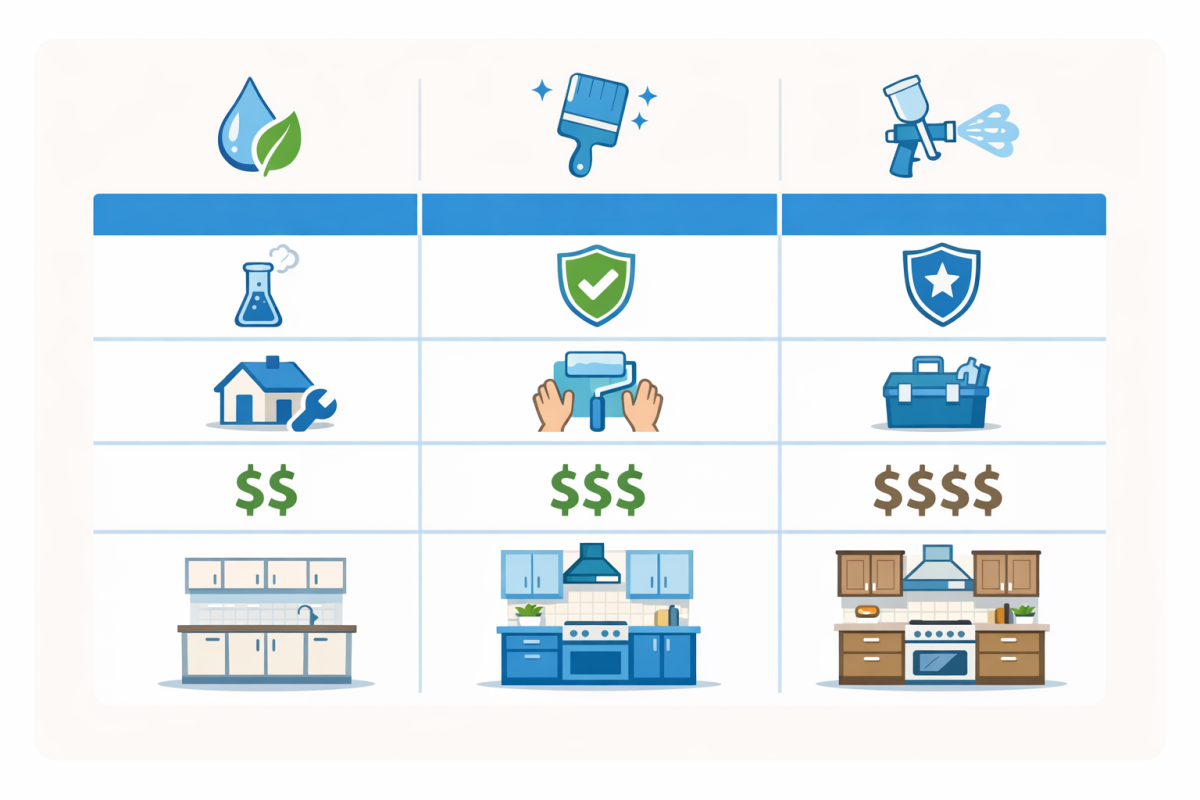
Typical Low VOC Cabinet Paint Choices
| Option | Approx. VOC Range* | Durability On Cabinets | DIY Friendly | Best For |
|---|---|---|---|---|
| Waterborne alkyd enamel | 50–150 g/L | Excellent | Moderate | Primary homes, long term updates |
| Premium acrylic cabinet enamel | 0–100 g/L | Good to very good | High | Budget conscious projects, sensitive occupants |
| 2K waterborne urethane | 80–250 g/L | Outstanding | Low | High end homes, rentals, flips needing factory finish |
*Approximate ranges, always verify the specific product data sheet.
Matching Options To Your Situation
- Eco focused families: Choose premium acrylic enamel with verified low VOC and pair it with meticulous prep. You may sacrifice a small amount of hardness compared to hybrids but benefit from very low emissions.
- Busy households with kids and pets: Waterborne alkyds often hit the sweet spot. They resist fingerprints, food splatters, and cleaning chemicals better than many standard acrylics.
- Investors and flippers: Professionally applied 2K systems can transform dated oak or maple cabinets into a “model home” look that justifies higher listing prices or rents.
If you are unsure which path is right, reviewing project galleries and product details from local specialists in cabinet refinishing and cabinet painting in Northern Colorado can help you see how different systems perform in real homes.
Safe Prep And Application Practices For Low VOC Products
Even low VOC paints require thoughtful handling, especially in occupied homes.
Safer Surface Prep
Sanding and cleaning release more dust and contaminants than the coating itself in many cases.
- Use a vacuum attached sander with HEPA filtration, especially on older finishes that may contain unknown coatings
- Clean with a degreaser designed for pre paint prep, then rinse thoroughly
- Consider liquid deglossers to reduce heavy sanding on fragile veneers
If your home predates 1978 and cabinets might have older coatings, follow EPA lead safe renovation guidelines or hire a certified pro.
Ventilation Without Ruining Your Finish
Strong cross ventilation is crucial, but in Colorado’s dry climate you must balance airflow with proper curing.
- Use box fans to exhaust air out a window, and open a second window slightly for make up air
- Avoid pointing high speed fans directly at cabinet doors during the first hour after painting
- For winter projects, run a bathroom or kitchen exhaust fan and crack a nearby window for short periods rather than leaving everything wide open all day
Personal Protection
Even with low VOC products, protect yourself:
- Use a NIOSH approved respirator with organic vapor cartridges if you are spraying or working for long periods
- Wear safety glasses and nitrile gloves during prep and painting
- Keep children and pets out of the work zone until surfaces are fully dry to the touch

When To Hire A Colorado Cabinet Refinishing Specialist
DIY is feasible for many homeowners, but there are situations where a professional refinishing company in Boulder or Northern Colorado is the better option, especially if you want low VOC results without sacrificing durability.
Situations That Favor A Professional
- Large kitchens with 30 or more doors and drawers
- High value properties where finish quality directly impacts resale price
- Busy families who cannot have a kitchen out of service for weeks
- Older cabinets with previous coating failures, heavy grease, or smoke damage
Professionals bring:
- Spray equipment that delivers a factory smooth finish
- Controlled ventilation setups that manage overspray and fumes
- Familiarity with specific low VOC cabinet systems proven in Colorado homes
Local experts, such as the team behind Cabinet Refinishing Cabinet Painting In Northern Colorado, typically know which products hold up best under Colorado’s dry conditions and strong sunlight.
Budget And Time Tradeoffs
A typical DIY cabinet repaint might stretch over several weekends. A professional crew often completes the same work in 3 to 5 working days, including off site spraying of doors and drawers. When you factor in:
- Lost kitchen access
- Tools and materials
- Potential rework if adhesion fails
Hiring a specialist can be more cost effective over the life of the finish, especially for eco conscious homeowners who want to “do it once and do it right.”
Key Takeaway: A well executed low VOC cabinet refinish can easily add 5 to 10 years of life to existing cabinets, which is usually far cheaper and greener than replacing them.
Eco Conscious Refinishing With Local Expertise
If you are in Boulder County or anywhere in Northern Colorado and want a durable, low VOC cabinet transformation, working with a team that specializes in this exact niche is your best shortcut to a successful outcome.
How A Specialist Supports Low VOC Goals
A cabinet specific refinishing company such as Cabinet Refinishing and Cabinet Painting Boulder CO can:
- Help you choose coatings with VOC levels that fit your comfort level and family needs
- Set up ventilation and containment so odors and dust are controlled in occupied homes
- Apply professional grade primers and topcoats that are formulated to last in Colorado’s dry climate
They also understand the unique cabinet styles common in the region, from 1990s golden oak to early 2000s maple, and can recommend colors and sheens that modernize without clashing with existing floors and counters.
[IMAGE: Illustration of a Boulder County kitchen “before and after” showing dated oak cabinets on the left and freshly refinished low VOC painted cabinets on the right, with mountain scenery visible through a window.]
Ready To Explore Your Options?
If you are weighing low VOC cabinet paint options in Colorado and want a local, experienced opinion, visit Cabinet Refinishing and Cabinet Painting Boulder CO. You can review previous projects, learn more about their cabinet specific systems, and request guidance tailored to your home and air quality priorities.
Call to action: Explore real kitchen transformations, learn which low VOC cabinet systems perform best in Colorado, and see what is possible in your home: Learn more.
Key Takeaways At A Glance
- Low VOC cabinet paints in Colorado should balance emissions with long term durability
- Waterborne alkyds, premium acrylic enamels, and 2K waterborne urethanes are the main technologies worth considering
- Colorado’s dry, high altitude climate affects drying, leveling, and odor perception
- Proper prep, ventilation, and personal protection are still essential even with low VOC products
- For complex projects or high value homes, a dedicated cabinet refinishing specialist can deliver a safer, longer lasting result
Frequently Asked Questions
Are low VOC cabinet paints as durable as traditional oil based paints?
High quality waterborne alkyds and professional grade waterborne urethanes can now match or exceed the durability of many traditional oil based products. Pure acrylic enamels can be slightly softer, but still perform well with proper prep and primer. The key is to choose a cabinet rated system, not standard wall paint, and to allow full cure time, which can be 7 to 30 days, before heavy use.
How long do low VOC cabinet finishes typically last in Colorado?
With good surface prep and professional grade products, low VOC cabinet finishes in Colorado often last 8 to 12 years before needing significant touch ups. In high traffic rental units, that timeline may be closer to 5 to 8 years. Factors that shorten lifespan include heavy grease, lack of gentle cleaning, and dark colors in direct sunlight. A protective topcoat, when compatible, can extend the life of lighter colors.
Can I safely stay in my home while cabinets are being painted?
In most cases, yes, especially if you use low VOC products and plan smartly. Keep the work zone isolated with plastic, run exhaust fans, and keep windows cracked when weather allows. Sensitive individuals may prefer to spend the first night elsewhere after spraying or heavy coating days. Professional refinishers typically plan ventilation so odors dissipate quickly and the kitchen can be used for basic function between stages.
Do low VOC or zero VOC paints still smell?
Yes, even zero VOC paints usually have some odor, particularly during application and the first few hours of drying. However, the intensity and duration are typically much lower than traditional solvent based products. Most homeowners in Boulder County report that smells from low VOC cabinet paints are manageable with basic ventilation and usually settle within 24 to 72 hours, depending on weather and air circulation.
Is low VOC cabinet painting really more eco friendly than replacement?
In most scenarios, yes. Refinishing existing cabinets avoids the environmental impact of manufacturing, transporting, and disposing of full cabinet boxes. You use far fewer raw materials and keep bulky waste out of Colorado landfills. Even when using moderate VOC professional systems, the overall environmental footprint is usually smaller than replacing with new cabinetry, especially if you plan to stay in the home long term.