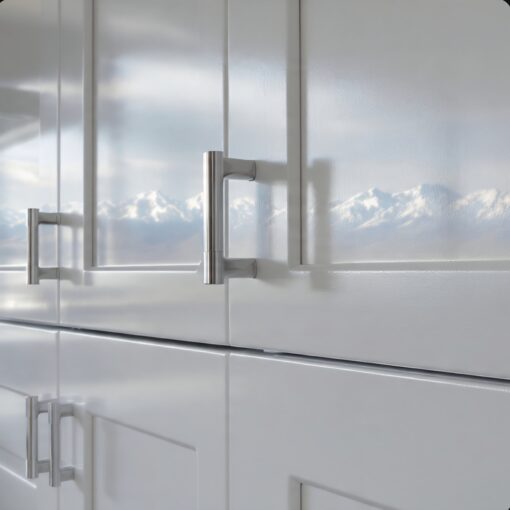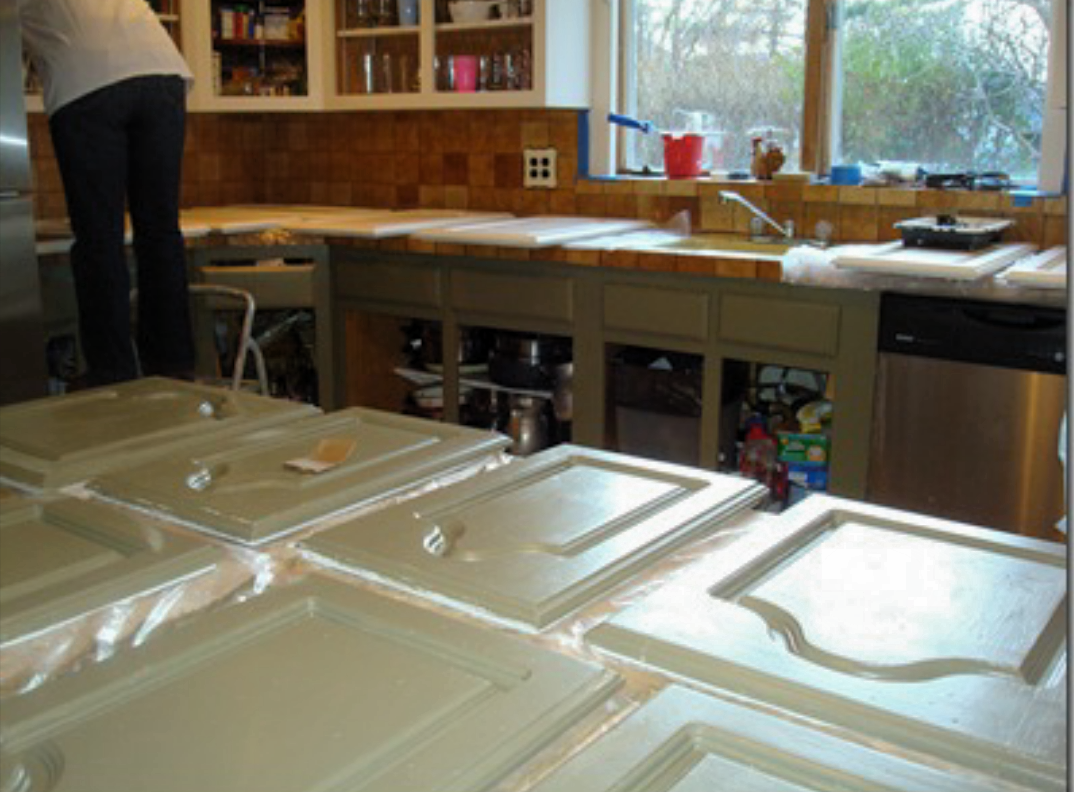
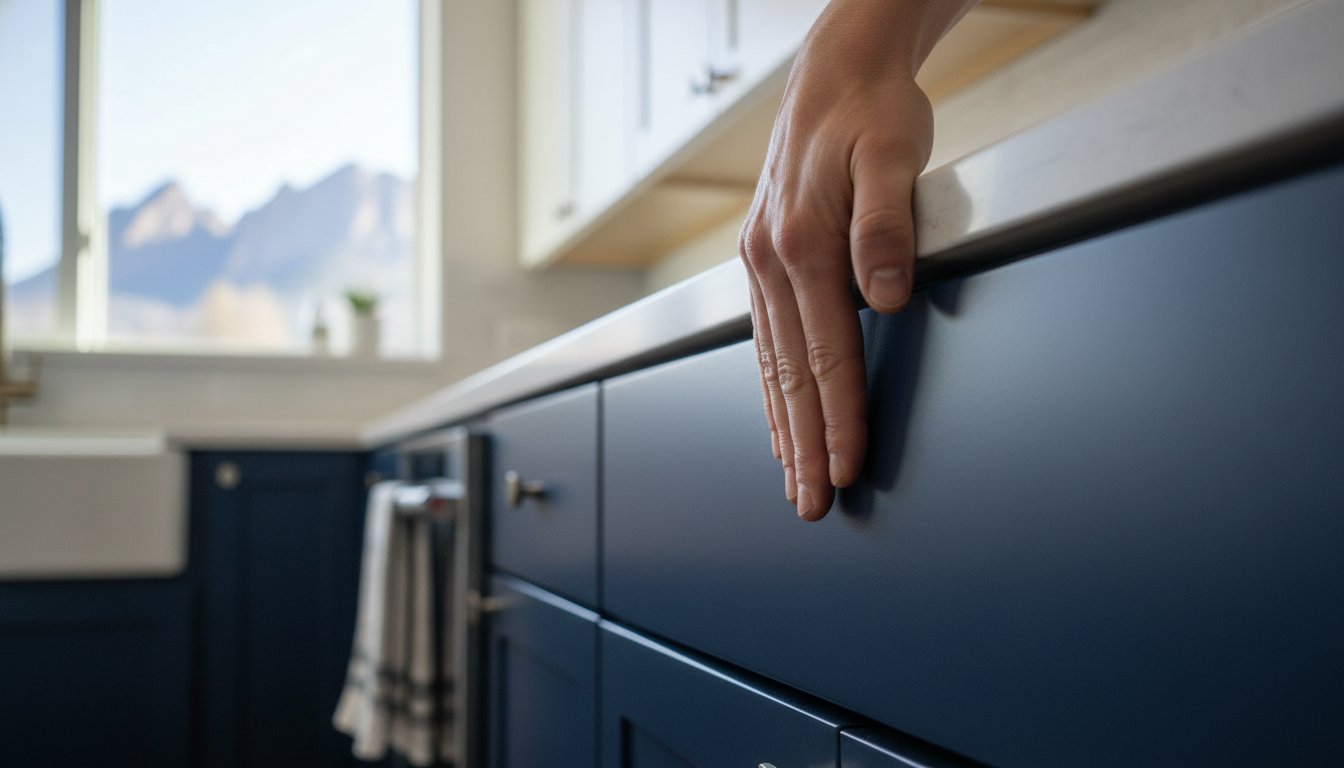
Most homeowners believe that a high quality brush is the secret to a smooth kitchen, but the truth is that any brush at all is usually the reason your DIY project looks like a hobbyist’s craft instead of a professional renovation. You want that sleek, smooth-to-the-touch surface that makes your kitchen feel brand new. It’s frustrating to spend hours on prep only to see visible texture and ridges once the paint dries, especially when the dry Colorado air causes coatings to set before they can level out. If you’re tired of seeing brush marks ruin your kitchen aesthetic, you’re not alone.
This guide explains the professional techniques and environmental adjustments required to achieve factory finish cabinets Boulder residents can be proud of. At Cabinet Refinishing Boulder, we’ll show you why traditional brushing often fails in our climate and how our proven spray systems deliver a durable, flawless surface. You’ll discover the importance of meticulous cleaning, sanding, and professional masking that goes into every project we’ve completed over the last 45 years. Whether you’re in Boulder, Lafayette, or Arvada, understanding the difference between a simple paint job and a professional refinishing process is the first step toward a kitchen you’ll love for years.
Key Takeaways
- Learn why standard retail paints and poor leveling physics lead to visible brush strokes on your kitchen cabinetry.
- Understand how the dry, high-altitude air in Colorado affects drying times and the specific additives needed to keep paint flowing.
- Discover the professional spray techniques required to achieve factory finish cabinets Boulder residents expect for a high-end kitchen.
- Identify the essential preparation methods, such as de-glossing and specific sanding patterns, that create a perfectly flat foundation.
- See why micro-atomized spray systems outperform even the best brushes by eliminating directional lines and texture.
Why Brush Marks Appear When Painting Kitchen Cabinets
Leveling describes the paint’s ability to flow into a flat, glass-like surface before it begins to cure. Chemistry and gravity work together during this critical window. When you apply a coating, surface tension naturally tries to pull the liquid together. In high-viscosity retail paints, this tension pulls the material into ridges along the lines left by your brush bristles. These ridges then lock in place as the paint dries. Achieving factory finish cabinets Boulder homeowners expect requires overcoming these specific physics. Vertical surfaces like cabinet doors are especially difficult. Gravity pulls the wet paint downward, which can cause sags if the paint is too thin or permanent ridges if it’s too thick.
The Physics of Paint Leveling and Surface Tension
Surface tension acts like a tight skin on the liquid. If the paint doesn’t have the right chemical balance to break that tension, it won’t flatten. Gravity usually helps horizontal surfaces level out, but on cabinet frames and doors, gravity often works against you. It pulls the paint into “curtains” or sags. When you combine high viscosity with vertical application, you get a surface that is bumpy and uneven. Most hardware store paints are formulated to be thick. This high viscosity helps prevent messy drips for inexperienced painters, but it also preserves every stroke. Professional glazing techniques and specialized coatings are often used to manage these layers, but standard brushing simply can’t compete with micro-atomized sprayers.
In our dry Colorado climate, paint sets fast. You have very little time for the surface to level out before it becomes permanent. This creates “drag.” Drag is the resistance you feel when the brush is under-loaded or the coating is too heavy. It’s a common struggle for those trying to get factory finish cabinets Boulder results without the right equipment. Once drag begins, the brush pulls at the drying paint, creating even deeper grooves that sanding alone cannot always fix.
Common Tools That Guarantee Visible Texture
The tools you choose often determine the final look of the project. Cheap synthetic brushes have stiff bristles that create deep micro-ridges. These ridges catch the light and make the finish look amateur. Thick-nap rollers are just as bad. They leave behind a stipple or “orange peel” texture that ruins the sleek aesthetic of a modern kitchen. Even a high-quality brush fails if the heel is loaded with dried paint. This creates uneven pressure across the bristles, leaving behind heavy, inconsistent lines. After 45 years in the industry, we’ve seen how these manual tools fail to provide the durability and smoothness required for a professional kitchen update.
- Stiff synthetic bristles create deep troughs in the paint film.
- Thick rollers introduce air bubbles and stipple texture.
- Dry paint in the brush heel causes “fingering” or split bristle marks.
- Inconsistent hand pressure leads to varying film thickness across the door.
5 Essential Steps to Minimize Brush Marks for DIYers
Achieving a smooth surface starts long before you open a paint can. Most DIY failures happen because the surface wasn’t prepared to handle a new coating. You must start with a high quality chemical de-glosser. This step removes years of kitchen grease, oils, and old wax that sanding alone often smears around. Without a clean slate, your paint will bead up or fail to bond, making it impossible to get the factory finish cabinets Boulder homeowners desire. Once the surface is chemically clean, you can move to mechanical preparation.
The Professional Sanding Protocol
Don’t make the mistake of using just one type of sandpaper. You need a grit-progression strategy to create a perfectly flat starting point. Start with 120-grit sandpaper to level out existing imperfections and “tooth” the surface. After the initial pass, move to 220-grit for final smoothing. This finer grit removes the scratches left by the 120-grit, ensuring the primer lays flat. Always use a tack cloth between every single stage to remove microscopic dust. Even a few specs of dust will create visible bumps in your final finish. This attention to detail is a hallmark of the kitchen cabinet refinishing process used by experts to ensure longevity.
Selecting the Right Brush for Enamel Coatings
If you choose to brush, your tool choice is everything. A 2-inch angled sash brush is the best tool for the detailed profiles found on most cabinet doors. Look for soft-tip synthetic filaments specifically designed for waterborne enamels. Stiff bristles are meant for heavy exterior paints and will leave deep troughs in your cabinet finish. To avoid “dry dragging,” load only the bottom third of the brush with paint. Apply the coating in long, steady strokes and avoid over-working the area. If you find the process too tedious, you can always look into professional results that utilize high-volume sprayers instead.
Applying multiple thin coats is much better than trying to cover everything in one thick layer. Thick layers take longer to dry and are prone to sagging on vertical surfaces. A high-build, professional-grade primer is also essential. These primers are designed to fill minor wood grain and sand down easily to a powder. This creates a foundation so smooth that your topcoat has the best possible chance to level out. While these steps help, remember that achieving factory finish cabinets Boulder standards usually requires the controlled environment of a professional spray booth.

The Secret to a Smooth Finish: Additives and Environment
Boulder’s unique environment presents a major challenge for achieving a glass-smooth surface. Our high altitude and notoriously low humidity cause paint to dry significantly faster than in other parts of the country. This rapid evaporation leads to “flash-drying.” When paint flash-dries, it locks brush marks and texture into the coating before the liquid has any chance to flow and level. If you want factory finish cabinets Boulder homeowners can be proud of, you have to manipulate the environment and the chemistry of the paint itself. Professional results require a deep understanding of how Colorado air affects the curing process.
Managing Open Time in Boulders Dry Climate
Colorado homeowners struggle with visible texture because the moisture is sucked out of the paint film almost instantly. This is why a finish that looks good in a humid coastal city might fail here. We manage this by extending the “open time.” This is the window where the paint remains wet and mobile. One professional secret is the “Humidifier Trick.” We suggest running a large-capacity humidifier in the workspace for 24 hours before and during the application. This small increase in local humidity prevents the paint from skinning over too quickly. You should also avoid using fans. While moving air helps paint dry, it accelerates flash-drying and introduces dust particles that ruin the finish. Keep the room still and the temperature consistent.
How to Use Leveling Agents Correctly
Conditioners are essential for reducing surface tension. These aren’t standard thinners; they are engineered additives that help the paint flow without compromising its chemical bond. We often use a “Spoon Test” to verify the mixture. When you lift a stir stick or spoon from the bucket, the paint should fall in a steady, unbroken stream. If it breaks into individual drips, it’s still too thick to level properly. However, you must be careful. Over-thinning is a common mistake that destroys the durability of the coating. If you add too much conditioner, the paint becomes transparent and loses its ability to resist chips and scratches. This balance is why many residents choose professional factory finish cabinets Boulder services rather than risking their expensive cabinetry on a DIY experiment.
- Maintain an indoor temperature between 68 and 72 degrees for optimal flow.
- Use a hygrometer to ensure humidity stays above 40 percent in the work area.
- Mix additives in small increments to avoid ruining the entire batch of paint.
- Keep all windows closed to prevent sudden temperature drops or wind-blown debris.
Controlling these variables is the only way to ensure the paint has enough time to flatten out. Without these environmental adjustments, even the best brush in the world will leave behind a trail of ridges. Our 45 years of experience in the Denver and Boulder markets has taught us that the climate is often your biggest competitor. Proper preparation and climate control are the only ways to guarantee a professional result that lasts.
Why Brushing Can Never Truly Match a Factory Finish
Manual brushing is a contact-based application. It relies on bristles to spread a thick liquid across a surface. Even with the best additives, a brush leaves behind physical evidence of its path. These directional lines are often invisible in low light, but they become glaringly obvious under modern LED kitchen lighting or when the morning sun hits your cabinets. To get the factory finish cabinets Boulder homeowners expect, you’ve got to move beyond contact-based tools. A non-contact spray application is the only way to ensure a perfectly level surface. This method ensures the coating reflects light evenly from every angle, providing a deep, consistent luster that a brush simply cannot replicate.
The Atomization Advantage of HVLP Systems
HVLP stands for High Volume Low Pressure. These systems use a high volume of air at a low pressure to atomize the paint. Atomization breaks the liquid into millions of microscopic droplets. This fine mist settles onto the wood and flows into a single, continuous film. This is the mechanical difference that makes kitchen cabinet painting so much more effective than brushing. Sprayers allow us to use specialized coatings that are often too high in solids to ever be applied with a brush. When you look at the DIY vs. professional cabinet painting debate, the equipment is the deciding factor for quality. Brushing takes weeks of labor, whereas a professional spray system delivers superior results in a fraction of the time.
Chemical Cross-Linking and Coating Durability
Professional coatings don’t just look better; they’re physically stronger. They utilize chemical cross-linking. This process happens as the coating cures, creating a tight molecular bond that resists heat, moisture, and kitchen grease. Standard hardware store paints lack these industrial resins. They remain soft and are prone to chipping or peeling within a few years. A professional spray finish provides a hard, durable shell that mimics the original factory coating. This durability is essential for factory finish cabinets Boulder standards and maintaining home resale value in competitive markets like Boulder and Lafayette. Our 45 years of experience has shown that these high-performance coatings are the only way to ensure a long-lasting kitchen transformation.
Brushing is a slow process that results in a “painted” look rather than a refinished look. If you want a kitchen that looks like it came from a high-end showroom, you need a professional system. Get a professional estimate for your cabinet project and experience the difference of a spray-applied finish today.
Professional Factory Finish Cabinets in Boulder: The 45-Year Expert Choice
Choosing a contractor for your kitchen is a high-stakes decision. You don’t want a general house painter or a franchise with no local roots. We’ve provided factory finish cabinets Boulder homeowners have trusted since 1981. Our business is built on 45 years of experience and hundreds of successful projects across the Front Range. We don’t just paint. We use a proven system that delivers a durable, glass-smooth surface. Cabinet refinishing is a superior, cost-effective alternative to full cabinet replacement. It saves you money and eliminates the weeks of construction mess associated with new installations.
Our Meticulous Preparation and Masking Process
Our preparation process sets us apart from less-qualified competitors. We protect your floors, countertops, walls, and appliances with professional-grade masking materials. We don’t take shortcuts. Our team uses a multi-stage cleaning and sanding system to ensure the best possible coating adhesion. This meticulous detail is why our finishes don’t peel or chip. We utilize low-VOC, high-performance coatings that are safer for your home environment. Proper masking and cleaning are the most important steps in the job. We take the time to do them right every time.
Serving the Boulder and Denver Community Since 1981
Homeowners in Arvada, Longmont, and Louisville trust our local expertise. We’ve spent decades refining our techniques in the Colorado climate. We handle all removable doors and drawer fronts in our dedicated spray booths. This controlled environment is 100% dust-free. It’s the only way to achieve factory finish cabinets Boulder residents expect without the risk of environmental debris. We’ve served the following areas for over 45 years:
- Boulder and Longmont
- Lafayette and Louisville
- Arvada and Broomfield
- Greater Denver Metro Area
Getting started is simple and direct. You can get a quick estimate by texting us photos of your current kitchen cabinets. Provide a few wide shots and a count of your doors and drawers. We’ll give you a straightforward quote based on our decades of experience. For a deeper look at what we offer, explore our ultimate homeowners guide. We’re ready to deliver the professional, brush-mark-free kitchen you deserve.
Transform Your Kitchen With a Professional Spray Finish
Brushing cabinets in the dry Colorado air is a recipe for frustration. You’ve learned that manual tools and rapid drying times make a perfectly smooth surface nearly impossible for DIYers. Achieving factory finish cabinets Boulder homeowners truly want requires specialized spray equipment and a controlled environment. Our process eliminates the texture, ridges, and imperfections that often ruin a kitchen’s aesthetic. Choosing a professional path ensures your cabinetry looks like it came straight from a high-end showroom without the flaws of a hand-painted project.
We’ve spent over 45 years perfecting our systems in this local market. Our team has completed hundreds of successful kitchen transformations throughout Boulder, Lafayette, and Arvada. You don’t have to settle for visible brush marks or the extreme cost of a full cabinet replacement. We provide a guaranteed brush-mark-free, factory-grade finish that stands up to daily use and adds real value to your home. Our meticulous preparation and spray booth applications deliver results that a brush simply cannot match.
Get a Free Factory Finish Quote in Boulder Today and start your kitchen renovation with the confidence of an expert partner. We are ready to help you achieve the flawless look your home deserves.
Frequently Asked Questions
Can I use a foam roller instead of a brush to avoid marks?
Foam rollers don’t eliminate texture; they replace brush marks with a stipple or “orange peel” effect. This happens because the roller pulls the paint away from the surface as it rotates. For a true factory finish cabinets Boulder homeowners want, a spray application is the only method that avoids physical contact with the drying film. Spraying atomizes the coating into a fine mist that settles perfectly flat.
Is it better to sand between every coat of paint on cabinets?
Sanding between every coat is a critical step in our professional refinishing process. It removes any airborne dust nibs or minor imperfections that settled during the drying phase. We use fine-grit abrasives like 220-grit or 320-grit to ensure each layer bonds mechanically to the one beneath it. Skipping this step often results in a rough, unprofessional texture that is easily visible under kitchen lighting.
How long should I wait for paint to dry before checking for brush marks?
You can check for texture as soon as the paint is dry to the touch, which typically takes one to four hours in the dry Colorado climate. However, the leveling window is much shorter. The paint’s ability to flow and hide marks usually ends within the first 10 to 15 minutes of application. Once the surface “skins over,” the texture is locked in permanently until it is sanded flat again.
What is the best type of paint to avoid brush strokes on cabinets?
Professional-grade waterborne alkyd enamels or industrial urethane coatings are best for minimizing texture. These products are engineered with a longer “open time” to allow for better flow and leveling. Retail latex paints are often too thick and dry too quickly for cabinet work. Our 45 years of experience has shown that high-performance, hard-wearing coatings are essential for achieving a durable, factory-grade result that resists kitchen grease.
Does using a paint conditioner make the finish less durable?
Using a paint conditioner does not compromise durability if you follow the manufacturer’s mixing ratios. These additives are designed to improve flow without breaking down the chemical resins of the paint. However, over-thinning the material can lead to a soft finish that is prone to chipping. We carefully balance these additives to ensure factory finish cabinets Boulder projects remain durable for five to ten years of normal use.
Why does my paint look smooth when wet but show marks once it dries?
Paint often looks smooth when wet because the liquid volume fills the gaps between brush marks. As the water or solvent evaporates, the paint film shrinks and conforms to the physical profile of the surface beneath it. This shrinkage reveals the ridges left by bristles or rollers. In Boulder’s low humidity, this process happens faster, which makes proper leveling even more difficult for inexperienced painters.
How much does professional factory finish cabinet painting cost in Boulder CO?
The cost for professional cabinet painting in the Boulder area depends on the number of doors, the condition of the wood, and the specific finishes selected. Every kitchen is unique, so a detailed estimate requires a consultation. While DIY projects cost less upfront, hiring a professional for a full kitchen ensures a long-lasting, durable result. Our 45-year history in the local market ensures we provide high-value, premium results.
Can I fix brush marks after the paint has already dried completely?
You cannot simply paint over dried brush marks to hide them. The only way to fix existing texture is to sand the surface back down to a perfectly flat foundation. Once the ridges are removed and the dust is cleaned away, you must apply a new coat using better leveling techniques or a spray system. This is why proper preparation and tool selection are so important from the very first coat.