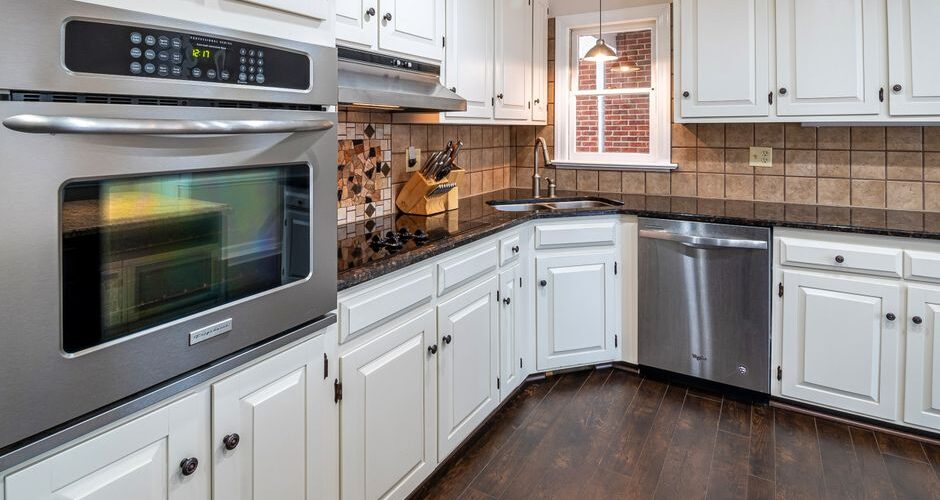

Why Cabinet Paint Peels In Boulder Kitchens
Peeling cabinet paint is more than an eyesore. It is a signal that moisture, temperature swings, or poor prep are breaking down your finish. In Boulder County, where winter air is dry but kitchens see constant steam and sun exposure, failing paint on cabinets is very common, especially in homes from the 1980s to early 2000s.
Cabinet Painting Service Areas in Lafayette CO, Boulder CO, Evergreen CO & Surrounding Cities, Cabinet Refinishing in Boulder County, CO
Cabinet Painting in Boulder County & Northern Colorado
Brighton, CO, and Broomfield, CO.
Including Superior, CO, Louisville, CO, Niwot CO,
Lafayette, CO, Erie, CO, Firestone, CO,
Frederick, CO, Longmont, CO, Loveland, CO,
We also service projects throughout the entire state of Colorado.
If you see flaking around handles, above the dishwasher, near the sink, or along door edges, the existing coating has stopped bonding to the wood or to the previous finish. Leaving it alone invites swelling, staining, and further failure. The good news: with the right process and products, you can repair peeling cabinet paint so it looks seamless and lasts for years, without a full tear out or expensive custom cabinetry. My Review of Graco FFLP Tips for Spraying Cabinets
The sections below walk you through why it happens, how to assess the damage, a step‑by‑step repair process, and when it makes more sense to invest in professional cabinet refinishing in Boulder.

What Causes Peeling Cabinet Paint In Boulder CO Homes
Understanding the cause helps you choose the right fix and prevents the same problem from coming back.
Climate and Kitchen Conditions in Boulder County
Boulder’s climate creates a tough environment for painted cabinets:
- Large swings between cold, dry winters and warm summers strain wood and finishes
- Intense UV exposure at higher elevation can degrade cheaper paints and clear coats
- Kitchens in energy‑efficient, tightly sealed homes trap steam and cooking vapors
Common hot spots for failure:
- Above the range, coffee station, and kettle area
- Doors above dishwashers from repeated steam vents
- Sink base cabinets from water splashes and cleaning chemicals
- Window‑adjacent cabinets that take direct sun
Key Takeaway: If peeling is concentrated near heat, moisture, or sunlight, you must improve ventilation and protection, not just repaint.
Previous Coatings and Poor Surface Preparation
Most peeling issues trace back to what is under the paint:
- Painting directly over factory varnish or lacquer without sanding or deglossing
- Using latex wall paint instead of a cabinet‑grade enamel
- Skipping a bonding primer on slick or previously finished surfaces
- Trapped grease and cleaning residues that prevent adhesion
In many Boulder homes, original oak or maple cabinets were painted during a quick “flip” or DIY refresh. If you now see sheets of paint lifting off in large sections, that topcoat likely never bonded properly to the factory finish.
Everyday Wear and Product Choices
Even with good prep, wrong product selection accelerates peeling:
- Low‑quality paint not designed for kitchens
- Soft finishes that never fully cure and stay tacky
- Harsh cleaners, such as ammonia or abrasive powders, that burnish or undercut the coating
- Constant rubbing at high‑touch areas like handles and trash pull‑outs
A strong, cabinet‑grade coating, paired with the right primer, is the foundation of any long‑lasting repair.
How To Decide: Spot Repair, Repaint, Or Full Refinishing
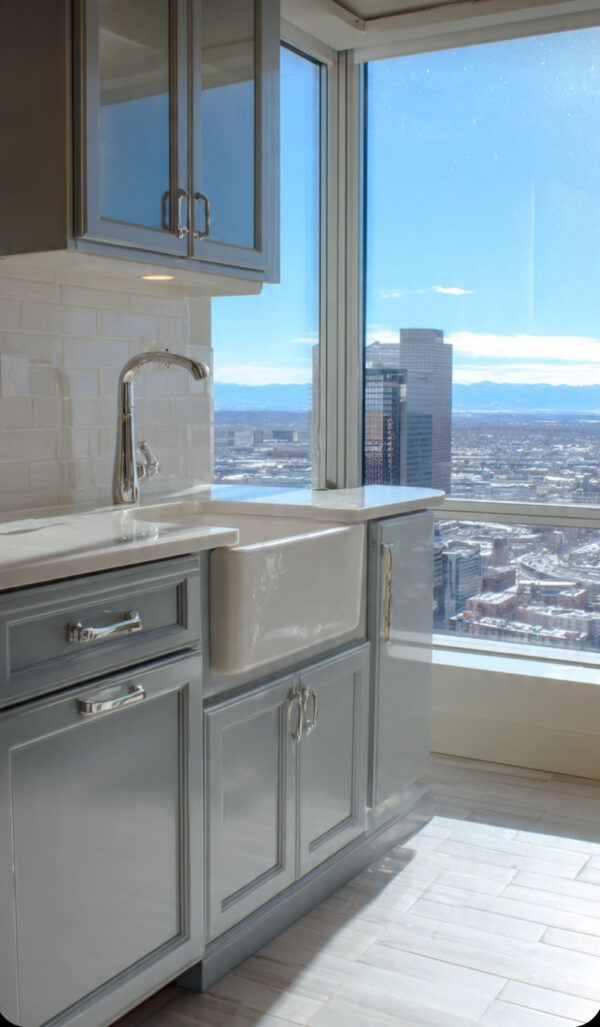
Before you grab a scraper, pause and evaluate. The best solution depends on how widespread the damage is and your goals for the kitchen.
Assessing the Extent of Peeling
Walk through your kitchen and take a systematic look:
- Lightly press on painted surfaces around any visible peeling
- Note where paint feels hollow, bubbles, or flexes under pressure
- Check door edges, backs, and face frames, not just the fronts
Use this quick guide:
| Condition | Recommended Approach |
|---|---|
| One or two small peeling areas | Localized repair |
| Scattered peeling on 20–30% of doors | Partial repaint of affected fronts |
| Widespread failure on most doors/frames | Full cabinet refinishing or repainting |
| Peeling plus swollen, damaged wood | Structural repair plus refinishing |
Budget, Timeline, and Home Value Considerations
Homeowners in Boulder County typically face three choices:
- Spot repair: Lowest cost, a few hours to a weekend, good for minor issues when you are not changing color.
- Full repaint: Moderate cost, 3–7 days, good if color and sheen still work and substrate is sound.
- Professional refinishing: Higher initial cost, but often far less than full replacement, with the greatest impact on resale and durability.
If you are preparing to list a home in Boulder or Longmont, a uniform, factory‑like finish usually photographs and shows far better than patchy touchups. Local real estate agents often recommend professional cabinet refinishing in Boulder instead of new cabinets, especially in otherwise updated homes.
When DIY Is Reasonable Versus Calling a Pro
DIY repair can make sense if:
- Peeling is minor and localized
- You are reasonably handy and comfortable with detailed sanding and masking
- You can live with some small variation in sheen or texture
Professional refinishing is usually smarter if:
- Multiple layers of past paint jobs are failing
- You want a color change plus upgraded finish quality
- Time is limited and you need a predictable, clean process
- You care strongly about a “factory” look on a higher‑end Boulder property
Step‑By‑Step: Fix Peeling Cabinet Paint The Right Way
If you decide to repair the peeling areas yourself, follow this process for durable, invisible results.
Step 1: Contain the Area and Gather Materials
Cabinet work is dusty and can drift through open floor plans common in Boulder homes.
You will need:
- Painter’s tape, plastic sheeting, and drop cloths
- Screwdriver and labeled bags for hinges and hardware
- Scrapers and a utility knife
- Sandpaper: 80–120 grit for removal, 180–220 grit for smoothing
- Degreaser or TSP substitute, clean rags, and a Scotch‑Brite pad
- High‑adhesion bonding primer, suited for glossy surfaces
- Cabinet‑grade enamel or urethane‑reinforced acrylic paint
- High‑quality synthetic brushes and a small foam or microfiber roller
Step 2: Remove Loose Paint Completely
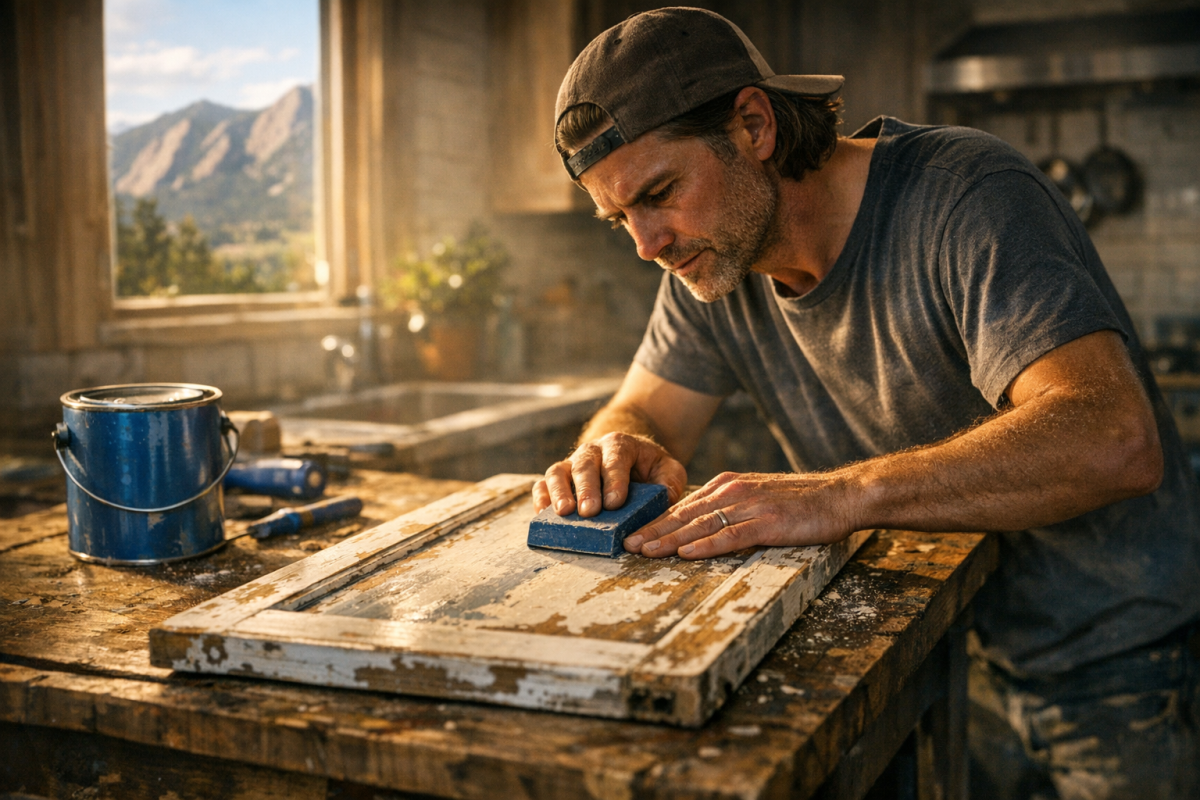
Do not simply feather the edges and paint over peeling sections. You must remove everything that is not firmly bonded.
- Gently scrape any blistered or flaking paint until you reach solid, well‑adhered coating
- Use a utility knife along edges and profiles to lift loose material
- For stubborn sections, lightly sand with 80–120 grit until the surface feels uniform
If large sheets come off down to bare wood, that confirms the original bonding failure. Treat those areas as a fresh substrate.
Pro Tip: Run your fingers over the surface with your eyes closed. Any ridge you can feel will likely telegraph through the final finish.
Step 3: Clean, Degloss, and Sand Smooth
Kitchens accumulate a surprising amount of grease and silicone from polishes and sprays.
- Wash all affected areas with a degreaser or TSP substitute
- Rinse with clean water and allow to dry thoroughly
- Lightly sand everything you plan to repaint with 180–220 grit to dull the sheen and feather edges
- Vacuum dust, then wipe with a tack cloth or damp microfiber
If you are blending a repair into an existing door, extend sanding several inches beyond the peeled zone so your new paint can taper seamlessly into the old finish.
Step 4: Prime for Adhesion and Stain Blocking
Primer is the bond bridge between old and new layers.
- Use a bonding primer rated for glossy or previously finished surfaces
- For oak or older woods with tannin bleed, consider a stain‑blocking primer
- Apply a thin, even coat over the repaired area and any bare wood, slightly beyond the sanded zone
- Allow full cure time, not just dry‑to‑touch time, per the manufacturer’s instructions
If the surface still looks patchy after one coat, a second primer coat over heavy repair zones is often worthwhile.
Step 5: Apply a Durable Cabinet‑Grade Topcoat
This is where many DIY projects fall short. Choose quality over convenience.
Look for:
- Waterborne or alkyd‑hybrid cabinet enamel with high hardness and good blocking resistance
- A sheen that matches your existing finish, usually satin or semi‑gloss
- A product rated for high‑touch, high‑moisture areas
Application tips:
- Use a brush for profiles and a small foam or microfiber roller for flat panels
- Apply multiple thin coats rather than one heavy coat
- Lightly sand with 320 grit between coats if the surface feels rough
- Allow full cure before rehanging doors and reinstalling hardware
For larger or more visible areas, consider repainting the entire door or drawer front from edge to edge so the repair is completely invisible.
Preventing Future Peeling In Boulder Kitchens
Once you have fixed the problem, a few practical habits will extend the life of your finish.
Improve Ventilation and Heat Management
- Always run your range hood when boiling or frying
- Crack a window or use a ceiling fan in tight kitchens
- Do not run the dishwasher repeatedly on high‑heat dry if peeling started on adjacent doors
- Avoid high‑heat toasters or air fryers directly under upper cabinets
Use Cabinet‑Safe Cleaning Practices
Harsh cleaners can act like paint strippers over time.
- Use mild dish soap and water for regular cleaning
- Avoid abrasive powders, strong ammonia, and concentrated degreasers on painted surfaces
- Dry surfaces after cleaning to minimize water sitting on edges and joints
Maintain Hardware and Touchpoints
- Keep handles and pulls tight so doors are not repeatedly pulled by the corners
- Add soft‑close hinges or bumpers to reduce impact if doors slam
- Address minor chips quickly with touch‑up before moisture can creep under the coating
Important: Even the best coating system can fail prematurely if heat, steam, and harsh chemicals are never controlled. Finishes last longest in kitchens where both environment and maintenance support the product.

When Professional Cabinet Refinishing In Boulder Is The Better Investment
DIY repairs work for isolated problem spots, but there is a point where you are chasing issues. At that stage, a full refinishing or repaint by a specialist can be more cost‑effective and higher impact.
Signs You Should Consider Professional Help
You are likely better off with professional refinishing if:
- Peeling and chipping are present on more than a third of your doors
- There are multiple generations of old paint and visible brush marks
- Your cabinets are a key feature in an open‑concept main level
- You want to change from dark oak to a modern painted look that adds resale value
Experienced Boulder refinishers use dedicated spray equipment, controlled environments, and industrial‑grade coatings. This produces a finish that feels closer to new factory cabinets than most homeowners can achieve in a lived‑in kitchen.
For an overview of what professional cabinet refinishing involves, including prep, spraying, and curing, review this guide: Cabinet Refinishing Boulder Transform Your Kitchen With Cabinet Refinishing In Boulder.
What To Expect From A Local Refinishing Specialist
A reputable refinisher serving Boulder County typically:
- Removes doors and drawer fronts to spray off‑site in a controlled shop
- Masks and tents your kitchen to protect counters, floors, and appliances
- Uses commercial bonding primers and high‑build finishes designed for cabinetry
- Repairs damaged edges, fills old hardware holes, and can add new handles or pulls
- Completes most projects within about a week, with limited kitchen downtime
If you want a deeper look at process and options, including color choices and durability expectations, see Cabinet Refinishing And Cabinet Painting In Boulder Revitalize Your Kitchen With Over 40 Years Of Expertise.
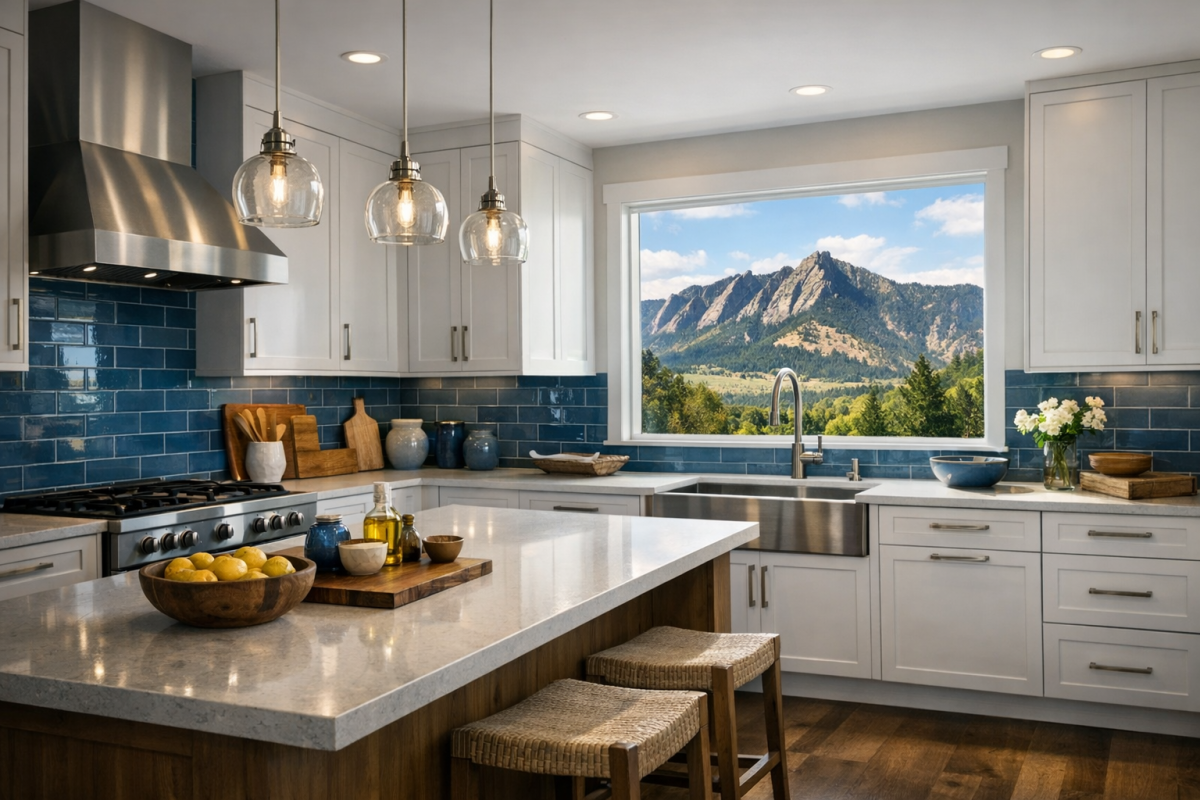
Local, Practical Help: Cabinet Refinishing And Cabinet Painting Boulder CO
If your peeling cabinet paint is widespread or you are planning a broader kitchen refresh, it may be time for a more comprehensive solution.
Cabinet Refinishing and Cabinet Painting Boulder CO focuses specifically on transforming existing cabinets, not selling new boxes. That matters in Boulder County, where many homes already have solid wood cabinetry worth preserving.
A professional refinishing project can:
- Strip away failing layers and correct past DIY mistakes
- Give you a uniform, sprayed finish across doors, drawers, and frames
- Upgrade your kitchen aesthetics for a fraction of full replacement
- Use coatings selected for Boulder’s climate and everyday family use
You can explore service details, see before‑and‑after projects, and request a consultation at:
https://cabinetrefinishing.info/
Call‑to‑action: Learn more
For homeowners across Boulder, Louisville, Lafayette, and surrounding communities, this kind of targeted refinishing often provides the best balance of cost, durability, and visual impact.
Also see: Cabinet Refinishing Boulder Servicing Boulder Co for service area specifics and project examples.
Putting Your Plan Into Action
Peeling cabinet paint in a Boulder CO kitchen is not just a cosmetic annoyance. It signals a failure in the coating system that, if ignored, will spread and detract from your home’s value.
Your next steps:
- Inspect your cabinets carefully and decide whether spot repair or full refinishing is needed
- If damage is minor, follow the detailed prep, priming, and painting steps above
- If peeling is widespread, explore professional refinishing so the entire kitchen looks cohesive and “like new”
Handled correctly, you can stop the peeling, upgrade the look of your kitchen, and extend the life of your existing cabinets for many years.
Frequently Asked Questions
Why is my cabinet paint peeling so quickly in Boulder CO?
Rapid peeling is usually a sign of poor adhesion to the existing finish rather than a climate problem alone. Many cabinets were painted without proper sanding or bonding primer, or with regular wall paint instead of cabinet enamel. Boulder’s dry winters, steam from cooking, and strong sun then stress a weak coating. Once you see one area fail, others often follow unless the root preparation issue is addressed.
Can I spot repair peeling cabinet paint, or do I have to repaint everything?
You can spot repair if the peeling is confined to a few small areas and the rest of the finish is sound. The key is to remove all loose paint, clean thoroughly, sand to feather edges, prime for adhesion, and then apply a cabinet‑grade enamel. To keep the repair invisible, you may need to repaint the entire door or drawer front, even if the damage started in just one corner.
How long should a properly refinished cabinet finish last?
With good prep, quality products, and reasonable maintenance, a professional cabinet refinish in Boulder can last 8 to 15 years or more. Factors that influence lifespan include how heavily the kitchen is used, whether steam and heat are controlled, and how cabinets are cleaned. Mild soap, soft cloths, and avoiding harsh chemicals will usually add several years to the life of the finish.
Is it worth refinishing cabinets before selling my Boulder home?
For most Boulder County homes with structurally sound cabinets, refinishing is a high‑ROI improvement prior to listing. It modernizes the kitchen at a fraction of replacement cost and photographs extremely well in online listings. Buyers often respond better to a cohesive, light, updated kitchen than to older oak or visibly peeling paint, which can suggest deferred maintenance.
What type of paint is best for fixing peeling cabinet paint?
Choose a high‑quality cabinet enamel or urethane‑reinforced acrylic, not standard wall paint. Look for products specifically labeled for cabinets, trim, and doors, with good hardness, blocking resistance, and washability. Pair it with a compatible bonding primer designed for previously finished or glossy surfaces. This combination gives you a smooth, durable finish that is far less likely to peel again in a busy Boulder kitchen.