Why Durable Cabinet Paint Jobs Matter In Boulder Kitchens
Repainting kitchen cabinets is one of the highest ROI upgrades you can make, especially in Boulder County where buyers expect clean, updated kitchens. Done well, a painted finish can last 10 years or more. Done poorly, it can chip within months at high‑use spots like trash pullouts, sink bases, and around hardware.
The best way to repaint kitchen cabinets for durability is a system, not a single product. It combines proper cleaning, mechanical and chemical deglossing, bonding primer, high‑quality cabinet‑grade paint, and a controlled application method.
This guide breaks down that system step by step, with a focus on older, previously finished cabinets that many Boulder, Longmont, and Louisville homes have. You will learn what products actually add durability, where homeowners usually cut corners, and when it makes more sense to call in a professional refinisher instead of going fully DIY.
Key Takeaway: Longevity comes from surface prep and product choice, not from how many coats of paint you apply.
What “Durable” Really Means For Painted Cabinets
Before you pick up a brush, define what durability means in a real kitchen, not a showroom.
How Durable Cabinets Need To Perform
Durable cabinet finishes should:
- Resist chipping on door edges and around knobs
- Tolerate grease, steam, and daily wipe downs
- Stay smooth without tackiness or blocking (doors sticking to frames)
- Avoid yellowing, especially in sunny Boulder kitchens at elevation
A good benchmark: cabinets that still look presentable after 5–7 years in a busy family kitchen with kids and pets.
Common Durability Killers
Most peeling and chipping come from three causes:
- Poor cleaning: Painting over grease, oils, or silicone residue
- Inadequate deglossing: Shiny factory finishes that paint cannot grip
- Wrong product: Wall paint or cheap latex instead of cabinet‑grade enamel
Homeowners in older Boulder County homes often face additional issues, such as multiple layers of unknown product on the cabinets, or oil‑based finishes from the 80s and 90s that need specific prep.
The Ideal Cabinet Finish Profile
For longevity, aim for:
- A hard, enamel‑like surface, not a soft wall‑paint feel
- A slight sheen, usually satin or semi‑gloss, which cleans easily
- A finish that cures fully within about 21–30 days
Key Takeaway: Durability is less about high gloss, and more about adhesion, hardness, and chemical resistance to cleaners and oils.
The Non‑Negotiable Prep Steps That Make Paint Last
Prep is where most DIY jobs fail. Professional refinishers typically spend 60 to 70 percent of project time on prep. That is not an exaggeration.
Deep Cleaning To Remove Hidden Contaminants
Use a degreaser designed for paint prep, not just dish soap. Options include:
- TSP or TSP substitute
- Dedicated cabinet deglosser/cleaner
Focus heavily on:
- Handles and pulls
- Around knobs and finger pulls
- Doors near the stove and above the range
- Sink base doors and trash pullouts
Rinse thoroughly with clean water and let dry. Any residue left behind can interfere with adhesion.
Mechanical and Chemical Deglossing
Modern cabinet finishes are engineered to repel stains. That means they also repel paint unless you break that glossy surface.
The most durable approach is to combine:
- Sanding: 120–180 grit to scuff the surface, not to strip to bare wood
- Liquid deglosser: Wiped on to soften and dull remaining sheen
Sand lightly, vacuum the dust, then wipe with a tack cloth or microfiber. For raised‑panel doors, use sanding sponges to reach profiles.
Pro Tip: If you can still see a noticeable shine anywhere after sanding and deglossing, sand again. Any remaining gloss is a future peel point.
Labeling, Hardware Removal, And Dust Control
Durability also depends on how evenly you can coat surfaces.
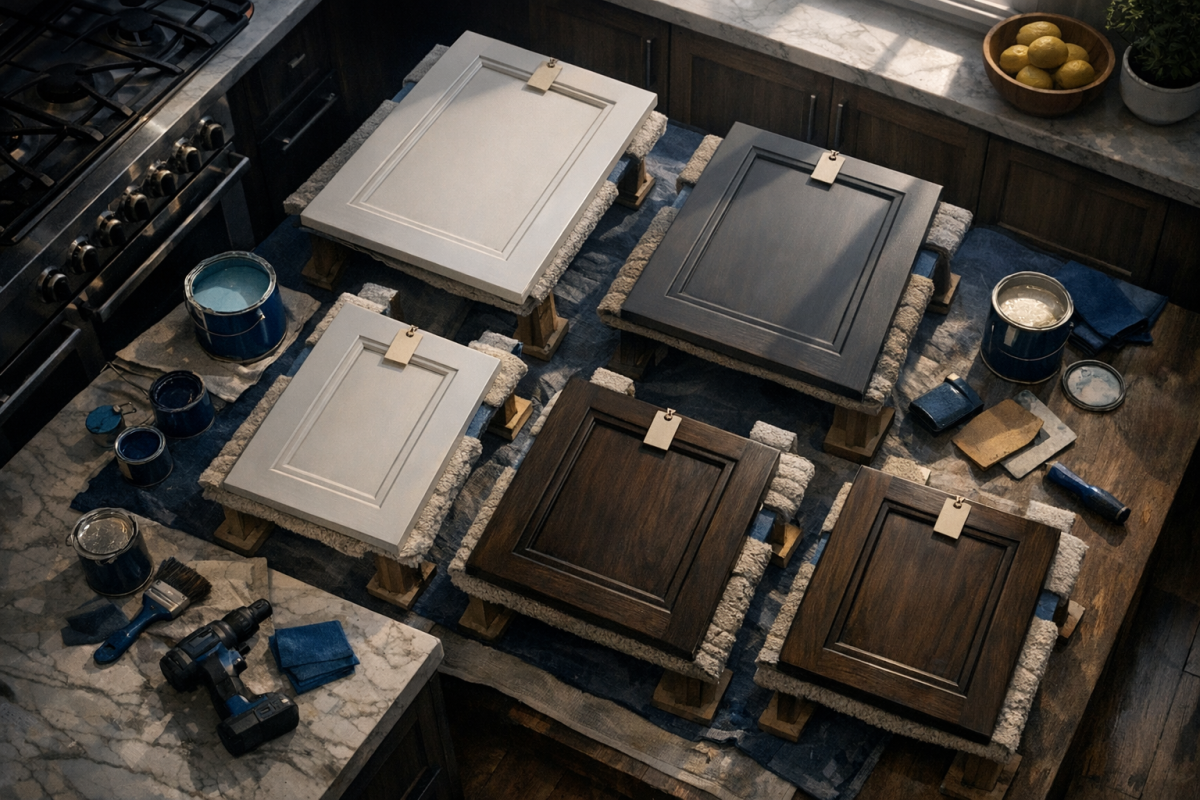
- Remove doors and drawers
- Label each piece and its hardware location
- Set up a temporary spray or painting area, ideally in a garage or basement with plastic sheeting
This allows proper coverage on edges and backs, where wear often begins.
Choosing The Right Primer And Paint For Long‑Lasting Cabinets
If prep is your foundation, primer and paint are your structure. The best way to repaint kitchen cabinets for durability in Boulder’s dry climate is to use products specifically formulated for trim and cabinetry.
Bonding Primer Is Mandatory
A true bonding primer is designed to adhere to slick surfaces and to give your topcoat something strong to grab.
Look for:
- Label terms like “bonding,” “adhesion,” or “for glossy surfaces”
- Compatibility with both existing finish (often oil or catalyzed lacquer on older cabinets) and your planned topcoat
Apply one or two thin, even coats. Follow recommended recoat times. In Boulder’s low humidity, products can feel dry quickly, but they may not be ready for sanding or recoating yet.
Cabinet‑Grade Enamel vs Standard Wall Paint
Do not use wall paint on cabinets. It scratches and chips far more easily.
For durability, consider:
- Waterborne alkyd enamel: Mimics oil’s hardness with easier cleanup and less yellowing
- Acrylic urethane trim paint: Flexible, tough, good for expansion and contraction in older homes
Key features to look for:
- Marked as “trim,” “door,” or “cabinet” paint
- Non‑blocking (so doors will not stick to frames)
- High resistance to grease and cleaning chemicals
Best Sheen For Durability
Satin and semi‑gloss are the sweet spot:
- Satin: Softer look, still wipeable, often preferred in contemporary Boulder homes
- Semi‑gloss: Better for rentals and flips, higher resistance and slightly easier cleaning
High gloss can show every flaw, which is a problem on older cabinet doors with panel movement or prior damage.
Key Takeaway: The jump from basic acrylic wall paint to cabinet‑grade enamel often adds several extra years of usable life to your finish.
For more details on professional product systems, see the options used in Cabinet Refinishing Kitchen Cabinet Painting Services.
Application Methods That Maximize Durability
Even with the right products and prep, how you apply the coating makes a major difference in longevity.
Brushing And Rolling: When It Works
For many occupied homes, brushing and rolling is practical if you:
- Use high‑quality synthetic brushes and fine‑nap foam or microfiber rollers
- Strain your paint to reduce dust and nibs
- Apply multiple thin coats instead of one thick one
This method works well for:
- Smaller kitchens
- Budget‑conscious updates
- Real estate listings that need a good visual upgrade more than commercial‑grade durability
Spraying For A Factory‑Like Finish
Spraying, when done correctly, gives:
- Smoother, harder feeling finish
- More consistent mil film thickness, which increases durability
- Better coverage on detailed profiles and edges
However, it requires:
- Proper masking and ventilation
- An HVLP or airless sprayer
- Experience to avoid runs and uneven build
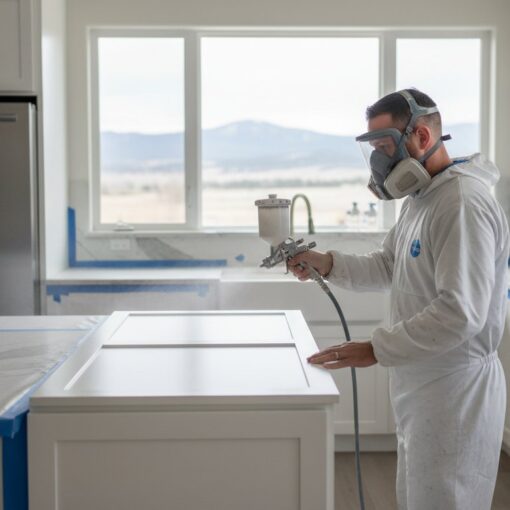
Professional refinishers in Boulder County often remove doors and drawers for spraying off‑site, while carefully masking frames in place.

Dry Time vs Cure Time
Paint has two clocks:
- Dry time: When you can touch or lightly recoat
- Cure time: When it reaches full hardness and chemical resistance
Cabinet paints can take 21–30 days to fully cure, especially in cooler basements or shaded areas. During that period:
- Handle doors gently
- Avoid harsh cleaners
- Install soft‑close hardware if possible to minimize impact
Important: Rushing the reinstallation or using doors heavily before cure is complete is one of the fastest ways to damage even a well‑prepped finish.
Dealing With Older, Dated, Or Problem Cabinets
Many Boulder and Adams County homes still have oak, maple, or builder‑grade cabinets from the 80s, 90s, or early 2000s. These need special consideration if you want durability.
Oak Grain And Tannin Bleed
Oak has heavy grain and high tannin content. If you want a smooth, modern look:
- Fill the grain with a dedicated wood grain filler, sanded smooth
- Use a stain‑blocking primer that resists tannin bleed
Skipping grain filling is fine if you are okay with visible texture, but do not skip stain blocking. Yellow or brown spots bleeding through white paint usually come from tannins and old stain.
Previously Painted Or Peeling Surfaces
If your cabinets were already painted:
- Test a few areas with painter’s tape; if paint peels off easily, you likely need to strip or heavily sand
- Feather sand edges of chips or peels
- In extreme cases, chemical stripping and a full refinishing system is more durable than adding more paint layers
For complex scenarios like this, reviewing professional options such as Cabinet Refinishing Kitchen Cabinet Refinishing can save you from costly trial and error.
Rental And Flip Strategies
For investment properties and flips:
- Prioritize stain blocking and bonding primer to prevent callbacks
- Consider slightly darker or mid‑tone colors that hide wear better than bright whites
- Use durable semi‑gloss that stands up to tenant turnover cleanings
Real‑World Example: A Boulder rental with white cabinets repainted using bonding primer and waterborne alkyd enamel saw no significant chipping after 5 years and three tenant turnovers, compared to a control unit painted with standard acrylic, which needed touch‑ups every turnover.
Eco‑Conscious And Budget‑Smart Choices For Boulder Homeowners
Many Boulder County homeowners care about indoor air quality and sustainability, and they also want to avoid the cost and waste of full cabinet replacement.
Low‑VOC And Low‑Odor Options
Modern waterborne enamels offer:
- Very low VOC levels
- Faster odor dissipation than traditional oil‑based products
- Safer application in homes with kids and pets
If you are repainting in winter with windows closed, prioritize paints specifically marketed as low‑odor.
Refinishing vs Replacing: Durability And Cost
Repainting or refinishing cabinets typically costs a fraction of replacement, while still giving a 70–80 percent feel of a full remodel.
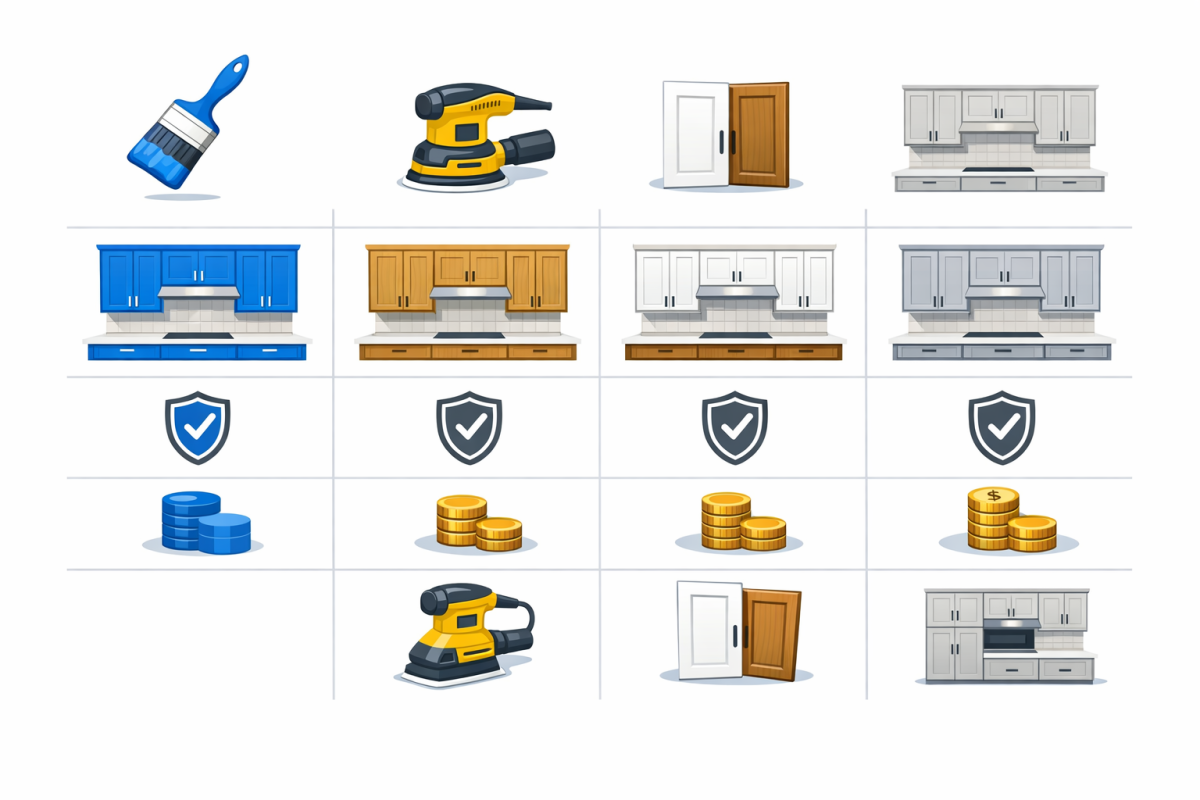
A simple comparison:
| Option | Typical Cost vs Replace | Durability (with good prep) | Waste / Environmental Impact |
|---|---|---|---|
| Full cabinet replacement | 100% baseline | 15–25 years | Highest, landfill for old boxes/doors |
| New doors plus painting frames | 60–80% | 10–20 years | Medium |
| Professional refinishing | 25–40% | 8–15 years | Low |
| DIY repaint | 10–20% | 3–10 years | Low, depends on prep and product |
Key Takeaway: Properly executed repainting is one of the most eco‑friendly and cost‑effective durability upgrades you can make in a kitchen.
For homeowners comparing options beyond repainting, the approaches outlined for Painting Kitchen Cabinets Painting Kitchen Cabinets Adams County offer region‑specific insights.
Professional Help: When It Makes Sense To Call In A Refinisher
Some projects are perfect for DIY. Others are far more cost‑effective when handled by a professional, especially if durability is your primary goal.
Signs You Should Consider A Pro
- Very large kitchens or complex layouts with islands, glass fronts, and detailed trim
- Existing peeling, bubbling, or heavy tannin bleed that keeps returning
- High‑end listings where finish quality directly affects sale price
- House flips on tight timelines, where curing and staging schedules overlap
Professionals typically:
- Use commercial‑grade sprayers and products not sold in big box stores
- Have systems for dust control and overspray management
- Can complete the project in days, not weeks, with controlled drying environments
Local Option For Boulder County: Cabinet Refinishing And Cabinet Painting Boulder CO
If you want a factory‑smooth, highly durable finish without dedicating multiple weekends and a garage to the project, consider:
Cabinet Refinishing and Cabinet Painting Boulder CO
Website: https://cabinetrefinishing.info/
They focus on:
- Extensive adhesion prep so coatings last
- Sprayed finishes that mimic new factory cabinets
- Product systems tuned for Colorado’s dry climate
This is especially valuable for:
- Older custom cabinets you want to preserve
- High‑traffic family kitchens
- Sellers aiming to maximize sale price with a durable, marketable finish
[IMAGE: Cinematic close‑up of professionally refinished white shaker cabinets in a Boulder kitchen, with natural light and subtle reflections]
Pro Tip: Even if you plan to DIY, a consultation with a refinishing pro can help you choose compatible primers and topcoats and can prevent expensive do‑overs.
Putting It Into Practice: Your Action Plan For Durable Results
To get a long‑lasting, professional‑grade finish on your kitchen cabinets:
- Inspect your existing cabinets for peeling, tannin bleed, or prior paint.
- Deep clean, then mechanically and chemically degloss every surface.
- Apply a true bonding primer, using stain‑blocking versions for oak or heavy stains.
- Choose a cabinet‑grade enamel in satin or semi‑gloss, waterborne alkyd or acrylic urethane.
- Apply multiple thin coats, sprayed if possible, allowing proper dry and cure times.
- Reinstall hardware gently, consider soft‑close options, and treat cabinets carefully for the first month.
If you want the durability and appearance of new cabinets without the replacement cost, and you live in Boulder County or nearby, consider partnering with Cabinet Refinishing and Cabinet Painting Boulder CO to handle the most demanding parts of the process for you. Learn more.
Frequently Asked Questions
How long should a professionally repainted cabinet finish last?
With proper prep and cabinet‑grade products, a professionally repainted finish can realistically last 8 to 15 years in a typical Boulder kitchen. Factors that shorten lifespan include heavy abuse, constant moisture at sink bases, and harsh cleaners. Expect shorter life on DIY jobs that skip bonding primer or use standard wall paint, and longer life when you use waterborne alkyd or acrylic urethane enamels.
Can I skip sanding if I use a bonding primer?
You should not. Bonding primer improves adhesion, but it performs best on a scuffed surface. Light sanding with 120–180 grit removes gloss, roughens the profile for primer to grip, and helps remove any remaining contaminants. Relying solely on “no‑sand” claims increases your risk of peeling, especially around handles and door edges where contact is constant.
Do I need a clear topcoat over cabinet paint for durability?
Usually not, and sometimes it reduces performance. Modern cabinet‑grade enamels are formulated to be self‑sealing and durable without a clear coat. Adding a polyurethane or other clear finish can cause yellowing or adhesion issues if products are not compatible. It is better to choose a tougher enamel and apply sufficient coats than to rely on a separate clear layer.
What is the most durable color choice for kitchen cabinets?
Color itself does not change hardness, but it affects how wear shows. Bright whites highlight chips, stains, and tannin bleed. Mid‑tone grays, greiges, and soft greens or blues tend to hide minor wear better. In rentals and flips, deeper colors on islands or lower cabinets are often used to mask scuffing, while uppers stay lighter for visual openness.
How long should I wait before using my repainted cabinets normally?
Most cabinet paints are dry to touch within hours, but they need 21–30 days to fully cure. You can rehang doors after the manufacturer’s recommended recoat and handling time, usually 24–72 hours, but treat them gently. Avoid scrubbing, heavy slamming, or sticking felt pads directly to fresh paint until full cure, which is when you get maximum chip and chemical resistance.